 Gen info Gen info
- Ricinus communis, the castor bean or castor oil plant, is a species of perennial flowering plant in the spurge family, Euphorbiaceae. It is the sole species in the monotypic genus, Ricinus, subtribe Ricininae.
- Etymology: Carl Linnaeus gave the genus name Ricinus, which is the Latin word for tick; the seed so named for its markings and a bump at the end that resemble certain ticks. The genus Ricinus also exists in zoology, referring to insects (not ticks), which are parasites of birds. The common name "castor oil" probably relates to its use as replacement for castoreum, a perfume base made from dried perineal glands of the beaver (castor in Latin). Another common name, palm of Christ, or Palma Christi, relates castor oil's reputed ability to heal wounds and cure ailments. (53)
- Global castor seed production is about 2 million tons per year, led by India with over 3/4 of global yield (1,196,680 tonnes), followed by Mozambique and China with 85,089 and 36,000 tonnes, respectively. (2019 data). (53)
- Ancient use: Castor seeds were found in Egyptian tombs dating back to 4000 BC; the slow burning oil likely used to fuel lamps. Castor seed oil has been used for lighting, body ointments, and improving hair growth and texture. Cleopatra was reputed to use it to brighten the whites of her eyes. The ancient Egyptian Ebers Papyrus dating back to 1552 BC, describes castor oil as a laxative. Since 2000 BC, use of castor bean oil as laxative, purgative, and cathartic has been mentioned in Unani, Ayurvedic, Siddha, and various other ethnomedical systems. (53)
 Botany Botany
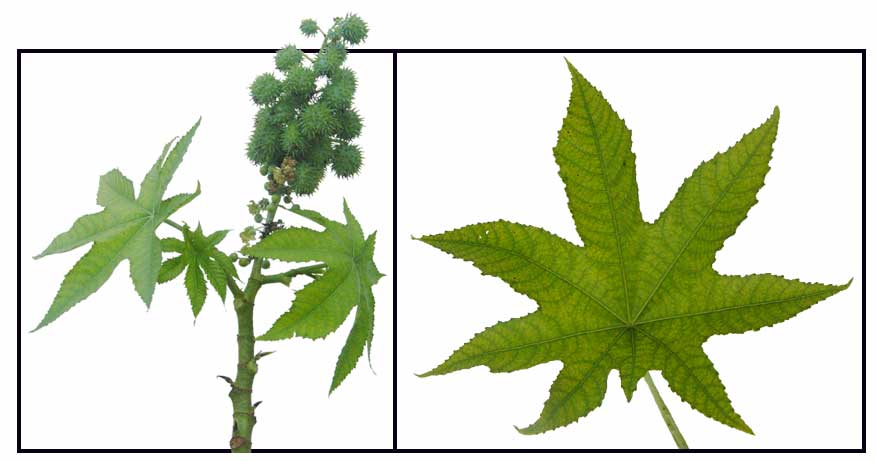
• Tangan-tangan is a coarse, erect, branched,
smooth, somewhat woody bush, 1 to 4 meters high. Younger parts are glaucous,
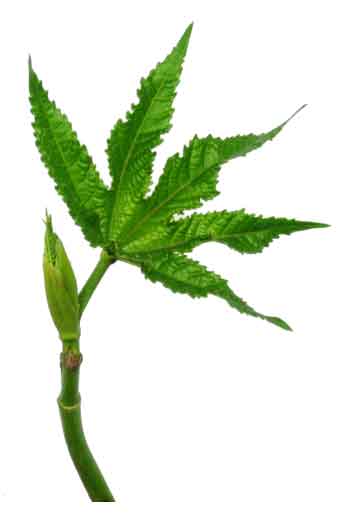
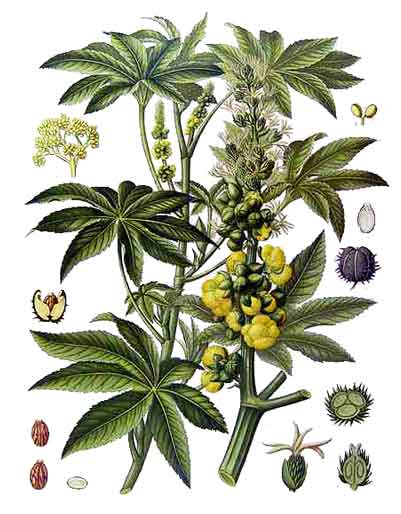
and the vegetative parts and inflorescence are green or purplish. Leaves are smooth, alternate, palmately-divided, and 20
to 60 centimeters in width, the lobes oblong and toothed. Racemes are stout and erect. Male
flowers about 1 centimeter in diameter. Calyx is thin, splitting into 3
to 5 segments. Stamens are very numerous, filaments variously connate
in branching clusters. Female flowers are calyx spathe-like, caducous.
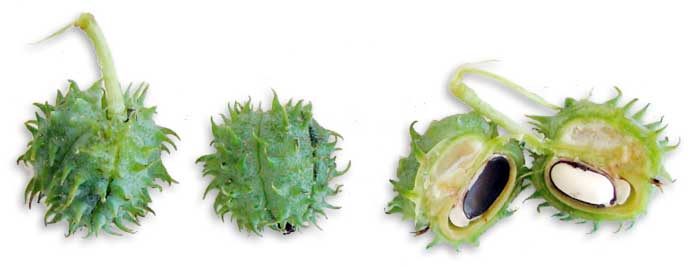
Ovary is 3-celled. Fruits are capsules, ovoid, 1 to 1.5 centimeters long, green or
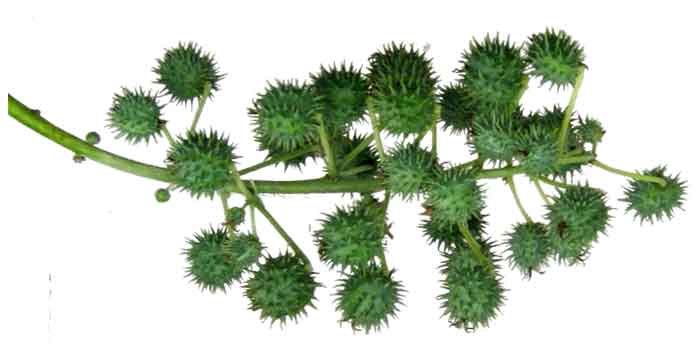
purplish and covered with soft spinelike processes.
• Ricinus communis is a fast-growing, suckering shrub that can reach the size of a small tree, around 12 meters (39 feet), but it is not cold hard. The glossy leaves are 15–45 centimeters (6–18 inches) long, long-stalked, alternate and palmate with five to twelve deep lobes with coarsely toothed segments. In some varieties they start off dark reddish purple or bronze when young, gradually changing to a dark green, sometimes with a reddish tinge, as they mature. The leaves of some other varieties are green practically from the beginning, whereas in yet others a pigment masks the green color of all the chlorophyll-bearing parts, leaves, stems and young fruit, so that they remain a dramatic purple-to-reddish-brown throughout the life of the plant. Plants with the dark leaves can be found growing next to those with green leaves, so there is most likely only a single gene controlling the production of the pigment in some varieties. The stems and the spherical, spiny seed capsules also vary in pigmentation. The fruit capsules of some varieties are more showy than the flowers.
The flowers lack petals and are unisexual (male and female) where both types are borne on the same plant (monoecious) in terminal panicle-like inflorescences of green or, in some varieties, shades of red. The male flowers are numerous, yellowish-green with prominent creamy stamens; the female flowers, borne at the tips of the spikes, lie within the immature spiny capsules, are relatively few in number and have prominent red stigmas.
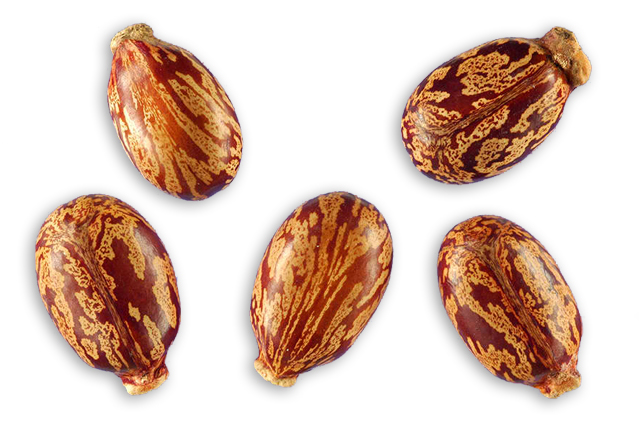
The fruit is a spiny, greenish (to reddish-purple) capsule containing large, oval, shiny, bean-like, highly poisonous seeds with variable brownish mottling. Castor seeds have a warty appendage called the caruncle, which is a type of elaisome. The caruncle promotes the dispersal of the seed by ants (myrmecochory). (53)
Distribution
- Naturalized.
-
In open waste places near settled
areas throughout the Philippines.
- Prehistoric introduction.
-
Native of the Old World.
- Pantropic in distribution.
Properties
- Roots plain-tasting, neutral-natured;
leaves and stems sweet-pungent tasting, neutral natured, slightly
toxic.
- Seeds are exceedingly pungent in taste, warming-natured, purgative, anti-rheumatic, soothes and regulates the gastrointestinal tract.
- Considered antidote, antiphlogistic, anti-rheumatic.
- Studies have suggested anti-tumor, antioxidant, anti-fertility, anti-implantation, anti-diabetic, anti-protozoal, antinociceptive, CNS-stimulant, anti-ulcer, immunomodulatory, hepatoprotective, lipolytic, wound healing, analgesic, estrogenic, mosquito larvicidal, antiviral properties.
 Constituents Constituents
- Phytochemical screening yielded proteins, carbohydrates, phenols/tannins, flavonoids, saponins, glycosides, and steroids. (28)
- Fixed oil, 49-85%;
ricin; ricinin; ricinus lipase.
- Castor seeds is the source of castor oil, with its variety of
uses.
-Seeds contain between 40% to 60% oil, rich in triglycerides, mainly
ricinolein.
-
Seed coat contains ricin, a toxin, also found in lesser concentration
throughout the plant.
- Seeds also yield the less toxic but highly homologous R. communis agglutinin and the alkaloid ricinine.
- Roots yield ricinolic acid.
- Phytochemical screening of seed extract yielded saponin glycosides, ricin, saponin, anthocyanin, vitamin A, vitamin C, vitamin B6, phenol, sterol, calcium, iron, tannins. (see study below)
(39)
- As a by-product of castor oil production, ricin is mass-produced above 1 million tons per year. The seed also yields the less toxic, highly homologous Ricinus communis agglutinin and the alkaloid ricinine. (24)
- Fatty acid composition of seed oil showed unsaturated fatty acid (UFA) was 97.9% of total fatty acid. Ricinoleic acid comprised over 85% while other fatty acids were linoleic (8.1%), oleic (4.3%). stearic (1.1%), palmitic (0.8%) and linolenic (0.4%).
Parts
utilized
· Roots, leaves, seeds.
· The leaves and seeds, externally; the oil, both internal
and external.
· Collected year-round, but seeds are best collected from
May to August.
 Uses Uses
Folkloric
· Entire fresh leaves are used externally for headache.
· Cooked with milk, leaves are used as poultices for certain kinds of ulcers.
· Seeds are purgative; also used as anti-rheumatic.
· Root-bark is purgative; also used for skin diseases and burns.
· Rheumatic arthritis, paralysis;
epilepsy; distention of the uterus, prolapsus ani: drink dried root
decoction or poultice Bai-hui pt (GV-20) with pounded seed or leaf material.
· Difficult partus, non-lowering of the fetus (during delivery):
poultice Yungchuan Pt (K-1 pt) with pounded fresh leaves.
· Lymph node TB; facial paralysis: poultice with pounded seeds
(seed coat removed). If the paralytic side is on the left side of the
face, apply poultice on the left.
· Wound caused by piercing with pointed objects (nails, bamboo
slats, bullet wound): use pounded fresh seed and apply as poultice.
· To increase the woman's secretion of milk, leaves are pounded and applied over the breast as poultice.
· Decoction of leaves reported to act as lactagogue and emmenagogue when administered internally.
· Skin ulcers: Boil
pounded leaves and use as wash.
· Bark of castor plant
also sued as dressing for ulcers and sores.
· Seed oil is laxative
and vermicide; also used as ear drops to hardened cerumen. Also used
for warts.
· For hemorrhoids,
seeds are roasted, pounded, and applied to affected area. The oil is suitable for piles and anal fissures.
· Dosage: dried roots 15 to 30 gms in decoction.
· Seed paste applied to wounds and
itch for 4-5 days.
· In Rhodesia, natives use the bark for dressing wounds and sores.
· Zulus use a paste of the root for toothaches; also, an infusion of leaves, applied orally or as an enema, for stomachaches.
· Leaf poultice used for boils.
· In French Guinea leaves are boiled and used as febrifuge.
· In Ayurveda, the leaf, root and seed oil used for inflammation and liver disorders.
· In China, crushed seeds used more frequently than the oil; a paste is applied to relieve scrofulous sores.
· Transvaal Sutos known to apply the powdered, roasted seeds to sores and boils in children.
· In Makran, oil used as ointment for sores.
· In Central Nigeria, seed variety is a popular contraceptive agent among the Rukaba women.
· Pulp is rubbed into the temples in headaches, into the palms of hands in palsy, into the urethra in stricture, and rubbed to the soles of feet of parturient women to hasten the birth of the child or to facilitate the expulsion of the placenta.
· Seeds are chewed in scrofula.
· Pulp is used for a variety of skin affections, dog bites, or whenever a lubricant is needed.
· Castor oil used as a mild purgative, adaptable to infants and young children. It is considered one of the most reliable cathartic for relief of obstinate constipation.
· Used as emmenagogue and galatagogue. Castor oil massaged over the breast after childbirth increases the flow of milk. (30)
· Warmed leaves coated with oil applied over the abdomen to relieve flatulence in children.
Infusion of leaves used for stomachache. Fresh leaf juice used as emetic in narcotic poisoning; also considered useful in jaundice. Pounded leaves used for caries; also, applied over guinea-worm sores to extract the worm. Root decoction used for lumbago; paste used for toothache. (26)
· In Sindh ethnobotany: (1) given in hot milk to induce labor pains (2) applied intravaginally for opening the uterus mouth at the time of delivery (3) used for expulsion of plasma membrane after delivery, and (4) castor beans are used to decrease the postpartum size of the abdomen. (29)
· In Ayurveda used in many ailments, most for Vataj Vikara (various painful conditions and nervine dysfunctions).
· In Tunisia, plant is used as contraceptive. In African folk medicine, used for treatment of warts, cold tumors, indurations of mammary glands, corns, and moles.
· In Haiti the plant is turned into a red oil, which is given to newborns as a purgative to cleanse the insides of their first stools. (53)
 Others Others
• As far back as 4000 BC, its
slow burning seed oil was used to fuel lamps.
• Castor is widely used in industry, in lubricants, polymer applications, paints, and cosmetics (Mutlu and Meier, 2010)
• Tañgan-tañgan is the source of the castor oil of commerce.
• Although best known for its medicinal properties for its use as a purgative, only a comparatively small amount of used for medicinal purposes. Its chief use is as lubricant for internal combustion engines, particularly aero-engines, for which it is suitable because of its high viscosity, retained at high temperatures, while non-solidifying at low temperatures.
• Castor oil is insoluble in light petroleum and other mineral oils. It can be used for making compound lubricating oil.
• Cosmetics: The seed oil of RC and its primary constituent, ricinoleic acid
are used in the manufacture of skin-conditioning agents, as emulsion
stabilizers and surfactants in cosmetics. In lipstick, castor oil is
used at 81% concentration.
• Castor oil is also used in making "cognac oil," in a dressing for leather, in "fat-liqouring" in the leather industry, in the manufacture of artificial leather, cutting oils, linoleum,
and as wool oil.
• Also used in retouching-varnishes and in the negative varnishes of photography.
• Castor oil is classified by the FDA as GRAS (generally recognized
as safe) and effective as a stimulant laxative.
• Contraceptive: Used in making contraceptive jellies and creams. Also, used with a pinch of alum for contraception. In women, one castor seed a month after the menstrual cycle reported to prevent conception for that month. (30)
• Cake left after the castor oil is extracted from the kernels of castor seeds is used as fertilizer. In addition to its use as manure, it is also employed as fuel, for caulking timber, destroying white ants (termites) and other pests.
• Medicine: Ricin has been used experimentally in medicine in bone marrow transplants and to kill cancer cells. (54)
Allergenicity and toxicity
- Ricin: According to the Guiness World Records, it is the world's most poisonous common plant. The toxicity of raw castor beans is due to the presence of ricin. While the lethal dose in adults is considered to be 4 - 8 seeds, reports of actual poisoning are rare. (53)
- No part of the plant, except
for the oil, is for internal use. The seeds contain Ricinin (C8H8O2N2)
and Ricin has blood coagulating property and may cause poisoning
if taken orally. Three seeds is enough to kill a child. Boiling the
seeds for 2 hours or more removes the toxic principle.
-
Ricinus is extremely allergenic, with an OPALS (Ogren Plant Allergy Scale) allergy scale rating of 10 out of 10. It is a strong trigger for asthma. Allergies to Ricinus are commonplace and severe.
- Ricin is more life-threatening when inhaled, as digestive enzymes can degrade the toxin to some extent.
Injection causes local pain and muscle necrosis. (45)
- There have been reports of ricin delivery by poison darts.
The first case report of homicidal use of ricin was in 1978 at a bus stop in London, where a poisonous dart was fired from a concealed umbrella tip into the thigh of Bulgarian national Georgi Markov. (45)
- The plant produces abundant amounts of very light pollen, which are easily airborne and can trigger allergic reactions when inhaled.
- Sap, leaves, flowers, or seeds can cause skin rashes
.
- Cross-allergic reactions can occur with latex sap from related Hevea brasiliensis plant.
Castor bean dust has been considered a congestin, an anaphylactogenic.
- Pomace: Pomace (castor bean dust), a product of castor oil factories, was reported to be a specific source of asthma among workers inhaling it, with the concern that exposures to pomace in large amounts may cause acute ricin poisoning.
- Toxicity manifestations: If ricin is ingested, symptoms may begin as early as 2-4 hours and as late as 36 hours. It manifests as burning sensation in the mouth and throat, abdominal pain, purging and bloody diarrhea; progressing in several days to severe dehydration, drop in blood pressure, hypovolemic shock, hepatic and renal failure. Without treatment, death may occur in 3-5 days. With treatment, most cases fully recover. (45) (53)
- Torture: Wars have found use for castor oil as instrument of torture. Dissidents and regime opponents were forced to ingest the oil in large amounts, causing severe diarrhea and dehydration, possibly death. (53)
- Ricin as terrorism agent: Ricin can be used as a terrorism agent in the form of powder, mist, pellet, or dissolved in water or weak acid. Accidental exposure to ricin is highly unlikely. Its use as poison is a deliberate act. However, spread of poison is possible with contact of ricin-contaminated surfaces. Effect of poisoning depend on the route of entry: inhalation, ingestion, touching or injection. Death from poisoning can occur within 36 to 72 hours of exposure. There is no antidote. Treatment is supportive. (54)
Studies
• Antioxidant
/ Anti-Inflammatory: Study of the methanolic extract
of RC in Wistar albino rats showed significant radical scavenging activity
and significant anti-inflammatory activity in carrageenan-induced hind
paw edema. The pharmacologic effects were attributed to the presence of phytochemicals
like flavonoids, alkaloids and tannins. (1)
• Antioxidant
/ Anti-Inflammatory: Study showed R communis inhibited both the primary and secondary phases of adjuvant arthritis, but less than betamethasone.
• Antifertility:
Study of ethanol extracts of R communis in male rats showed a drastic
reduction in sperm counts, alteration in motility, movement and morphology.
These antifertility effect was reversible and without hepatotoxicity. (2)
• Antifertility / Gonadal Function Disruption: RCE showed a reversible negative impact on male reproductive functions, probably mediated via gonadal disruption in testosterone secretion.
• Antidiabetic / Roots:
Study of ethanolic extract of roots of RC showed significant antihyperglycemic
activity with a high margin of safety with not mortality. Results suggest
a promising potential for a potent phytomedicine for diabetes. (3)
• Hypoglycemic / Roots, Stems and Leaves: 50% ethanolic extract of root, stems and leaves showed hypoglycemic activity in normal animals and antihyperglycemic activity in diabetic animals.
•
Hepatoprotective / Leaves: Study
of the leaf extract of EC showed significant protection against galactosamine-induced
hepatic damage. It showed marked choleretic activity and an anticholestatic
effect against paracetamol-induced cholestasis. (4)
• Immobilized Lectin: A glycoprotein lectin from R communis was immobilized using concanavalin A. The immobilization technique could prove an important tool for the study of receptor hormone and antibody-antigen interactions. (6)
• Biomaterial Source / Castor Bean Polymer Biocompatibility: The use castor bean-derived polyurethane tested for use in surgical reconstruction of bone tissue nasal deformities showed progressive bone formation and maturation, with no histological foreign body granuloma or phagocytic cell reaction. Macroscopic and microscopic results showed the castor oil polymer implant to be biocompatible with a favorable formulation with regards processing, flexibility, no emission of toxic vapors and low cost.
• Antibacterial / Seeds: The study on water and alcohol extract of dry seeds of R communis showed significant activity against K pneumonia, E coli, P vulgaris, S aureus. The active antimicrobial ingredients remained to be identified. (8)
• Antibacterial / Leaves: Study screened the antibacterial activity of various leaf extracts of R communis against dermatophytic and pathogenic bacteria such as E coli, S aureus, K pneumonia, Strep progens. All the extracts showed significant antibacterial properties with the acetone extract showing maximum inhibition. (12) Study evaluated the antibacterial activity of castor (Ricinus communis) leaf extract against five bacteria: two Gram-positive (B. subtilis and S. aureus) and three Gram-negative (E. coli, P. vulgaris, and P. aeruginosa). The concentrated ethanolic crude extract at 5 gm/ml showed better antibacterial activity than standard gentamycin. (44)
• Antibacterial / Seeds: Study of selected bacteria (K pneumonia, P vulgaris, and S aureus) showed high susceptibility to fermented seed extracts of R. communis.
• Cytotoxic / Anticancer / Apoptosis-Inducing / Melanoma Cell Line / Leaves: A study of the volatile extract from R communis leaves yielded three monoterpenoids: 1,8-cineole, camphor and alpha-pinene and a sesquiterpenoid, ß-caryophyllene. The leaf extract showed to be dose-dependently cytotoxic to several human tumor cell lines. Apoptosis was induced in SK-MEL-28 human melanoma cells. The results provide further insight into the potential use of naturally occurring terpenoids as inducers of apoptosis in cancer cells. (9)
• Antiulcer: Study showed R communis-treated rats showed a tendency towards reduced acid secretion, lowering gastric acidity, and dose-dependent decrease in ulcer index.
• Testicular Function Suppression / Male Contraceptive: Study in male Wistar rats showed marked suppression of testicular function in semen parameters with suppression of testicular histology and function and presents a potential as male contraceptive agent. (15)
• Antioxidant
/ Anti-Inflammatory: Methanol extract and total flavonoids fractions showed potent anti-inflammatory action in an acute model. The results of the ME at 500 mg/k and FF at 50 mg/k were at par with diclofenac sodium. Results showed RC leaves have anti-inflammatory potentials and flavonoids are dominant in the extract activity. (16)
• Hepatoprotection / CCl4-Induced Toxicity / Leaves: Study of Ricinus communis leaves powder against hepatosuppression induced by carbon tetrachloride showed a high potential in healing liver parenchyma and regeneration of liver cells. Results suggest a potential liver tonic for humans due to presence of large number of antioxidants. (17) Study of ethanol extract of leaves on carbon tetrachloride induced liver damage in rats showed hepatoprotective effect. (40)
• Epicatechin / Natural Parasitic: Study of a methanol extract of R. communis yielded epicatechin, a potential new compound against sheep fluke Paramphistomum cervi. Results showed a potential source of epitachin as a new natural parasitic agent. (19)
• Antifungal: Various extracts of roots, stems, and leaves were evaluated for antifungal properties against pathogenic microorganisms such as T. rubrum, Candida albicans, Microsporum spp. Some of the extracts showed varying effectiveness against the test pathogens. (20)
• Antihepatotoxicity / Ketoconazole Induced Hepatic Damage: Study evaluated an ethanolic extract of leaves of R. communis against Ketoconazole induced liver damage in mice. Results showed significant reduction of hepatic enzymes in treated mice. (21)
• Hypoglycemic / CRI Reduction / Roots: Study evaluated a crude aqueous extract of root in alloxan-induced diabetic rats. Results showed reduction of fasting blood glucose, with a significant reduction in CRI (Coronary Risk Index) of the rats. Results showed potential of the extract in reducing atheroslcerosis. (22)
• Irreversible Testicular Changes / Decorticated and Defatted Seeds: Study evaluated the effect of
decorticated and defatted castor seeds on the testis of male mice. Results showed significant decrease in the ration of weight of testis to body weight and levels of testosterone hormone. Histopathologically, there was severe changes in testicular architecture which was attributed to the cytotoxic activity of ricin. (23)
• Ricin / Intoxications in Human and Veterinary Medicine: This review summarizes the knowledge on intended and unintended poisoning with ricin or castor seeds both in humans and animals, with particular emphasis on intoxication due to improperly detoxified castor bean meal and forensic analysis. As a by-product of castor oil production, ricin is mass-produced above 1 million tons per year. It has gained attention as a potential biological warfare agent. The seed also yields the less toxic R. communis agglutinin and the alkaloid ricinine. After oil extraction and detoxification, the defatted press cake is used as organic fertilizer and low-value feed. There have been scattered reports of animal intoxication after uptake of insufficiently detoxified fertilizer. (24)
• Essential Oil of Leaves / Cytotoxicity / Antimicrobial: Study evaluated the essential oil of leaves for antimicrobial activity against 12 bacterial and 4 fungal strains and cytotoxic activity against HeLa cell lines. Results showed strong antimicrobial activity against all test microorganisms and strong cytotoxic activity with an IC50 value less than 2.63 mg/ml. (25)
• In-Vitro Anticancer Effects / Human Cancer Cell Lines: Study evaluated the in-vitro anticancer effects of ethanolic extract against seven human cancer cells line. The ethanolic fraction of seed part showed 41% activity against Colon cancer cell line (Colon 502713) while the stem part showed maximum activity against SiHa (47%). (27)
• Antimicrobial / Roots: Study evaluated various extracts of roots against pathogenic microorganisms E. coli, S. aureus, P. aeruginosa and Aspergillus niger. The hexane and methanol extracts exhibited maximum antimicrobial activity. (30)
• Effect of Seed Oil on Recurrent E. Coli UTI: Study evaluated the inhibitory effect of different concentrations of Castor seed oil on growth of E. coli isolated from 52 male and female patients. The results showed an inhibitory effect. Effect was possibly attributed to the content of α-linoleic acid in the seed oil, higher than other fatty acids. (31)
• Antitumor Lectins / Seeds: Study purified three toxic proteins and one agglutinin from the seeds of Ricinus communis. Ricin A is a newly isolated lectin with a strong inhibitory effect on the growth of tumor cells. The greater sensitivity of the tumor cells to lectin than non-transformed cells could be due to the higher binding affinity of lectin to tumor cells. (33)
• Formulation Study on Seeds / Contraceptive: Formulation studies showed the 10% starch mucilage was the best binder for formulation of the granules, while 75% lactose was the best diluent for the drug. Administration of the dosage forms in rats exhibited significant contraceptive activity (80%). (34)
• Acute Toxicity Study / Whole Plant Powder: Study evaluated the acute toxicity of whole plant powder of R. communis in the form of aqueous slurry on Swiss mice. Results showed no mortality even at the highest dose of 10g/kbw. (35)
• Phytoremediation / Organochlorine Pesticides: Study evaluated the ability of R. communis to promote degradation of 15 persistent organic pollutants. Contaminants tested were HCH, DDT, heptachlor, aldrin and others. Results showed use of R. communis may have some potential as a biotechnological approach for the decontamination of soils contaminated with organic pollutants. (36)
• Agglutinins / Seeds: Seeds yielded two related agglutinins: ricin, a dichain ribosome-inactivating protein and Ricinus communis agglutinin-1, a much less toxic tetrameric hemagglutinin. The immunochemical analysis of these agglutinins show both ricin toxicity and cancer chemotherapeutic potential in form of an immunoconjugate. BLI (biolayer interferometry) provides a useful method to characterize the binding of antibodies, with the potential for immunodiagnostic applications in food matrices. (37)
• Biodiesel: Study of local vegetable oil Ricinus communis as raw material for the production of biodiesel. Results showed RC oil can be used as biodiesel raw material with its high oil content and non-edible characteristics. However, pure RC biodiesel usage can cause problems in injection systems because of its high viscosity. (38)
• Antimicrobial / Seeds: Study evaluated the methanolic extract of R. communis seeds for in vitro antimicrobial activities. The extract inhibited growth of Bacillus subtilis, Staph aureus, Pseudomonas aeruginosa, Salmonella typhi, and Escherichia coli and Candida albicans. (39)
• Castor Meal as Source of Dietary Protein for Goats / Reproductive and Metabolic Effects: Study evaluated the effect of total substitution of soybean meal with castor meal, detoxified or non-detoxified, on response to estrous synchronization, conception rate, early fetal development, IgG, and metabolic-hormonal response. Results showed inclusion of 15% castor meal to goat diets did not affect the reproductive performance, embryonic and early fetal development, or blood metabolites. Electrophoresis showed absence of ricin in castor meal after detoxification. Non-detoxified castor meal contained ricin at 50 mg/kg residue. (41)
• Antiasthmatic / Mast Stabilizing / Antianaphylactic /Root: Study evaluated the antiasthmatic activity of ethanol extract of R. communis root on milk induced leucocytosis and eosinophilia in mice, mast cell degranulations in mice and passive cutaneous anaphylaxis in rats. The extract significantly decreased milk induced leucocytosis and eosinophilia and protected degranulation of mast cells in mice, and inhibited passive cutaneous anaphylaxis in rats. Phytochemical screening yielded flavonoids, steroids, saponins, alkaloids, and glycosides. Results suggest flavonoids and saponins present in the extract possess mast stabilizing and antianaphylactic activity. (Dnyaneshwar J Taur, Ravindra Y Patil; Asian Pacific Journal of Tropical Biomedicine (2011) S13-S16) (42)
• Therapeutic Role in Disease Prevention and Treatment / Review: Review presents the diverse phytochemical constituents such as alkaloids, flavonoids, terpenes, saponins, phenolic compounds such as kaempferol, gallic acid, ricin, rutin, lupeol, ricinoleic acid, pinene, thujone and gentisic acid, and discusses its pharmacologic and therapeutic effects, the biochemical targets, and clinical trials. Study suggests R. communis can be a candidate for the search of novel complementary drugs. (43)
• Ricin: Seed yields the glycoprotein, ricin, considered the most potent phytotoxin. It is composed of A and B chains linked with disulphide bonds. The A chain irreversibly inhibits protein synthesis causing cell death, while the B chain binds to glycoprotein and glycolipids on cell surfaces and facilitates entry of ricin into the cell. Toxicity is primarily from A chain mediated ribosomal inactivation. Toxicity also comes from cell membrane damage caused by B chain and to a lesser extent by type I and type IV reactions from release of cytokine inflammatory mediators. The ricin threat started with a study as a potential weapon during WWI, then as a "ricin bomb" developed by the British in WWII, and now, a potential threat as a bioterrorism agent. (see toxicity concerns above) (45)
• Antinociceptive / Seeds: Study evaluated the antinociceptive action of Ricinis communis seed extract in male Balb/C mice. The 200 and 400 mg/kg extract significantly increased pain threshold in writhing and tail flick tests. The analgesic effects are probably related to activation of the opioid system. (47)
• Antihyperglycemic /
Antioxidant / Hematological Effects / Seeds: Study evaluated a methanolic extract of R. communis seeds on blood glucose levels, antioxidant enzymes, and hematological parameters of alloxan induced male Wistar albino rats. The ME had an LD50 value above 5000 mg/kbw. Results showed a significant (p<0.05) decrease in blood glucose and a significant (p<0.05) increase in PCV, RBC, and significant decrease (p<0.05) in WBC counts. The methanol extract possessed hypoglycemic properties, an ability to modulate activities of antioxidant enzymes. and a positive effect on hematological parameters. (48)
• Carotenoid Rodoxanthine / Potential Hepatocytes Regenerators / Seeds: The liver is the only visceral organ with remarkable capacity to regenerate. As little as 25% of the original liver mass can regenerate back to full size. Study of EE-CS isolated the bioactive carotenoid rodoxanthine and evaluated its in vivo hepatocyte regenerator potentiality against CCl4-induced rat hepatocytes. Results showed significantly lowered biochemical parameters in the extract treated group, with less cavitation and necrosis on histopathological examination. Compared to silymarin, the EE-CS showed ability to restore and regenerate the CCl4-induced hepatocyte attributed to the presence of rodoxanthine. (49)
• Antibacterial / Fatty Acid Composition / Seed Oil: Study of R. communis seed oil for antibacterial activity against six bacterial strains (S. aureus, E. faecalis, B. subtilis, E. coli, P. aeruginosa, and S. typhi) with maximum zone of inhibition ranging from 5.2-8.1 mm. Seed oil yielded 97.9% unsaturated fatty acid, with ricinoleic acid comprising over 85%. Results add to the industrial and medicinal potential of the plant. (see constituents above) (50)
 • Bioinsecticidal
/ Plutella xylostella: Study evaluated the potential of R. communis leaf, root, seed kernel crude extracts and oil emulsion to control diamondback moth, Plutella xylostella. Results showed strong larvicidal effect with 100% mortality on 3rd instar larvae treated with 10% oil emulsion in both ingestion and toxicity tests. Based on low oviposition rates, oviposition deterrence, immature mortality, and relatively low persistence of the toxic ricin oil, the use of R. communis may be a suitable product for P. xylostella population density reduction in the field. (51) • Bioinsecticidal
/ Plutella xylostella: Study evaluated the potential of R. communis leaf, root, seed kernel crude extracts and oil emulsion to control diamondback moth, Plutella xylostella. Results showed strong larvicidal effect with 100% mortality on 3rd instar larvae treated with 10% oil emulsion in both ingestion and toxicity tests. Based on low oviposition rates, oviposition deterrence, immature mortality, and relatively low persistence of the toxic ricin oil, the use of R. communis may be a suitable product for P. xylostella population density reduction in the field. (51)
• Bio-Detoxification of Ricin in Seeds / Gene Silencing: Ricin is the highly toxic ribosome-inactivating lectin occurring in seeds of R. communis. It is an important crop because of its high seed content of ricinoleic acid, an unusual fatty acid with several industrial applications. Aiming to generate a detoxified genotype, study explored the RNAi concept to silence the ricin coding genes in the endosperm of castor bean seeds. Results showed ricin genes were effectively silenced in genetically modified (GM) plants and ricin proteins were not detected by ELISA. The GM seed proteins were not toxic to rat intestine epithelial cells or to Swiss Webster mice. Bio-detoxified castor bean cake, rich in valuable proteins, can be used for animal feeding. Gene silencing can make castor bean cultivation safer for farmers, industrial workers and society. (52)
• Larvicidal Against Aedes aegypti / Flowers: Study evaluated the larvicidal effect of R. communis flower extract on Aedes aegypti using 4th instar mosquito larvae. Results showed percentage mortality of Aedes mosquito larvae in 1% Baygon spray was 100%. A 50% concentration of castor flower extract caused 89.20% mortality and 95% for 100% extract concentration. Results suggest the flower extract had larvicidal effect of the flower extract was attributed to toxic ricin component. (56)
• Antiviral / Leaves: Study evaluated the antiviral potential of Ricinus communis leaves using three mechanisms against three common viruses. Leaves were extracted with 70% methanol and further partitioned. Challenge doses of virus (CDV) for Coxsackie B virus type 4 (COXB), herpes simplex virus type 1 (HSV1), and hepatitis A virus (HAV) using Vero cell cultures. Results showed the leaves extract possess antiviral activity. All extracts possessed high anti-replicative activity against HAV and moderate activity against COXB4. All extracts showed protective activity against HAV, especially the butanol extract. No anti-infective effects were recorded for any of the extract against the studied viruses. (57)
Availability
- Wild-crafted.
- Worldwide cultivation.
|


_-_Flickr_-_Kevin_Thiele.jpg)