|
Gen info
- Citrus is a genus of flowering trees and shrubs in the rue family, Rutaceae. Plants in the genus produce citrus fruits, including crops such as oranges, lemons, grapefruits, pomelos, and limes. Various species have been used and domesticated by indigenous cultures since ancient times.
- Etymology: The genus name Citrus derives from Latin, referring to either plant now known as citron or a conifer tree (Thuja). It is related to the Greek word for cedar, kédros, perhaps due to similarities in the smell of citrus leaves and fruit with that of cedar. (63)
- "Kaffir" is thought to derive from the Arabic kafir, meaning 'infidel', although how it applied to lime is uncertain. Muslim used the term to refer to non-Muslim indigenous Africans. The most likely etymology is through the Kaffirs, an ethnic group in Sri Lanka partly descended from enslaved Bantu. The earliest known reference, spelled "caffre" is in the 1888 book The Cultivated Oranges, Lemons Etc. of India and Ceylon by Emanuel Bonavia. Another claim that the name of the fruit derives from the South African ethnic slur "kaffir", adopted by White colonialists for black African people, is not well supported. (55)
 Botany Botany
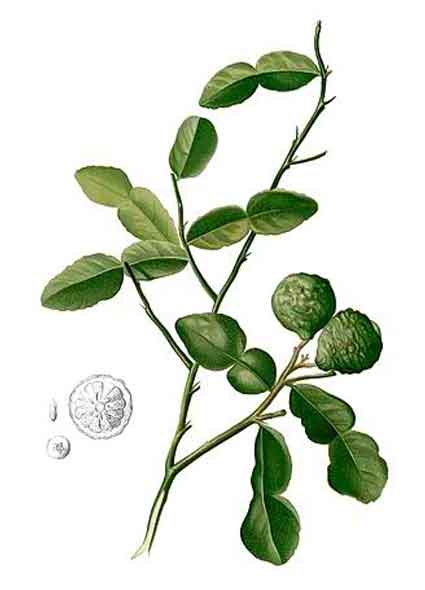
• Kabuyau is a small, slender, erect
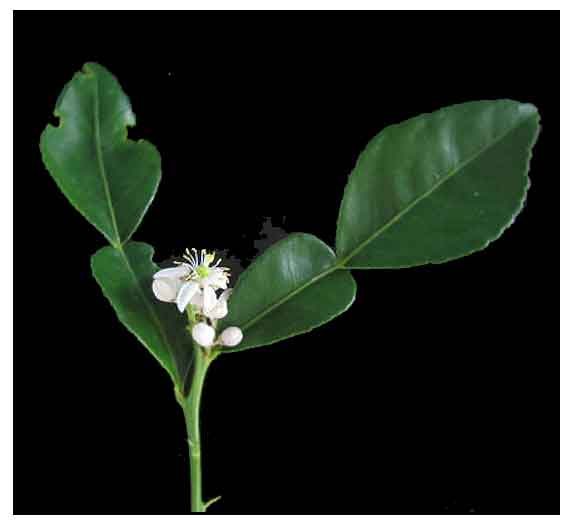
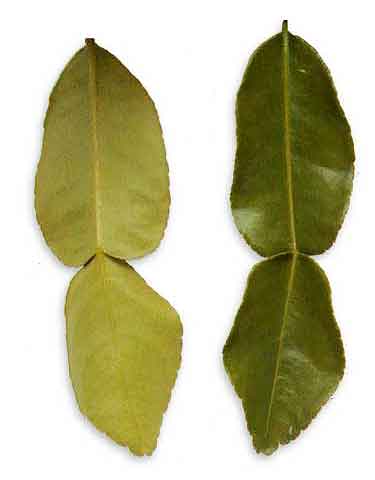
tree. Leaves are smooth, oblong, 10 to 15 centimeters long, 3 to 5 centimeters wide. Flowers
are cream-colored, borne in fascicles upon short, green axillary spikes. Fruit
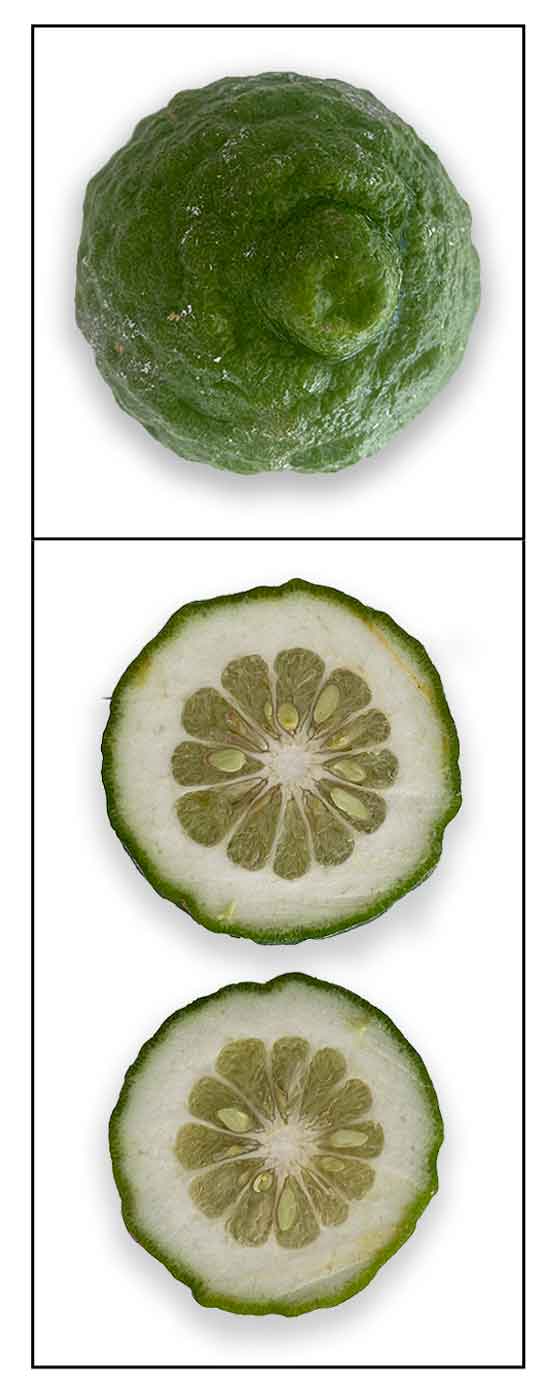
is variable in size, globose, up to 10 centimeters in diameter; slightly raised at the apex, and many seeded. Flesh is white
and astringently sour. Rind is thick, lemon yellow.
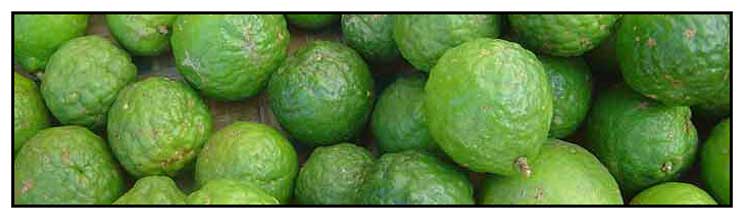
• Citrus hystrix is Small tree with a spreading or sprawling growth habit. Foliage: Dark green, smooth glossy leaves are oblong, but pinched in the middle so that 1 leaf looks like 2 ovate leaves fused together. Fruit: The fruit is round to egg-shaped and often has a distinct nipple-like structure near the apex. It is light to dark green with a very wrinkled and bumpy texture, eventually turning yellow before dropping from the tree. The flesh contains little juice which is sour and slightly bitter. (60)
Distribution
- Native to the Philippines.
-
Common in
primary and secondary forests, sometimes in or near settlements, at low and medium altitudes, throughout the Philippines.
- Also native to Assam, Bangladesh, Bismarck Archipelago, Borneo, Cambodia, China, Himalaya, Lesser Sunda Is., Malaya, Maluku, Myanmar, New Guinea, Nicobar Is., Solomon Is., Sulawesi, Sumatera, Thailand, Vanuatu, Vietnam, Wallis-Futuna Is. (23)
 Constituents Constituents
-Rind: volatile oil,
4%; citral, 40%.
- Leaves: volatile oil, 0.08%.
- From the essential oil: Limonene (most abundant), B-pinene, terpinen-4-ol
and α-terpinol.
- Three coumarins have been reported: bergamottin, oxypeucedanin and 5-[(6',7'-dihydroxy-3',7'-dimethyl-2-octenyl)oxy]
psoralen.
- Study for volatiles from C. hystrix peels essential oil
yielded 13.4%. Major compounds were sabinene, ß-pinene, limonene, α -pinene, camphene, myrcene, terinen-4-ol, α -terpinol, linalool, terpinolene and citronellal.
(30)
- Study of for major and minor components of kafir lime oil by fractional distillation process of mix-twigs and leaves yielded 20 compounds. The five main components
were ß-citronellal (46.40%), L-linalool (13.11%), ß-citronellol (11.03%), citronelyl acetate (6.76%) and sabinen (5.91%). (32)
- GC-MS study of C. hystrix leaves for essential oil yielded 29 compounds. Major constituents were beta-citronellal (66.85%), beta citronellol (6.59%), linalool (3.90%) and citronellol (1.76%). (see study below) (34)
- Study of hexane and CH2Cl2 extracts of fruit peels isolated four new compounds: citrusosides A-D (1-4), along with 15 known compounds. (see study below) (44)
- Study of Kaffir Lime essential oil using steam distillation method yielded EO extraction of 1.6%, with main components of monoterpene hydrocarbon, aldehyde and ester with sabinene (22.875%). ß-pinene (33.939%), D-limonene (15.847%). and ß-citronellal (14.791%). Other ingredients were
α-pinene (3.099%), ß-myrcene (0.836%), eucalyptol (0.354%), γ-terpinene (0.476%), 4-terpineol (2.246%),
α-terpineol (1.426%) and linalool (1.139%).
(50)
- Kaffir lime leaves oleoresin yielded nerolidol (58.27%), citronellal (15.5%), citronellol (2.78%), linalool (2.28%), isopulegol (1.61%), citronellyl acetate (1.28%), trans-caryophyllene (1.17%), geranyl acetate (0.69%), alpha-copaene (0.34%) and alpha-farnesene (0.27%).
(see study below)
(56)
Properties
- Leaves yield an oil resembling the odor of oil distilled from the leaves of C. grandis.
- Fruit is considered stimulant and stomachic.
- Studies have shown insect repellent, mosquito larvicidal, antioxidant, antibacterial, antifungal, antitumor, anxiolytic, anti-cockroach, antifertility, cardioprotective, skin whitening, membrane stabilizing, thrombolytic, anxiolytic, preservative properties.
Parts used
Leaves, rind, fruits.
 Uses Uses
Edibility / Culinary
- Fruit flesh is astringently sour; juice used for seasoning and makes a good drink.
- Rind is squeezed to extract oil
- Rind is often mixed with gogo to impart a sweet smell.
- Leaves used to season food.
- Leaves used in preparation of Thai and Malay dishes.
Folkloric
- In herbal medicine, the fruit has been used for treatment of dizziness, indigestion, flu, fever, hypertension, abdominal pains, and diarrhea in infants. Fruit juice added to water or fruit rubbed on skin and armpits to control body odor.
-
Aromatic baths: Squeeze
fruit and juice to gogo (for shampoo) or water (bath).
- Nausea and fainting: Inhale oil from rind.
- Malays use the peel as a tonic ingredient.
- Fresh peels and dried fruits used to relieve nausea, flatulence, and control menstruation.
- Rind used in treatment headache and worms
in children.
- In Malaysia, used for stomachaches and
dyspepsia.
- Fruit juice is expectorant and antidandruff.
- With ginger and other aromatics, used to treat postpartum septicemia.
- In Meghalaya, India, the Garo and Khasi tribes use the whole fruit or juice orally as antidote for food poisoning. Fresh or stored juice use for relief of fever and stomach disorders. Juice in water, mixed with salt and sugar taken for various abdominal complaints i.e., flatulence, constipation, etc. Juice topically applied to whole body or forehead to reduce fever. Also, used as antiseptic on cuts and wounds. (37)
- Fruit skin extracts and juice used as insecticide for washing the head and treating the feet to kill land leeches. (45)
- Fresh leaves rubbed on teeth and gums as aid to dental health.
(45)
Others
- Scent: Volatile oil used in perfumery, toiletries, handwash and shampoo.
- Insecticide: Juice of fruit used as insecticide.
- Repellent: leaves used as mosquito repellent.
 Studies Studies
• Insect Repellent: (1) Essential oil effective in repelling mosquitoes,
but less than tumeric or citronella grass. (2) Except at 10% and 25% of Kaffir lime oil, the studied oils at all concentrations were able to protect mosquito bites more than 2 hrs. with dose dependence .
• Coumarins:
Study
isolated three known coumarins from CH as inhibitors of both lipopolysaccharide
and interferon-y-induced nitric oxide generation in in Mouse Macrophage
RAW 264.7 Cells. (2)
• Anti-Tumor / Glyceroglycolipids: Glyceroglycolipids
from Citrus hystrix, a Traditional Herb in Thailand, Potently Inhibit
the Tumor-Promoting Activity of 12-O-Tetradecanoylphorbol 13-Acetate
in Mouse Skin: Study isolated two glyceroglycolipids from the leaves
of Citrus hystrix. Both showed to be potent inhibitors of tumor promoter-induced
Epstein-Barr virus (EBV) activation. The anti-tumor promotion may involved
the inhibition of arachidonic acid cascade. (3)
• Anti-Microbial / Thai Herbs:
Study of fresh and oil extracts fifteen medicinal herbs were tested
for potential use as natural antimicrobial additives in foods. Tested
against B cereus, S typhi and S aureus, six , including Citrus hystrix,
showed high activities on first screening. C. hystrix, together with
A. ascalonicum and C aurantifolium were selected as potential antimicrobial
food additives (4).
•
Antimicrobial / Peel: Study showed the ethyl acetate extract of kaffir
lime (C hystrix) peel showed broad spectrum inhibition against all Gram-positive
bacteria, yeast and molds including S aureus, B cereus, Listeria monocytogenes,
Saccharomyces cerevisae and A fumigatus.
•
Flavonoid / Antioxidant / Effect of Processing: Study compared
fresh use with effects of boiling and deep-fat frying on the leaf of
Citrus hystrix's phenolic, flavonoid contents and antioxidant capacities.
Results showed boiling decreased total antioxidant capacity and that
the method of processing can significantly affect the flavonoid content
and their total antioxidant capacities. (5)
•
Antioxidant In a study of four Citrus species, C. hyxtrix exhibited the highest antioxidant activity by DPPH and FRAP methods, and the highest flavanoid and phenolic content. (18)
•
Antioxidant / Free Radical Scavenging Activity:
Study on 10 methanolic extracts from various medicinal plants commonly
used in Thai traditional medicine, the extract from leaves and peels
of Kaffir lime exerted the strongest effect on production of the hydroxyl
radical (OH). (7)
•
Stimulating Effect of Oil / Aromatherapy: Study of kaffir lime essential oil from fresh peels of Citrus hystrix showed a significant increase in blood pressure and decrease in skin temperature. Findings likely represent stimulating / activating effects of the kaffir lime oil, providing some evidence for use in aromatherapy. (8)
•
Anti-Fertility: Study of extracts of C hystrix fruit peel showed effective inhibition of implantation, producing abortion and slight hastening of labor time. The extract stimulated uterine contractions in an in situ study. (9)
•
Anxiolytic Effect: Study provided evidence that smelling oils of C hystrix and C microcarpa have anxiolytic property, with the C hystrix having a stronger effect. (9)
•
Insecticidal / Essential Oil: Study of essential oil yielded 29 compounds. Beta-citronellal, 66.85%, was the major compound, followed by beta-citronellol, linalool and citronellol. Topical application of the essential oil showed antifeedant properties with severe growth inhibition of S. litura. (13)
•
Antioxidative / Myricetin:Study showed C. hystrix leaf may exert antioxidative stress properties by scavenging hydroxyl radicals and inhibiting lipid peroxidation that causes oxidative damage to the liver cancer cell line HepG2. A possible component inhibiting lipid peroxidation is myricetin, a predominant flavonol of C. hystrix leaves.
•
Antibacterial / Essential Oil:Study showed emulsions with at least 2% of the essential oil of Kaffir lime showed inhibition of growth of E. coli, B. subtilis, and S. aureus at at efficacy similar to Ampicillin. (15)
•
Anxiolytic: Study provided some evidence that the smelling of essential oils of C. hystrix and C. microcarpa confer anxiolytic effect. (10)
•
Cockroach Control: According to a 2007 study by the Thailand National Institute of Health evaluating natural remedies for cockroach control, C. hystrix was the most effective essential oil used in controlling the pest, repelling 100 % of certain types of cockroaches. (17)
•
Cytotoxicity / Leukemic Cell Lines: Various crude extracts from leaves were evaluated for potential in vitro cytotoxic activity. An ethyl acetate fraction showed the highest cytotoxicity on 4 leukemic cell lines. (19)
•
Antibacterial / Essential Oils/ Respiratory Tract Pathogens: Study evaluated the inhibitory effect of essential oils of leaf and fruit peel against respiratory tract pathogens. Both oils were effective against all test pathogens. Results suggest makrut leaf oil, makrut oil, and components (citronellal, α-terpineol, terpinene-4-ol) may be alternative natural medicines for prevention and treatment of many bacterial diseases. (20)
•
Cockroach Repellent / Essential Oils: Seven commercial essential oils were evaluated for repellent activity against three cockroach species. The essential oil derived from Citrus hystrix showed the best repellency (100%) against P. americana and B. germanica and highest repellency (87.5%) against N. rhombifolia. (21)
•
Cardioprotective / Peels Extract: Study observed the combination effect of doxorubicin and kaffir lime peel ethanolic extract (ChEE) on ALT and AST activity and cardio-hepato-histopathology on female Sprague Dawley rats. Results showed ChEE repaired cardiohistopathology profile of doxorubicin induced cardiotoxicity, but did not repair hepatohistopathology nor reduce ALT and AST enzymes activity. (22) Kaffir lime peel contains several flavonoids viz., rutin, naringenin, hesperidin that has show potency as cardioprotector in chemotherapy. Study showed peel extract in a microemulsifying drug delivery system (SMEDDS) repaired cardio-hepato-histopathology profile in doxorubicin-induced rats. Results suggest a potential as cardio-hepato-protector in chemotherapy. (43)
•
Antibacterial / Fruit: Study evaluated the antibacterial activities of methanol extracts of Citrus hystrix and C. maxima fruit. Results showed antibacterial activity against all test organisms (S. aureus, S. typhi, E. coli) except for P. aeruginosa and K. pneumonia. (24)
•
Anti-Cancer / Leaves / Cervical Cancer and Neuroblastoma Cell Lines: Study evaluated the cytotoxic effect of kaffir lime leaf extract on cervical cancer and neuroblastoma cell lines. Results showed reduced viability of the cell lines and potential as anti-cancer compounds. (25)
•
Larvicidal / Aedes aegypti / Leaves / Fruit and Peels: Study evaluated ethanol extract of C. hystrix leaves for larvicidal effect against Aedes aegypti. Results showed concentration dependent larvicidal effect, with a 2.4% leaf extract causing 99.5% mortality of Aedes larvae in 24 hours. (26)
•
Skin Whitening and Cosmetic Applications / Essential Oil: Study sought to develop topical whitening formulations from essential oil of C. hystrix. The percentage of tyrosinase inhibition of fruit peel oil and leaf oil (0.25% w/v) was 54 and 55, respectively. Both topical cream and gel formulations had no irritation to either rabbits or human volunteers. The study showed strong potential for health products containing essential oil of C. hystrix in cosmetic applications. (27)
•
Antifungal Against Rice Pathogenic Fungi / Essential Oil: Essential oils from Bergamot oil (Citrus hystrix) and Tea tree oil (Melaleuca alternifolia) provided anti-mycelial growth, and disrupted spore germination activity on economically important rice pathogenic fungi. (28)
•
Antibacterial in Periodontal Disease / Synergistic Action / Essential Oil: Study evaluated essential oil from leaves and peel for antibiofilm formation and mode of action against bacteria causing periodontal disease. The leaf oil exhibited antibacterial activity at MICs of 1.06 mg/mL for P. gingivalis and S. mutans and 2.12 mg/mL for S. sanguinis. Leaf oil also showed antibiofilm formation activity with 99% inhibition. There was synergism of the oil with chlorhexidine. There was disruption of bacterial outer membrane. Citronellal was identified as a major active compound of C. hystrix oil. Results suggest the leaf oil can be a natural active compound or used in combination with chlorhexidine in mouthwash preparations. (29)
• Automated Steam Distillation for Extraction of Essential Oil: Study reports on automated steam distillation for commercial extraction of essential oil.
Oil extraction took less than 3 hours with oil yield of 13.4% more than uncontrolled temperature. With uncontrolled temperature, oil analysis yielded some important volatile compounds were absent viz., terpinolone, linalool, terpinen-4-ol due to thermal degradation effect from fast heating of extracted material. (see constituents above) (30)
• Antifungal
/ Pathogenic Otomycosis / Leaves: Study evaluated the antifungal effect of kaffir lime leaf extracts against fungi Aspergillus niger and Candida albicans. Both aqueous and alcohol extracts showed zones of inhibition against A. niger and C. albicans. The antifungal efficacy towards pathogenic otomycosis was solvent dependent. Both extracts exhibited greater inhibition of C. albicans. (31)
• Fumigant / Repellent / Leaves: Although quite effective, synthetic pesticides have a negative effect on the environment. Study evaluated the repellent and fumigant activity of leaf extract of C. hystrix against all L. serricorne life stage. GC-MS analysis of leaf crude extracts and n-hexane solvent showed a high percentage of citronellal compound (86.43%). The leaf extract showed strong fumigant activity against pupae and eggs. Leaves also exhibited strong repellent activity against cigarette beetle Lasioderma serricone. (33)
• Insecticidal / Essential Oil of Leaves: Study evaluated the insecticidal activity of essential oil of kaffir lime leaves against tobacco army worm, Spodoptera litura. Results showed effectively killing of larvae with an LD50 of 26.748 µL/g. The oil also exhibited antifeedant properties resulting in severe growth inhibition of S. litura. (see constituents above) (34)
• Excito-Repellency Against Ae. aegypti and An. minimus / Leaf and Peel Essential Oils: Various concentrations of essential oil of kaffir lime were evaluated for repellency, excitation, and knockdown properties against laboratory strains of Aedes aegypti and Anopheles minimus using an excito-repellency system. The leaf oil showed strong combined irritant and repellent activity and strongest spatial repellent activity. Peel oil showed good excitation with repellency. Kaffir lime oils were more active against An. minimus than Ae. aegypti mosquitoes. Leaf oil exhibited statistically more activity than peel oil at each concentration against An. minimus. (35)
• Effect on Breast Cancer Cell Line (T47D) Protein Profile / Leaf: Previous study showed kaffir lime leaf has cytotoxic effect on cervical cancer and neuroblastoma. This study evaluated the protein profile of T47D and vero cell after treatment with kaffir lime leaf. Results suggest the kaffir lime leaf extract affected the protein profile in T47D and vero cell, possibly changing the cellular susceptibility to apoptosis. Results suggests further studies of KL leaf extracts as chemopreventive agent with less side effects. (36)
• Molluscicidal
/ Peel: Pomacea canaliculata (golden apple snail) is an invasive pest that affects rice cultivation. Study evaluated the molluscicidal activity of extracts of peels and pulps of Citrus hystrix against Pomacea canaliculata under controlled laboratory conditions. A methanol peel extract showed toxicity to the snail with LC50 of 71.66 mg/mL. The pulp extract produced no mortality. The molluscicidal mechanisms were unclear. (38)
• Amelioration of Acetylcholine Deficits: Cholinergic neurotransmission is an affliction found in a variety of neurodegenerative diseases, including Alzheimer's, Parkinson's, and Huntington's diseases for which treatment relies on elevating neurotransmission through Ache activity or positive modulation of Ach receptors. This study investigates the potential and underlying mechanism of Kaffir lime oil and its active constituents in the augmentation of cholinergic response in Caenorhabditis elegans. Results established the potential of Kaffir lime oil and identified its components for ameliorative potential related to cholinergic dysfunction in patients suffering from neurodegenerative disorders. (41)
• Antimutagenic
/ Leaves: Antimutagenicity is recognized as an important food function. Antimutagenic food components can reduce risk of carcinogenesis. Study of methanolic extract of kaffir lime leaves showed strong antimutagenicity against heterocyclic amines (food-originating mutagens). Major antimutagenic compounds in kaffir lime leaves are furanocoumarin derivatives epoxybergamottin and oxypeucedanin. (42)
• Citrusosides / Cholinesterase Inhibitory Activity
/ Fruit Peels: Study of hexane and CH2Cl2 extracts of fruit peels isolated four new compounds: citrusosides A-D (1-4), along with 15 known compounds. Several compounds were evaluated for cholinesterase inhibitory activity. (R)-(+)-6'-Hydroxy-7'-methoxybergamottin, (R)-(+)-6',7'-dihydroxybergamottin, and (+)-isoimparatorin showed IC(50) values of 11.2 ± 0.1, 15.4 ± 0.3, and 23 ± 0.2 μM, respectively. The presence of dioxygenated geranyl chain in the test compounds is crucial for the inhibitory activity. (44)
• Therapeutic Effects on Metabolic Disorders / Review: Review updates on the progress of research on the use of C. hystrix in metabolic disorders. Phytochemical compounds, including ß-pinene, sabinene, citronellal, and citronellol have been detected in the plant and its extracts have exhibited potential antidiabetic, antihyperlipidemic, antihypertensive, and antiobesity activity. The bioactive compounds have potential as drug candidates for metabolic disorders. Authors suggest in vivo studies to confirm the observed in vitro effects. To progress to clinical trials, pharmacokinetics and toxicity of crude extract and bioactive compounds must be elucidated. (46)
• Agrostophillinol / Anti-Inflammatory / Anti-Leukemic / Cytotoxicity / Leaves: Study of hexane fractional extract of leaves isolated a bioactive compound, agrostophillinol. The compound exhibited cytotoxicity against EoL-1 and HL60 cells with IC50s of 35.27 and 53.44 µg/mL, respectively. It also exhibited potent anti-inflammatory activity, significantly inhibiting IL-6 secretion. (47)
• Volatile Organic Compounds / Leaves: Study evaluated crude leaf extracts and fractions of kaffir lime for volatile organic compounds and biological activity. Chloroform and ethyl acetate crude extracts yielded fatty acids, fatty alcohols, prenol lipids, sterol lipids, terpenoids, and long chain alkenes. Palmitic acid and terpenoids such as citronellyl propionate, nerolidol, citronella and caryophyllene oxide were the dominant compounds in chloroform and EA crude extract and hexane fractions, which were reported to possess cytotoxicity against cancer cells. In non-hexane fractions, long chain alkanes such as triacontane and hentriacontane were the most dominant bioactive compounds which possessed cytotoxic effect. Fractionation using double maceration method yielded different volatile compounds with different biologic activities, useful for further studies to investigate potential as therapeutic agents. (48)
• Antioxidant / Membrane-Stabilizing / Thrombolytic / Leaves: Study evaluated leaf extracts for antioxidant, thrombolytic, and membrane-stabilizing activities. For thrombolytic and membrane-stabilizing activity, the ethanolic leaf extract exhibited clot lysis of 13.69% against standard streptokinase (SK) and highest percentage hemolytic value of 74.40% against standard ASA (93.24%) respectively. In vitro antioxidant evaluation all extracts showed significant positive results on DPPH, CUPRAC, NO scavenging, total antioxidant capacity, and total phenolics content and total flavonoid contents. (49)
• Essential Oil Activity Against Blow Flies and House Fly / Peel: Study evaluated the activity of EO of peel of Kaffir lime against 3 species of blow flies (Chrysomya megacephala, C. rufifacies, and Lucilia cuprina) and the house fly (Musca domestica). Larvicidal and adulticidal efficacy of the EO were evaluated by dipping method and topical application, respectively. The highest lethal concentration was against house fly M. domestica (LC50 38.93 g/l), followed by Lc (61), Cr (66.39), and Cm (71 g/l). Scanning electron microscopy of flies showed swollen, corroded integument with bleb formation. Light microscopy showed deformed midgut and hindgut and vacuolated fat cells, along with decrease in the number of nuclei in fat cells and degeneration of nuclei. GC-MD study of EO by steam distillation revealed major constituents of ß-pinene (24.62%, sabinene (22.06%), limonene (19.29%) and citronellal (10.58%). Results suggest potential for a plant derived method to control medically important fly species. (51)
• Inhibition of Staphylococcus aureus / Juice: Study evaluated the antibacterial activity of Citrus hystrix juice at 25%, 50%, 75%, and 100% concentration on growth of S. aureus. Results showed zone of inhibition of 13.75, 17.25, 19.75, and 21.75 mm, respectively. The largest inhibitory zone was at concentration of 100%. (52)
• Effect on Lead Acetate Toxicity on Spermatozoa Quality / Leaf: Study evaluated the antioxidant effect of kaffir lime leaves on quality of spermatozoa of mice exposed to lead acetate. Kaffir lime leaves contain hesperetin, the dominant flavonoid in the citrus group. The antioxidant activity of kaffir lime leaf is able to neutralize lead-induced ROS and stimulate formation of enzymatic antioxidants. Study suggests kaffir lime leaves can improve the quality of spermatozoa in lead acetate exposed mice. (53)
• Antibacterial Against Salmonella / Peel: Study evaluated the in vivo and in vitro antibacterial activity of ethanolic peel extract of C. hystrix against Salmonella typhimurium. MIC was determined at concentration of 0.625% by agar dilution assay. In vivo activity was done with 16 mg of extract for 3 consecutive days in a mouse model of s. typhimurium. Bacterial loads in the ileum, liver, and spleen decreased after 24 h administration of the extract. Results showed antibacterial activity and potential of C. hystrix as an effective treatment for Salmonella spp. infection. (54)
• Preservative Effects / Oleoresin / Extension of Beef Shelf Life: Study evaluated the chemical compounds and preservative effects of kaffir lime leaves oleoresin incorporated on cassava starch-based edible coatings for fresh beef during 14 days of refrigerated storage. Results showed 1.48 log reduction of TPC on beef at end of storage compared to control samples. Oleoresin treatment maintained beef quality based on physico-chemical characteristics. Results showed enrichment of kaffir lime leaves oleoresin on cassava starch-based edible coatings could extend shelf life of fresh beef and as potential as alternative preservation method. (see constituents above) (56)
• Effect on P-Glycoprotein Efflux Transporter / Bioavailability Enhances
/ Fruits: Oral route is one of the most common drug administration route. P-glycoprotein, an efflux transporter, is crucial for intestinal drug absorption. P-gp has been reported to modify the bioavailablity of many orally administered drugs by its ability to efflux substrates back into the intestinal lumen. Study evaluated the possible P-gp mediated drug interactions of C. hystrix. Fruits were separated into flavedo, albedo, segment membrane and juice. Analysis showed the flavedo to contain more phytochemical constituents. Studies of these extracts on P-gp function showed flavedo to have highest inhibition on human P-gp in a concentration dependent manner. Furanocoumarins were isolated as P-gp inhibitors with inhibitory potency of epoxybergamottin > dihydroxybergamottin > oxypeucedanin > bergamottin > oxypeucedanin hydrate. The results exhibited that both dihydroxybergamottin and oxypeucedanin acted as P-gp inhibitors and has potential as bioavailability enhancers. (57)
• Eradication Effects against Methicillin Resistant Staphylococcus aureus / Leaves: Study evaluated the efficacy of ethanolic extracts of C. hystrix against MRSA. HTPLC of fractionated compounds revealed the presence of biological active products viz. quercetin, rutin and gallic acid. Antioxidant testing by DPPH assay showed superior activity with IC50 of 2.8 µg/ml. Results suggest the extract of leaves possess antibacterial activity against Methicillin resistant S. aureus. (
|


