 Gen info Gen info
- Artabotrys is a genus of plants in the Annonaceae family. It contains over 100 species in the Old World tropics, with 31 species in Africa.
All species are small trees or shrubs with a tendency to climb. (25)
- Artabotrys hexapetalus, the climbing ylang-ylang is a flowering shrub renowned for their exotic fragrance,
 Botany Botany
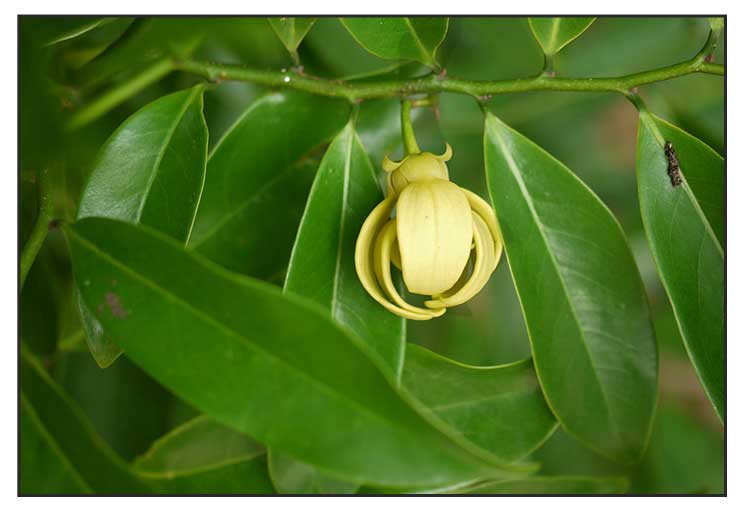
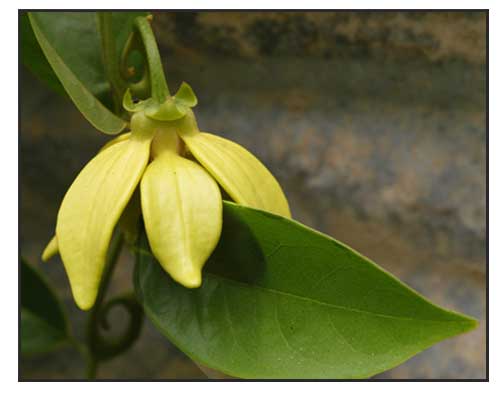
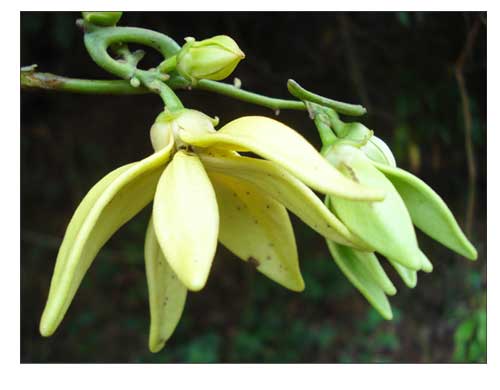
• Artabotrys hexapetalus is a climbing vine or scandent shrub that can reach up to 6 m tall. The plant is a shrub when young, becoming a climber when it attains a height of about 2 meters. Young twigs are densely appressed, brown and hairy, while old twigs have many obtuse thorny branches, 1.5-6 cm long. Leaves are 5 to 25 cm by 2.5 to 8 cm, wedge-shaped at the base, acute at the apex, short, acuminate with 0.4 to 0.8 cm long petiole. Flower is solitary or in pairs on a straight peduncle, later thickened and recurved. Sepals are ovate triangular, about 5 mm long and hairy outside. Outer petals are 3.7 to 4.5 cm by 0.9 to 1.6 cm; inner petals 3.2-4.2 cm by 0.9 to 1.2 cm, green turning bright yellow and with 20-30 carpels. Carpels are monocarp, obovoid, mucronate, 3.5 to 5 cm long, yellow, and a pleasant fruity fragrance. (11)
• Growth form: A woody climber, it can grow up to 10m in height. Foliage: Leaves are oblong to broadly lanceolate in shape with an acuminate to acute leaf tip. The leaf base is cuneate to acute. Flowers: Bisexual flowers are fragrant ans are borne on 1 to 2-flowered inflorescences. The sepals are green and ovate while the petals are yellow. (Flora & Fauna Web)
Distribution
-
Native to the Philippiines. (24)
- Listed by POWO as introduced. (1)
- In Luzon: Batangas, Rizal.
- Native to
Comoros, India, Laos, Sri Lanka.
- Indigenous in southern India and Sri Lanka, later introduced throughout the Old World tropics.
 Constituents Constituents
- Study of leaves yielded two new flavonol glycosides, artabotryside A (1) and artabotryside-B (2) along with three known flavonoids, taxifolin (3), 7-O-glucoluteolin (4), apigenin-7-O-apiosyl(1-->2) glycoside (5), and two organic acids, succinic (6) and fumaric aid(7). (3)
- Dried extracts of Arbotrys hexapetalus yielded quercetin in the range of 0.35%-4.26% (w/w) and apigenin 0.64%-8.46% (w/w). (4)
- Study of hexane extract of leaves isolated four aliphatic compounds, namely: monotricont-6-ene-25-ol (1), monotriacontan-13-ol (2), heptylundecyl-5-enoate (3), and butanone-3-undecylicosanoate (4).
(7)
- Study of roots isolated seven pairs of sesquiterpenes (1a/1b-7a/7b), a new peroxybridge sesquiterpene (8), and a new peroxy-bridge norsesquiterpene (9), together with five known compounds. (see study below)
(8)
- Study of seeds isolated eight compounds, identified as four neolignans, isoamericanin A (1), isoamericanol A (2), americanin B (3), and artabotrycinol (4), a semiterpenoid, (R)-artabotriol (5), along with palmitic acid (6), beta-sitosterol (7), and daucosterol (8).
(9)
- Flower yields a light, watery, transparent, sweet, and delicate pale yellow essential oil. The EO contains benzyl acetate, benzyl benzoate, linalool, caryophyllene, geranyl acetate, methyl benzoate, p-cresyl methyl ester, safrole, etc.
- GC and GC/MS analysis of A. hexapetalus flower essential oil yielded 26 components of the oil including sesquiterpene hydrocarbons (33.3% of the oil) and oxygenated sesquiterpenoids (47.7%).
Major components were identified as ß-caryophyllene (11.4%) and caryophyllene oxide (31.5%).
(15)
- Study of leaves yielded two novel flavonol glycosides named arapetaloside A and B, along with three known flavonoids, taxifolin, apigenin-7-O-apiosyl (1 fwdarw 2) glucoside ad glucoluteolin.
(22)
- Numerous bioactive natural products have been isolated from the plant, mainly mainly aporphine (artabonatines, artacinatine) and benzylisoquinoline (hexapetalines) alkaloids, terpenoids (artaboterpenoids), flavonoids (artabotrysides), butanolides (uncinine, artapetalins) and a small series of endoperoxides known as yingzhaosu A-to-D. (see study below) (27)
- GC-MS analysis of flowers for essential oil yielded major compounds of ethyl acetate (63.6%), isobutyl acetate (29.4%), and ethyl benzoate (14.2%). The EO consisted of predominantly oxygenated sesquiterpenes (52.91%), sesquiterpenes (43.31%), and small amounts of monoterpenes (1.24%) and other compounds (1.34%). (see study below) (31)
 Properties Properties
- The yellow flowers are very fragrant; greenish in the beginning and turning yellow with age. The plant is a shrub when young, turning into a climber once it attains a height of about 2 meters.
-
Considered antidepressant, mood elevator, antiseborrheic, antiseptic, aphrodisiac, hypotensive, hair revitalizer.
- Studies have suggested anthelmintic, cytotoxic, antileishmanial, antioxidant, anticancer, radical scavenging, antifertility, antiviral, antimalarial, antioxidant, anti-inflammatory, antipyretic, mosquito repellent, hepaptoprotective properties.
Parts used
Fruits, roots, leaves, bark, essential oil.
Uses
Edibility
- Although primarily used as medicine and for fragrance, the fruits are reportedly edible. When ripe, fruits are black or purplish red, with a tart and pleasant aroma. Also used for making tea. Flowers used to scent teas.
Folkloric
- In Chinese folk medicine, root and fruits used in treatment of malaria and scrofula, respectively. (3)
- Tribal communities of India use the plant for treatment of cholera and worm infestation. (5)
- In Asian folk medicine, used for treatment of fevers, microbial infections, liver disorders. (27)
- In India, fruits and bark used for treating fever, diarrhea, flatulence, cough, and bronchial asthma. Leaf decoction used as anthelmintic, antibacterial, antifungal, anti-inflammatory, muscle-relaxant, expectorant and cardiac stimulant. (28)
Others
- Essential oil / perfumery: Flowers yield an essential oil used in perfumes, deodorants, beauty soaps, shampoos, skin and hair lotions and creams. (4) In India and Sri Lanka, flowers are used in perfumery industries as source of essential oils.
- Fiber: Plant yields fiber.
Studies
• Antileishmania Activity / Apigenin and Quercetin: Study evaluated the antileishmanic effects of different extracts of A. hexapetalus against Leishmania donovani. Dried extracts yielded quercetin in the range of 0.35%-4.26% (w/w) and apigenin 0.64%-8.46%. Cytotoxicity assay of extracts over promastigotes showed the petroleum ether extract to be most cytotoxic with IC50 10.28 ± 1.06 µg/mL. Results showed the plant is effective against L. donovani in vitro. (4)
• Antidiarrheal / Anthelmintic Activity: Study of the aromatic plant in experimental models showed antidiarrheal and anthelmintic effects. (5)
• Antimicrobial against Storage Fungi and Aflatoxin B1 Secretion: / Essential Oil: Study evaluated the essential oil for antifungal activity against some storage fungi contamination of food stuffs. Results showed EO MIC of 750 µL/L against Aspergillus flavus, superior to prevalent synthetic fungicides. The EO exhibited broad fungitoxic spectrum against 14 different storage fungi. Also, the EO showed significant efficacy in arresting aflatoxin B1 secretion by the toxigenic strain of A. flavus. (6)
• Antiviral / Cytotoxic / Roots: Study of roots isolated seven pairs of sesquiterpenes (1a/1b-7a/7b), a new peroxybridge sesquiterpene (8), and a new peroxy-bridge norsesquiterpene (9), together with five known compounds. Compounds 1a, 1b, 12a-12d, and 14 sowed moderate antiviral activity against Coxsackie virus B3 with IC50s of 6.41-33.33 µM and S1 values >2.1. Compounds 5b, 8, and 12a exhibited weak activity against influenza virus A H3N2 with IC50s range from 19.24 to 33.33 µM and S1 values > 3.0. Compound 12c exhibited selective cytotoxicity against A2780 cell line with IC50 of 8.30 µM, while compound 12d showed potent activity against HCT-116, HepG2, and A2780 cell lines with IC50 of 3.24, 3.23, and 3.14 µM, respectively. (8)
• Copper Nanoparticles / Antibacterial: Study reports on the green synthesis of CuO nanoparticles using Artobotrys hexapetalus and Bambusa vulgaris plant extracts as reducing agents. The antibacterial activity of both prepared CuO nanoparticles was evaluated against gram-negative E. coli pathogen. (10)
• Antimicrobial / Antioxidant / Anticancer / Leaves: Study revealed antimicrobial, antioxidant and anticancer potential by invitro assay of Artabotrys hexapetalus leaves. Compared to other solvent extracts, the methanol extract yielded the higher phenolic content (49.15 µg/mg), flavonoid content (49.15 µg/mg) and potential antioxidant capacity (IC50 of 10.15 ± 0.85 µg/mg). Trisaccharide, n-hexadecanoic acid was isolated. The trisaccharide and partially separated fractions yielded higher antioxidant, anticancer (MCF-7) and antimicrobial activity. Results suggest potential for a new biological agent from A. hexapetalus leaves. (12)
• Preparation of Essential Oil Microcapsule / Antibacterial / Invention: Invention relates to the preparation method and application of Artabotrys hexapetalus essential oil microcapsule The obtained A. hexapetalus EO is in powder form, relatively good in water solubility and stability, high in embedding rate, and slow to release, with significant antibacterial activity, with potential application in chemicals and medicines. (14)
• Radical Scavenging Activity / Phenolic Content / Leaves: Study of leaf extract of A. hexapetalus showed 83.17% DPPH scavenging activity. Total phenol content was 123.138 µgGAE/µg and flavonoid content of 279.640 µgRutin/µg. (16)
• Absence of Anthelmintic Activity / Leaves: Study of a hydoalcoholic extract of Artabotrys hexapetalus leaves did not show anthelmintic activity against African adult earthworm Eudrilus eugeniae. (17)
• Novel Lipid Constituents / Antimicrobial / Leaves: Study of unsaponifiable matter extract from leaves of A. odoratissimus isolated novel lipids by using n-hexane. Two known compounds, one new carboxyester, 1-carboxy-heneicosane pentadecanoate, and two monoesters, hexyl pentaicosanoate and pentyl pentaicosanoate, were identified. The isolated compounds showed variable antimicrobial activity (18)
• Antibacterial / Cytotoxicity / Essential Oil: Study evaluated the chemical constituents and bioactivity of essential oil from A. hexapetalus. GC-MS analysis detected 68 chromatographic peaks and identified 53 compounds. The EO showed inhibitory activity against S. aureus, E. coli, B. subtilis and exhibited higher activity to restrain liver cancer cells (BEL-7402) with IC50s of 12.07 mg/L. (19)
• Anthelmintic / Cytotoxicity / Bark: Study of a methanolic bark extract of A. hexapetalus showed in-vitro anthelmintic activity using Pheretima posthuma and cytotoxic activity using brine shrimp lethality bioassay. (20)
• Sesquiterpenoids / Cytotoxicity against Cancer Cell Lines / Roots: Study of roots isolated artaboterpenoids A and B (1 and 2), two novel bisabolene-derived sesquiterpenoids. Compound 2a exhibited cytotoxic effects against HCT-116, HepG2, A2780, NCI-H1650, and BGC-823 cell lines with IC50s of 1.38 to 8.19 µM. (21)
• Antifertility / Leaves: Study evaluated various extracts of A. odoratissimus and C. guianensis for antifertility activity in adult female rats measuring effect on duration of various stages of estrus cycle and number of transplantation sites in pregnant rats. The ethanol and water extracts of A. odoratissimus leaves showed anti-implantation effect. The disturbance in implantation may be due to interference in the receptive stage of the uteri and endometrial sensitivity for decidualisation. (23)
• Antimalarial / Yingzhaosu Endoperoxides: Roots and fruits of the plant have been used for treating malaria. Numerous bioactive natural products have been isolated from the plant, including a small series of endoperoxides known as yingzhaosu A-to-D. The lead compound yinghaosu A exhibits marked activities against malarial parasites Plasmodium falciparum and P. berghei. The mechanism of action of yingzhaosu A points to an iron (II)-induced degradation leading to formation of two alkylating species, an unsaturated ketone and a cyclohexyl radical, which can react with vital parasitic proteins. Study suggests yingzhaosu A/C represents useful templates for designing novel antimalarial drugs. (see constituents above) (27)
• Antioxidant / Analgesic / Antipyretic / Leaves: Study evaluated some pharmacological properties of leaves along with in silico analysis. The extract was found to possess good amounts of phenolics, flavonoids, and tannins. It showed good radical scavenging effects along with ferric chloride-reducing capabilities. In analgesic tests, it showed excellent responses in writhing inhibition and elongation of tail withdrawal time. Extract also significantly lessened paw edema and a notable decrease in temperature. The extract exhibited notable analgesic, anti-inflammatory, and antipyretic activities. Admet analysis to assess safety profiles analyzed 18 ligands, of which 7 adhered to Lipinski's rule of five and proposed as lead compounds: apigenin, cadinol, kaempferol, myricetin, quercetin, taxifolin, and cosmosiin. (28)
• Hepatoprotective / Ethanol and Drug Hepatotoxicities / Leaves: Study evaluated the antioxidant and hepatoprotective properties of ethanolic extract of leaves against paracetamol (PCT), ethanol (ETN), and isoniazid and rifampicin (IR)-induced hepatotoxicities in albino wister rats. The altered levels of biomarkers were restored to near-normal levels in a dose-dependent manner after treatment with A. hexapetalus ethanolic leaf extract (100 mg, 100 mg, and 400 mg/kbw). Results suggest potent antioxidant and hepatoprotective properties. (29)
• Mosquito Repellency / Essential Oil / Leaves and Stem Bark: Study evaluated the chemical composition and mosquito repellent properties of A. hexapetalus. Hydrodistillation of leaves and stem bark of A. hexpetalus yielded essential oil with high amount of ß-caryophyllene oxide from the bark, while leaves yielded both ß-caryophyllene oxide and 11-hexadcyn-1-ol as main components. The EO from leaves of A. hexapetalus showed strong mosquito repellent activity. Repellency activity of EO from leaves were significantly higher than stem bark, but less than standard citronella oil. The mosquito repellent activity was attributed to presence of ß-caryophyllene oxide. (30)
• Antibacterial / Flower Essential Oil: GC-MS analysis of flowers for essential oil yielded major compounds of ethyl acetate (63.6%), isobutyl acetate (29.4%), and ethyl benzoate (14.2%). The EO showed antibacterial activity against bacterial strains of Streptococcus pneumonia, Staphylococcus aureus, Streptococcus pyogenes and Pseudomonas aeruginosa with ZOIs of 16.4, 15.7, 17.5, and 14.5 mm and MICs of 2.5, 5.0, 2.5, and 5.0 mg/ml respectively. Molecular docking analysis indicated the EO constituents are nucleic acid and cell wall synthesis inhibitors, worth the inclusion in cosmetics and fragrances. (31)
• Cytotoxicity Against Cancer Cell Lines / Bioactive Benzylisoquinoline Alkaloids / Stems: Study of stems isolated two new benzylisoquinoline alkaloids, hexapetalines A and B (1 and 2), along with 11 known alkaloids. The new compounds were evaluated for cytotoxicities against 5 human cancer cell lines: HL-60, SMMC-7721, A-549, MCF-7, and SW480 in vitro. Alkaloids 1 and 2 exhibited inhibitory effects with IC50s comparable to cisplatin. (32)
Availability
- Wild-crafted.
- Cultivated.
|


