|
Gen info
- Spathodea is a monotypic genus in the flowering plant family Bignonaceae—Spathodea campanulata is its single species. (54)
- Etymology:
Spathodea campanulata derives from the Greek words spathodea meaning 'spathe' (blade), referring to the shape of the corolla and calices, while campanulata describes the bell-shape of the flower. (40)
- S. campanulata has been nominated to the 100 of the "World's Worst" invaders.
It is planted extensively throughout the tropic for its showy and colorful flowers. (54)
- It was identified by the Europeans in 1787 on the Gold Coast of Africa.
Botany
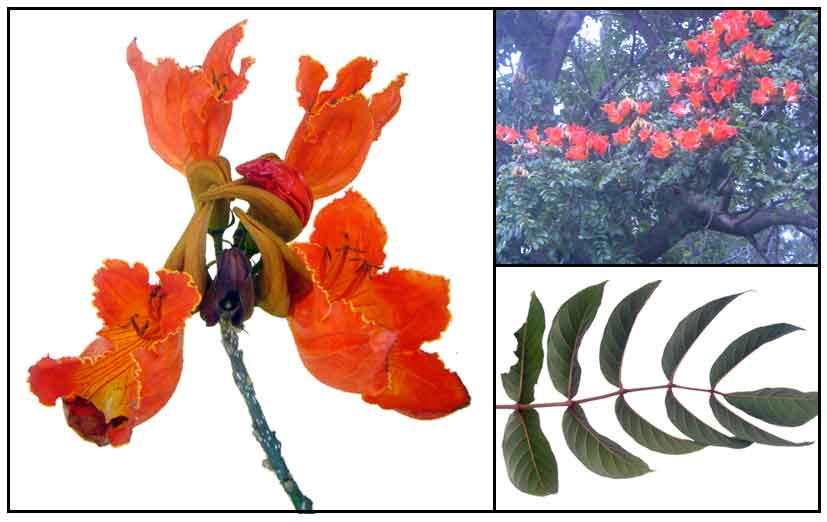
Spathodea campanulata is a robust tree, growing to a height of 20 meters, with a dense, dark, shining, green crown. Leaves
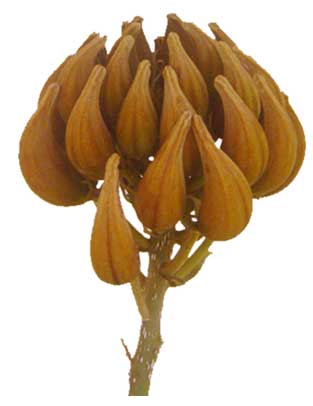
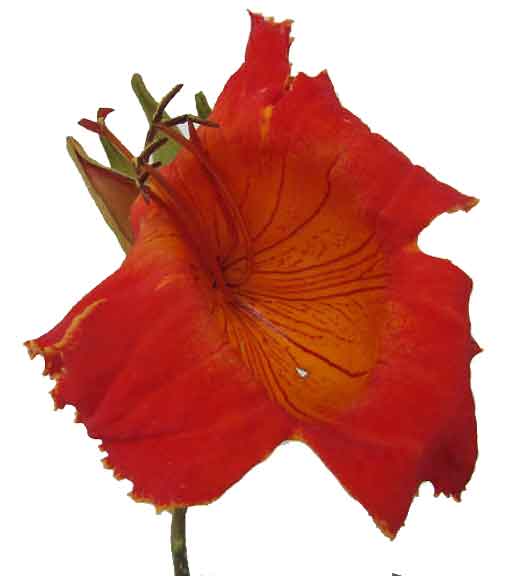
are pinnately compound, 20 to 25 centimeters long, divided into 5 to 8 pairs of leaflets. Leaflets are elliptic-oblong, 7.5 to 11 centimeters long, and 3.5 to 7 centimeters wide, with a pointed tip, and several glands along the midrib near the base. Flower bud is ampule-shaped and contains water. Flowers are large, bell-shaped, up to 10 centimeters long and 5 centimeters wide, borne in terminal, erect inflorescences (racemes), with a peculiar smell. Calyx is spathe-like, strongly curved, brownish, velvety-smooth, and split nearly to the base on one side. Corolla is curved, the tube being narrow below, but strongly inflated and 5-lobed above, scarlet or crimson red, with yellow, frilled edges. Pods are firm, thick, dark-brown, and 15 to 20 centimeters long. Seed is about 2.5 centimeters wide, with a broad, silvery white, transparent wing.
Distribution
- F Widely distributed in Luzon, thriving well in elevations up to 1,500 m.
- Found in parks, gardens and along roadsides.
- Cultivated in the Philippines for ornamental purposes.
- Native of tropical Africa.
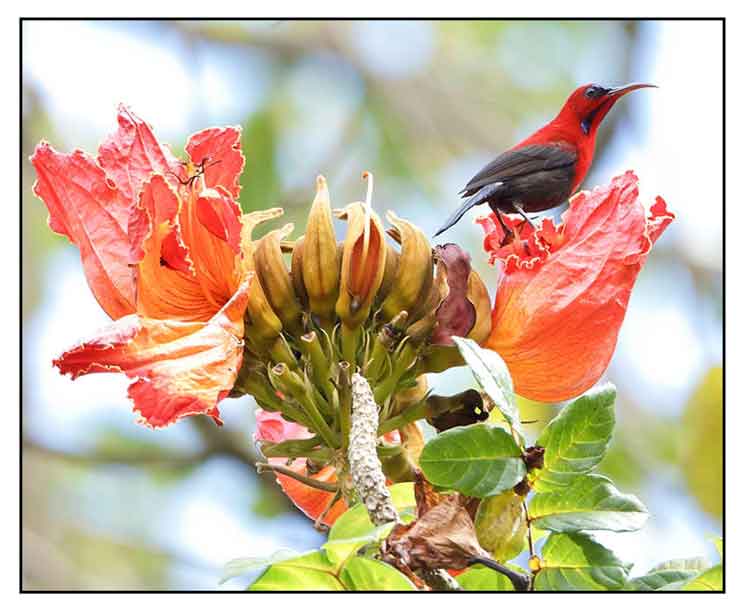
| In some Tagalog areas, plant referred to as "sirit-sirit" because of the ampule-shaped flower bud containing water, children delighting in the play squirting each other with water. Cup-shaped open flowers holding rain and dew are an attraction for some birds. |
 Constituents Constituents
- Phytochemical studies yield alkaloids,
tannin, saponin, steroids, terpenoids, flavonoids.
- Study to analyze the active constituents of the flower yielded four compounds. Butane, 1, 1-diethoxy-3-methyl- (35.11 %) and n-Hexadecanoic acid (30.22%) were the major constituents of the ethanolic extract. (10)
- Study of stem-bark has yielded spathodic acid, steroids, saponins, ursolic acid, tomentosolic acid and pectic substances.
- Phytochemical screening yielded carbohydrates, alkaloids, tannins, glycosides in the extracts of flowers, and steroids, carbohydrates, proteins, tannins, glycosides, and alkaloids in the bark. (19)
- Study of ethanol extract of leaves
yielded Z,Z-6,28-heptatriactontadien-2-one (1), phytol (2), Z,Z-6,28-heptatriactontadien-2-one (3), 7-pentyl bicyclo[4.1.0]heptane (4), squalene (5), 1,1,3,3,5,5,7,7,9,9,11,11-dodecamethyl- hexasiloxane (6), 2,4,4-trimethyl-3-dihydroxymethyl-5A-(3-methyl-but-2-enyl)-cyclohexe (7), longiverbenone (8). (30)
- Phytochemical screening of ethanol extract of leaves yielded alkaloids, saponins, steroids, anthraquinone glycosides, flavanoids, triterpenoids, and tannins. (see study below) (34)
- Study for fatty acid profile yielded
myristic acid 2.09 ± 0.41%, palmitic 23.32 ± 6.73%, palmitoleic 2.07 ± 0.36%. stearic 17.47 ± 5.16%; oleic 23.50 ± 9.58%, arachidic 13.10 ± 0.80%, gondoic 11.17 ± 7.98%, behenic 3.64 ± 1.85%, erucic 2.40 ± 0.97%, and lignoceric 2.79 ± 1.05%, with absence of linoleic acid and lauric acid. (see study below) (40)
- Study
of leaves isolated three new and four known iridoid: The new compounds were 6-O-trans- caffeoyl-decinnamoyl globularimin, 6-O-trans-caffeoyl-asystasioside E and 6-O-trans-caffeoyl-5,7-bisdeoxycynanchoside, and named as spatheosides A (1), B (2) and C (3), respectively. The known iridoids were verminoside (4), 6'-O-trans-caffeoyl-loganic acid (5), catalpol (6) and ajugol (7). (43)
Properties
- Vulnerary, anti-diabetic, anti-inflammatory, anti-ulcer.
- Plant stem-bark considered anti-hyperglycemic, anti-malarial, wound healing and antioxidant.
- Studies have shown antimicrobial, hypoglycemic, antimalarial, wound healing, antifungal, analgesic, anti-inflammatory, antimalarial, nephroprotective, antioxidant, anticonvulsant properties.
Parts utilized
Leaves,
root-bark, stems, fruit.
Uses
Edibility
• Winged seeds are reported to be edible.
Folkloric
• Bark decoction used for gastrointestinal troubles, dysentery, and constipation.
• Fresh or dried and pulverized bark is commonly used as a dressing for ulcers and skin diseases, applied dried, pulverized, or as fresh inner bark. A leaf decoction is used as lotion. Bruised leaves and flowers applied to wounds. (49)
• In Africa, the
stem bark is used as a paste for wound healing.
• In Senegal, bruised leaves and flowers are applied to wounds.
• In Gabon, flowers are applied to ulcers.
• In Southern Nigeria, leaves used for convulsions.
• In Gold Coast, bark decoction taken for constipation and gastrointestinal problems and dysentery.
• Cold infusion of leaves used for urethral inflammation.
• In Ghana, the
stem bark and leaf used for treatment of dyspepsia and peptic ulcer;
leaf, root bark and fruit used for arthritis and fractures; the stem
bark used for toothaches and stomachaches; root bark seed used for stomach
ulcers.
• In Rwanda, decoction of
stem bark used for diabetes.
• In Ayurveda, used for kidney diseases.
• In Jamaican folklore medicine, fluid from immature flower bud used for treatment of glaucoma. (28)
• Bark is laxative and antiseptic. Bark decoction used for bathing newly born babies to heal body rashes. (39)
• In Cameroon, plant used for treatment of malaria, mental disorders, and hemorrhoids. (42) Bark used for the treatment of chicken pox and genital herpes. For chicken pox, bath is taken with decoction mixture of ground stalks of Costus afer and barks of Pteleopsis hylodendron and Spathodea campanulata. For genital herpes, bath is taken with mixed decoction of ground stalk of C. afer and bark of S. campanulata. (41)
• In Nigeria. flower bud exudates used as local eye drop, anecdotally claimed to improve vision. (47)
- In Africa, stem bark used to treat malaria. In India and Africa, leaves used for skin disorders. Leaves used to treat asthma, epilepsy, liver disorders, measles and sore throat. Roots used for worm infections, stomach ache, dysentery, hallucinations. Flowers used as antidote against animal poison and cataracts (53)
Others
• Paper: In Singapore, timber is used for making paper.
• Wood: In West Africa, wood used for making drums and blacksmith's bellows.
• Poison: African hunters reported to extract arrow poison from seeds. (•) Hard central portion of the fruit reported used to kill animals. (39)
• Children's Play: Buds contain a watery liquid, which children pierce and squeeze to squirt out the fluid like water pistols.
• Dyes: Flowers yield a natural dye, producing a brown solution.
Studies
• Antimicrobial / Stem Bark:
Extracts of the sun-dried bark of Spathodea campanulata was tested
against B. subtilis, E coli, P aeruginosa and S aureus. The methanol
extract showed the best antibacterial activity. The antifungal activity
of the ME was reduced upon storage while the antibacterial activity
was unaffected.(1)
• Antibacterial / Bovine Mastitis: Study showed antibacterial activity of methanolic
and aqueous extracts against bovine mastitis pathogens. (2)
• Antibacterial: Study of
petroleum leaf extracts showed good inhibitory activity against Klebsiella
pneumonia compared with standard antibiotic Streptomycin. (3)
• Hypoglycemic / Stem Bark:
Decoction of stem bark of SC showed a hypoglycemic effect in streptozocin-induced diabetic rats and decreased blood glucose in GTT testing. However, there was no effect noted on insulin levels. (4)
 • Antimalarial / Schizonticidal Activity / Leaves: Alcoholic extract of leaves of S campanulata showed antiplasmodial activity, more effective in early infection than established one. Results provide scientific basis for use of the aqueous decoction of leaves for treatment of malaria. (5) • Antimalarial / Schizonticidal Activity / Leaves: Alcoholic extract of leaves of S campanulata showed antiplasmodial activity, more effective in early infection than established one. Results provide scientific basis for use of the aqueous decoction of leaves for treatment of malaria. (5)
• Healing Activity / Burn Wounds:
Study evaluated the burn healing efficacy of ointment formulation from methanolic extract of barks in experimental burn model in rats. Topical application (2%, 10%, and 49%) dose-dependently decreased the score of damage on the burn site. Results showed a healing activity on burn wounds and provides rational basis for its traditional use in promoting wound healing. (6)
• Antifungal:
Study of roots of SC yielded an iridoid glycoside (ajugol) and two phenolic derivatives. The phenolic constituents displayed biological activity against C herbarum. (7)
• Analgesic / Anti-Inflammatory:
Study of leaf extracts of S campanulata showed both analgesic and anti-inflammatory properties and presents a potential use for alleviating painful inflammatory conditions. (8)
• Anti-Solar:
Excessive exposure to sunlight can lead to painful sunburn and other skin-related problems. Study evaluated the UV absorption ability of flowers from Spathodea campanulata as an anti-solar agent. Results showed the plant to have an ability to absorb UV radiation, hence, a UV protection ability, It shows a potential for prophylactic utility in anti-solar formulations and a safer and cheaper alternative to chemical sunscreens. (11)
• Anticonvulsant / Glycoside / Leaves: Study of an ethanol leaf extract yielded a glycoside: urs-12-en-27�, 30 di-oic acid 3-0-�-L- rhamnopyranosyl (1�2) �-L- arabinopyranoside. The compound exhibited significant abolition of seizures induced by PTZ and maximal electro shock seizures. (12)
• Dye / Flower:
Study of the flower yielded a dye that can be successfully used for dyeing silk and cotton to obtain a wide range of soft, pastel and light colors with the use of natural and metallic mordants. (13)
• Antimicrobial / Leaf and Flower:
Study of the ethanol extract of leaf and flower was tested for antimicrobial activity against against gram positive and gram negative organisms like Escherichia coli, Klebsiella pneumonia, Proteus vulgaris, Pseudomonas sps, Salmonella typhimurium, Bacillus subtilis, Staphylococcus aureus, Vibrio cholera. Results showed dose-dependent antimicrobial activity, with the ethanol flower extract showing more potency than the leaf extract. Activity is attributed to flavonoids and tannins. (14)
• Wound Healing / Topical Formulation:
The wound healing potential of a methanol extract of stem bark was tested in Sprague Dawley rats using an excision wound model. A cream formulation showed wound healing facilitation. Results justified the folkloric use of stem bark for wound treatment. (15)
• Nephroprotective / Paracetamol Induced Toxicity / Bark:
Study evaluated a 70% ethanolic extract of bark of Spathodea campanulata on paracetamol induced nephrotoxicity in rats,Pretreatment ameliorated the effect of paracetamol on lipid peroxide formation and showed a decrease in serum marker enzymes. Histopathological exam showed restoration of renal architecture. Results showed pretreatment benefits in preventing kidney damage induced by paracetamol nephrotoxicity. (16)
• Acute and Sub-Chronic Toxicity Studies / Leaves:
Study evaluated an ethanol extract of leaf for safety in Swiss albino mice. Results obtained in hematological, biochemical, hepatorenal parameters, antioxidant activities and histological findings suggests non-toxicity of the extract. (17) Study
evaluated an ethanol leaf extract for acute and subchronic toxicities in rats. For acute toxicity study, 1000-1500 mg/kg of leaf extract was used and for subchronic study, 750-3000 mg/kg extract was administered for 90 days. The LD50 of the extract was 4466.64 mg/kg. There was no mortality during the period of study but the animals showed sings of anorexia, weakness, sluggishness, and significant (p<0.05) reduction in food and water intake and body weight. The extract caused significant (p<0.05) increase in AST, ALT, and ALP. The changes showed recovery 28 days post treatment. Results suggest a safety profile for the ethanol leaf extract and supports its use in the treatment of epilepsy. (45)
• Hepatoprotective / Stem Bark:
Study evaluated the hepatoprotective and curative potential of an aqueous extract of stem bark of S. campanulata in carbon tetrachloride-induced model of hepatotoxicity in rats. Results showed significant reversal of CCl4 hepatic damage in rats. (18)
• Phytochemical Screening / Anti-Malarial:
Study of organic leaf extracts yielded alkaloids, flavonoids, saponins, tannins, steroids, and terpenoids. An ethanol fraction exhibited very good antiplasmodial activity against both chloroquine sensitive and resistant Plasmodium falcifarum isolates. (20)
• Antioxidant / Prevention of T-Booh and H2O2-Induced DNA Damage: In this study, antioxidant rich dietary sources in leaves and flowers were used to prevent DNA damage induced by t-butyl hydroperoxide and hydrogen peroxide. The antioxidants present in the ethanol extract of leaves and flowers effectively prevented DNA damage. (21)
• Sunscreen / Gel Formulation for UV Protection:
Study was designed to prepare sunscreen herbal gel formulations of H. rosa-sinenesis, R. damascena, and Spathodea campanulata. All three flavonoid containing herbal drugs exhibited sunscreen activity which was attributed to the free radical scavenging properties of polyphenols in the extracts. (22)
• Larvicidal and Pupicidal Activities Against Dengue Vector Aedes Aegypti:
An aqueous leaf extract exhibited potent larvicidal, pupicidal property along with morphogenetic effects against dengue vector Aedes aegypti. Results showed an alternative environmental friendly insecticidal formulation for an effective vector control strategy. (23)
• Antioxidant / Nephroprotective / Bark / Gentamicin:
Study showed pretreatment with an ethanolic extract of bark may be helpful in preventing damage induced by gentamicin in rat kidneys. (24)
• Antioxidant / Bark and Flowers: Study of S. campanulata bark and flower extracts showed antioxidant activity on lipid peroxidation of liver microsome induced by Fe3-ascorbic acid. The bark extract was 5 times more efficient than the flower extract. Results suggest an antioxidant mechanism other than Fe+ complex formation. (26)
• Acute Oral Toxicity Study / Bark: Study in rats evaluated the acute oral toxicity of herbal extract of S. campanulata bark as per OECD 425 guideline. The bark extract was found safe at dose of 2000 mg/kg. (27)
• Decreased Intraocular Pressure / Fluid from Immature Flower Bud: Study investigated the effect of fluid from immature flower bud on intraocular pressure (IOP) of dogs. Crude sample of the fluid topically applied to the eye elicited a dose dependent response with peak activity (32% reduction in IOP) within 45 minutes of administration. (28)
• Larvicidal / Smoke Repellent Activity Against
Malarial Vector A. stephensi: Study evaluated the larvicidal and smoke repellent potential of S. campanulata against malarial vector, Anopheles stephensi. Leaf extracts showed larvicidal and pupicidal activity while leaves and pods showed enhanced activity in smoke repellency test. Results suggest an potential alternative to conventional synthetic insecticides. (29)
• Weak Antiproliferative Activity / Antimicrobial / Flower: Study evaluated in in vitro antimicrobial and antiproliferative activities of three plant extracts i.e., Spathodea campanulata flowers, Ficus bubu stem bark and leaves, and Carica papaya latex. S. campanulata flower extract showed potent activity against E. faecalis and K. pneumonia with MICs of 39.1 and 156.2 µg/ml, respectively. The flower extract showed weak activity against all tested human cancer cell lines i.e., U373 glioblastoma, A 549 NSCLC, and SKMEl-28 melanoma. (31)
• Antidiabetic Activity/ Stem Bark: Study evaluated S. campanulata stem bark for secondary metabolites and evaluated serial solvent fractions for antidiabetic activity. The secondary metabolites were composed of 7.5% alkaloids, 10% flavonoids, 13% tannins and 17% saponins per gram of plant material. All the fractions exhibited nominal reduction of hyperglycemia. Except for the hexane and EA fraction, all fractions showed percentage reductions of glucose greater than that of control at experimental doses. Greatest reduction of hyperglycemia was observed in the residual aqueous fraction. (32)
• Toxicity Against Immature Stages of Anopheles albimanus: Study evaluated the effects of African tulip aqueous extracts on every immature stage of A. albimanus under laboratory conditions. The highest inhibition (87.5%) was recorded for egg hatching at 50% concentration. Results suggest promise as S. campanulata as biolarvicides. (33)
• Free Radical Scavenging / Leaves: Study evaluated the antioxidant activity of ethanol extract of S. campanulata leaves in different model systems. The EE of leaves showed significant dose dependent antioxidant activity, with direct relationship between activity and extract concentration. The extract showed effective free radical scavenging activity towards nitric oxide and superoxide radicals with IC50s of 160 and 198 µg/ml, respectively. (34)
• Wound Healing / Topical Formulation of Stem Bark: Study evaluated the wound healing potential of S. campanulata stem bark in Sprague Dawley rats using an excision wound model. A methanol extract contained glycosides, flavonoids, and tannins, and was relatively stable when stored at room temperature for six months. Solvent-free, semi-solid extract was incorporated into an aqueous cream (10% w/w and 20% w/w) was applied on excision wound of rats.
Cicatrin® cream was used as standard wound healing agent. Uninfected excision wounds treated with the 20% cream and Cicatrin® resulted in 95% wound closure on day-20 and complete closure on day-24. Infected excision wounds showed 91% wound closure on day-24 and complete wound contraction on day-28. (35)
• Comparative Study of Biochemical Changes in Alloxan Induced Diabetic Rats / Flowering Branches and Bark: Study evaluated the glucose lowering effect of flowering branch and bark extracts of SC and its possible mechanisms. Results showed the bark extract may have a prospective anti-hyperglycemic therapeutic effect in diabetes, which may be through modification of tissue expression of insulin receptors. (36)
• Silver Nanoparticles / Antioxidant / Antimicrobial / Leaves: Study reports on the eco-friendly green synthesis of silver nanoparticles from leaf extract of S. campanulata
. The nanoparticles showed antibacterial activity against Bacillus cereus and Actinomyces. Extract also showed antioxidant activity using DPPH and reducing power assay. (37)
• Anticonvulsant / Leaves: Study evaluated the anticonvulsant properties of ethanol leaf extract of SC in mice using, PTZ-, picrotoxin-, and electroshock-induced models in mice. Results showed administration of the extract prior to intraperitoneal administration of of PTZ and picrotoxin protected the mice against induced convulsions in a dose-dependent manner, with 100% protection at maximum dose of 1,000 mg/kg. The extract increased the threshold and decreased the duration of convulsive episodes. Results suggest anticonvulsant activity and that the extract is non-sedating with no anti-psychotic properties and may not affect motor coordination when used as anticonvulsant. (38)
• Antioxidant Activity / Phenolic and Fatty Acid Content: Study for antioxidant properties showed
antioxidant activity of 7.71± 2.49 mg gallic acid/g, 68.17 ± 4.84% free radical scavenging activity, and total phenolics of 12.50 ± 1.97 mg gallic acid/g. (see constituents above) (40)
• Iridoid Glucoside / Antifungal Phenolic Compounds / Roots: Study of roots peels yielded an iridoid glucoside (ajugo) and two phenolic derivatives (p-hydroxy-benzoic acid and methyl-p-hydroxy-benzoate). The bioactive constituents were evaluated against fungus Cladosporium herbarum. Results suggest the phenolic derivatives in the roots may play an important role in root tissues in defensive mechanisms against fungi and other organisms in tropical soil. (44)
• Effect of Toxic Nectar and Pollen on two Amazonian Stingless Bees: The plant is related to insect mortality, including bees. The study evaluated the effect of S. campanulata nectar and pollen on the survival of Melipona fasciculata and M. seminigra workers. Results showed the nectar and pollen affected the survival of both worker bees. Thus, the plant is not a recommended plant to provide food resources for stingless bees. (46)
• Effect on Cataractogenesis / Flower Bud Exudate: Study evaluated the anti-cataract activity of S. campanulata flower bud exudates against cataractogenesis using rat lenses. Preventive potential of the exudate against cataractogenesis was measured by antioxidant parameters (TP, GSH, MDA, SOD, and CAT) in the lens homogenates. Photographic evaluation of lenses showed development of cataract in the untreated group while opacification was retarded in higher dose exudate-treated and captopril treated lenses. Results suggest the S. campanulata elicited its anti-cataract potential through its antioxidant activities. (47)
• Antioxidant Effects / Leaves: Study evaluated the phytochemical and in vivo and in vitro antioxidant activities of air dried leaves. Qualitative screening yielded saponin, steroid, flavonoids, glycoside, alkaloids, phenol, tannin, terpenoids, phlobatannin and anthraquinone. Quantitatively, phytochemicals were more in ethanol extracts followed by aqueous, methanol, and least in petroleum ether extracts. In vitro antioxidant activities were exhibited by aqueous, ethanol, methanol and petroleum ether extracts in DPPH, hydroxyl scavenging, and ferric reducing assays. (48)
• ZnO Nanoparticles: Study reports on the cost-effective, eco-friendly and green synthesis of zinc oxide nanoparticles using a leaf extract of S. campanulata as reducing and stabilizing agent. (50)
• Antibacterial / Anti-H. pylori / Bark: Study evaluated crude extract and main fractions of S. campanulata bark against isolated strains of H. pylori. Several phenolics and triterpenoids were isolated. Among the sub-fractions, SB2 showed capacity to inhibit H. pylori urease in a heterologous bacterial model. Another sub-fraction, SB3 was able to simultaneously modulate the expression of two adhesins (JopZ and BabA) and one cytotoxin (CagA). The flavonoid kaempferol showed capacity to modulate H. pylori virulence factors. (51)
• Antitrypanosomal / Stem Bark: An in-vivo study showed antitrypanosomal effect of methanolic extract of stem bark of Spathodea campanulata using Trypanosoma brucei brucei-infected mice. S. Spathodeacampanulata showed moderate but significant reduction in parasitaemia level, 8 days post treatment. (52)
Availability
- Wild-crafted.
- Seeds in the cybermarket. |


