 Gen info Gen info
- Ludwigia is a genus of about 82 species of aquatic plants with a cosmopolitan but mainly tropical distribution. The classification of many Ludwigia species is still being debated among botanists and plant taxonomists.
- The genus Ludwigia was
named by Carl Linnaeus after Christian Gottlieb Ludwig (1709-1773). (18)
 Botany Botany
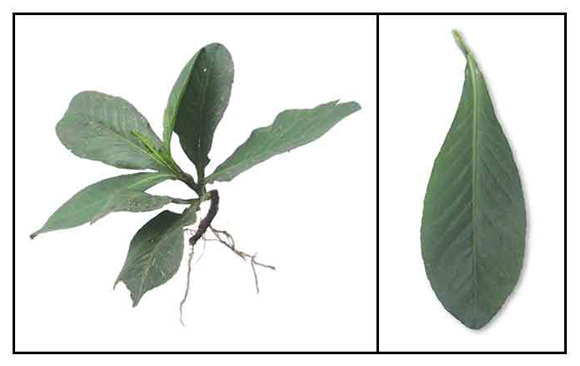
• Sigang-dagat is a perennial creeping
or floating, smooth herbaceous aquatic plant. Leaves are obovate to oblong-ovate, rounded or obtuse, 1.5 to
5 centimeters long, the floating stem frequently with cylindric white vesicles
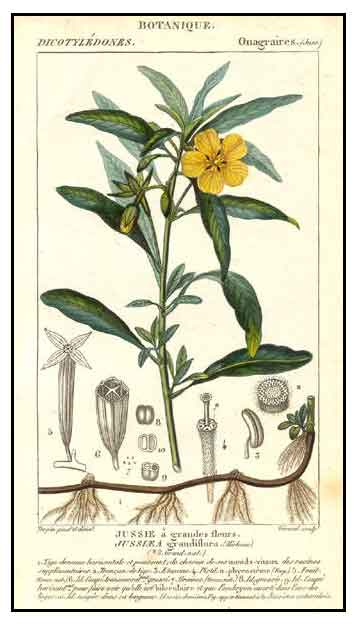
at the node. Flowers are 5-parted and borne in the axil of the leaves. Calyx-lobes
are lanceolate, about 7 millimeters long. Petals are obovate, white, pale yellow at
the base and about 12 millimeters long. Stamens are 8, inserted; ovary 4-celled. Fruits are capsular, linear, cylindric, 2 to 3 centimeters long, about 3 millimeters
in diameter, narrow at the base, and somewhat longitudinally ridged.
• Plant is a perennial floating herb with white spongy buoys, and can float on water surface as well as creep over the surface of wetlands. The plant has simple leaves with elliptic blades, which are 0.4–7 cm long and 0.7–3 cm wide. Its petioles are 0.5–1.0 cm short. Its cream flowers emerge singly at axils, and each have 5 sepals, 5 petals, and 10 stamems.
 Distribution Distribution
- Native to the Philippines.
-
In the shallow
water of quiet streams, in shallow lakes, and in fresh-water swamps throughout
the Philippines at low and medium altitudes.
- Common weed in rice paddies.
- Pantropic.
- Also native to Algeria, Angola, Assam, Bangladesh, Benin, Borneo, Botswana, Burkina, Burundi, Cambodia, Cameroon, Cape Provinces, Central African Republic, Chad, China South-Central, China Southeast, Congo, Cuba, Dominican Republic, DR Congo, East Himalaya, Egypt, Eritrea, Eswatini, Ethiopia, Free State, Gabon, Gambia, Ghana, Guinea, Guinea-Bissau, Hainan, Haiti, Honduras, India, Iraq, Ivory Coast, Jawa, Kenya, KwaZulu-Natal, Laos, Lebanon-Syria, Lesser Sunda Is., Libya, Madagascar, Malawi, Malaya, Mali, Maluku, Mauritania, Mauritius, Mexico Gulf, Mexico Northeast, Mexico Southwest, Mozambique, Myanmar, Namibia, Nansei-shoto, Nepal, New Guinea, Niger, Nigeria, Northern Provinces, Northern Territory, Pakistan, Palestine, Rwanda, Réunion, Senegal, Sierra Leone, Sinai, Sri Lanka, Sudan-South Sudan, Sulawesi, Sumatera, Taiwan, Tanzania, Thailand, Togo, Türkey, Uganda, Vietnam, West Himalaya, Zambia, Zimbabwe. (10)
 Constituents Constituents
- Study of aerial parts of J. repens L. isolated a new acylated avicularin, avicularin 2''-(4'''-O-n-pentanoyl)-gallate (1) along with 12 metabolites, viz., trifolin 2''-O-gallate, quercetrin, guaijaverin, reynoutrin, juglanin, avicularin, hyperin, trifolin, hyperin 2''-O-gallate, rutin, kaempferol and quercetin.
- Leaves, stems and flower petals yield flavonoid glycosides, kaempferol-3-glucoside, quercetin-3-O-rhamnoglucoside (rutin), quercetin-3-galactoside, mericetin-3-rhamnoside and isosalipurposide. Plant also yields terpenes, triterpenoids, flavonoids, anthraquinones, phenols, tannins, alkaloids, ursolic acid, carbohydrates, and proteins. (Ghani, 2003)
(6)
- Air-dried powder of L. adscendens yielded squalene (1), betulonic acid (2), betulin (3), betulinic acid (4), a mixture of (24R)-6b-hydroxy-stigmast-4-en-3-one and (22E,24R)-6b-hydroxy-stigmast- 4,22-dien-3-one (5a and b), pteleoellagic acid (6), 3,30,40-tri-O- methyl ellagic acid (7), dihydroquercetin or (þ)-trans taxifolin (8), quercetin (9), protocatechuic acid (10), afzelin (11), quercitrin (12), methyl gallate (13, gallic acid (14), and myricitrin (15). (7)
- Mineral content analysis (ppm) yielded Cu 0.019, Fe 2.633, Cr 0.001, Pb 0.11, Mn 3.618, Cd 0.017, Ca 22.4, Mg 2.28, Na 2.12, K 5.82, and Zn 2.39. ( 15)
- UPLC-MS/MS analysis identified a total of 168 metabolites including phenolics (57), flavonoids (26), terpenoids (25), sterols (23), fatty acids (11), coumarins (7) organic acids (5), sugar derivatives (5), lactones (4), acids (3), and glycoside (2). (see study below) ( 19)
Properties
- Antipyretic, diuretic,
blood refrigerant and antidote.
- Astringent, emetic, antidysenteric.
- Antibiotic, antiphlogistic, alleviates
swelling.
- Plain or sweet tasting, slightly cooling to refrigerant
in nature.
- Studies have suggested antioxidant, antibacterial, molluscicidal, contraceptive, antifertility, uterotonic, hematinic, anti-arthritic, anti-inflammatory, thrombolytic, membrane stabilizing, antidiabetic, anticancer, hepatoprotective, analagesic properties.
Parts
utilized
- Entire plant, leaves, stems.
 Uses Uses
Edibility
-Young shoots and leaves are edible; eaten as salad or cooked as vegetable.
-
In southwestern China,
plant is eaten as vegetable.
Folkloric
- Decoction of dried material used for colds with
fever, intense coughing, and inability to urinate.
-
Pounded
fresh material applied as poultice to carbuncle, sprains, and snake bites.
- In the Antilles,
used as an emollient.
-
Decoction used as astringent for dysentery.
- Malays used it for poulticing skin complaints.
- In Papua New Guinea, stems and leaves of the plant used as contraceptive.
- In India, leaf decoction with black pepper taken orally for stomach pain and treatment of intestinal worms. (15)
- In Thailand, decoction of whole plant used orally for fever and diarrhea. (16)
- In West Bengal, India, whole plant paste applied to bone fracture and rheumatism. (17)
- In Indo-china, crushed young shoots of L. adscendens are mixed with castor oil (Ricinus communis) for treatment of ringworm. In China decoction of aerial parts drunk for treatment of syphilis. (24)
Others
- Fodder concerns: In Indonesia, plant is reported to be dangerous for cattle, inducing gastroenteritis. However, in Indochina and Africa, considered a good fodder. (24)
- Agroforestry: In Peninsular Malaysia, Ludwigia is plowed under rice fields as green manure.
Studies
• Antioxidant:
Study showed crude extract and four fractions to show antioxidant activities,
most active in the rosmarinic acid, kaempferol and quercetin components. (1)
• Molluscicidal:
In a study of 43 plant species from 33 different families, 11 species, including J. repens showed molluscicidal activity against snails (Bullinus truncatus and Biomphalaria pfeifferi). (2)
• Flavonoids / Biologic Activities:
Study of an ethyl acetate extract of aerial parts yielded a new acylated avicularin along with 12 metabolites. (See above) The extract was non-toxic and exhibited significant antioxidant, hepatoprotective, anti-inflammatory and antidiabetic activities. Some of the isolated flavonoids showed cytotoxicity against Ehrlich ascites carcinoma cells. (4)
• Antioxidant / Mechanisms:
Study of three extracts for antioxidant effects showed the ethyl-acetate soluble fraction to have the highest antioxidant activity. Results showed rosmarinic acid,quercetin 3-O-β-D-glucopyranoside and kaempferol 3-O-β-D-glucopyranoside are the major antioxidant constituents, and the antioxidant activities of phenolics depended mainly on the number of hydrogen-donating hydroxyl groups on the aromatic ring of the phenolic molecules. (5)
• Antibacterial:
Study of methanolic extract of whole pants of Ludwigia adscendens showed a broad spectrum of antibacterial activity against all bacteria tested except Staphylococcus aureus. (6)
• Antifertility / Antigonadal Herbal Contraceptive:
Study evaluated crude aqueous extracts of J. repens on adult male albino Wistar rats. Results showed oral administration of extract may be considered a nontoxic antigonadal with dose- and duration-dependent male antifertility effects. (8) In a study that confirmed the anti-fertility effects of J. repens and potential as herbal male contraceptive, reversal studies caused recovery of reproductive parameters towards normal revealing the non-toxicity. (9)
• Uterotonic:
Study evaluated crude aqueous extract of J. repens (except roots) for effect on in vitro uterine contraction on isolated non-pregnant uterus of adult female rats in-vitro and compared it to oxytocin. Results showed significant increase in force and frequency of contraction than normal. The extract may act as oxytocin which is antagonized by atropine. J. repens extract acts as herbal uterotonic and can be applied after full term pregnancy. Results could justify the use of extract in traditional medicine to facilitate childbirth, milk ejection, placental expulsion, abortion, etc. (11)
• Haematinic / Antianemic Potential:
Study evaluated the potential of medicinal herb Jussiaea repens in preventing anemia in three groups of adult male albino rats: control n=6; 2,4-DNPH induced anemia (2 mg/100 gm bw/day ip/n=18); and JR supplementation and treatment (20 mg/100 gm bw/day p.o./n=6). Various parameters were observed including PCV, MCHC, free hemoglobin, and erythrocyte morphology. Results suggest the crude ethanolic extract can prevent anemia, with a potential for use as a potent antianaemic drug. (13)
• Anti-Inflammatory / Aerial Parts:
Study evaluated the metabolic profile of L. adscendens aerial parts and its anti-inflammatory activity. UPLC-HRMS/MS identified 168 metabolites. Bioactive metabolites in the aerial parts included gallic acid, quercetin, elagic acid, and betulinic acid. Study of methanol and ethyl acetate extract using nitric acid inhibition assay showed IC50s of 26.4 and 23.9 µg/ml, compared to resveratrol as standard anti-inflammatory with IC50 of 14.2 µg/ml. Results suggest the aerial parts as a potential source of bioactive metabolites. (see constituents above) (19)
• Inhibition of Sebum Overproduction / Improvement of Sebaceous Gland Function:
Study evaluated the effects of L. adscendens extract on sebaceous gland function in a 5α-dihydrotestosterone (DHT)-induced sebocyte model. The extract showed strong biological activity by activating the PPARγ/LXRα/SREBP1 pathway, reducing lipid production, inhibiting sebocyte hyperproliferation, and delivering notable antioxidant and anti-inflammatory effects. Lipidomic analysis showed the extract effectively altered lipid composition, especially lowering triglycerides (TG), diacylglycerols (DG), cerammides (Cer), and hexosyl-1-ceramides (Hex1Cer), with major changes in medium- and long-chain TG and phospha- tidylethanolamine (PE) levels. Efficacy tests showed the extract reduced sebum production and improved skin texture by shrinking pore size. Results showed anti-inflammatory and antioxidant effects, therapeutic potential for sebaceous gland-related conditions, and provides new insights into its mechanism for topical use. (20)
• Antioxidant / Antibacterial / Anti-Arthritic / Anti-Inflammatory / Thrombolytic / Membrane Stabilizing:
Study evaluated a methanol extract of L. adscendens (MELA) for phytochemical screening and potential invitro activities. The MELA showed high antioxidant activity by DPPH radical scavenging assay with IC50 of 85.76 µg/mL, significant antibacterial activity by Disc Diffusion Method, greater anti-arthritic and anti-inflammatory effects compared to standard ascorbic acid, and higher LC50 of 1.147 than vincristine-sulfate in brine shrimp lethality assay. Extract also showed powerful thrombolytic action and significant membrane stabilizing action. (21)
• Antidiabetic / Anticancer / Hepatoprotective / Aerial Parts:
Study evaluated n-butanol and ethyl acetate fractions of aerial parts for phytochemical composition and biological activities. Study isolated and purified eleven compounds belonging to flavonoids, saponins, triterpenoids, and oligosaccharides. The ethyl acetate fractions was most active as antidiabetic by α-glucosidase inhibitory assay (IC50 62.3 µg/mL), hepatoprotective against MTT hepatocyte damage (IC50 80.75 µg/mL), and cytotoxic against human prostate cancer cell line (IC50 52.2 µg/mL). (22)
• Analgesic / Leaves:
Study evaluated the analgesic activity of ethanolic extract of L. adscendens leaf on Swiss albino mice using acetic acid-induced writhing method. The extract showed significant analgesic activity (p<0.05) at 250 mg/kg and (p<0.001) at 500 mg/kg. Analgesic activity was attributed to presence of antioxidants like flavonoids, phenolics, and polysaccharides. (23)
• Anticancer / Anthelmintic / Anti-Nociceptive / Antidiabetic / Dried Plant Powder:
Study evaluated the methanolic extract of L. adscendens (MELA) for anticancer, anthelmintic, antinociceptive, and antidiabetic and toxicological activities. MELA demonstrated 39.16% inhibition at 1000 µg/mL in the Cell Viability Assay. In anthelmintic testing, the earthworm died after 6 minutes and 4 seconds, compared to Albendazole at 4 minutes and 20 seconds. Formalin-induced nociception test showed strong inhibition rates of 79.54% in early phase and 74.54% in late phase at 400 mg/kg, compared to diclofenac sodium at 62.99% and 68.18%. MELA showed significant decrease of blood glucose compared to standard Glibenclamide. Inn toxicological testing, 7000 mg/kg killed 2/5 mice, compared to cinnamon oil with 5/5 within 24 hours. (25)
Availability
- Wildcrafted.
- Herbal products in the
cybermarket. |


