|
 Gen info Gen info
- Scoparia is a genus of mostly tropical plants including Scoparia dulcis known as licorice weed and sweet broom. It contains 11 species.
- Scoparia dulcis is a
species of flowering plant in the plantain family. (59)
Botany
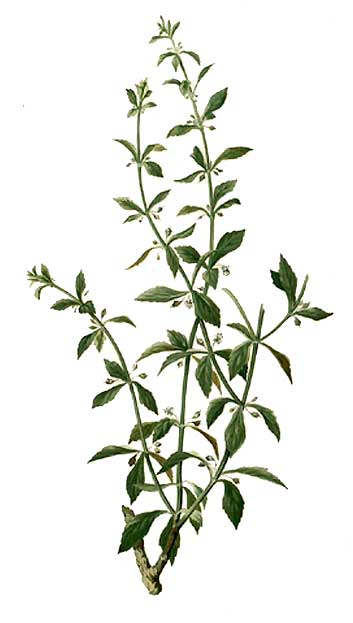
Mala-anis is an erect, much branched, smooth, herbaceous,
or half-woody plant 25 to 80 centimeters in height. Leaves are opposite and whorled, lanceolate to elliptic
or oblanceolate, 0.5 to 2 centimeters long, pointed at both ends and narrowed
below the short stalk, and toothed in the margins. Flowers are white, small, very numerous, and in pairs;
their stalks slender, and 1 centimeter long or less. Sepals are 4 or 5, imbricate,
corolla rotate, 4-fid, the throat bearded, lobes subequal, white
stamens 4, subequal. Capsules are ovoid or rounded, 2 to 3 millimeters in diameter.
Distribution
- Naturalized.
-
Ubiquitous weed throughout
the Philippines in settled areas at low to medium altitudes along roadsides,
sides of ditches, and other more or less shaded and moist places.
- Native of tropical America.
- Now pantropic.
- Considered a weed in many parts of India and Bangladesh.
Properties
• When chewed, bitter at first, later sweet.
• Sweet and has cooling nature.
• Considered antipyretic, diuretic, analgesic, anti-inflammatory, antifungal, antibacterial,
• Considered by some as aphrodisiac.
• Studies have shown antiviral, antimalarial, antidiabetic, anticancer, anti-inflammatory, antioxidant, antidiabetic, antiacetylcholinesterase inhibitory, anti-urolithiatic, antitussive, mucosuppressant, expectorant, larvicidal, anti-trypanosomal, immuno-boosting, nephroprotective, sympathomimetic, antimicrobial, anti-anxiety, α-glucosidase inhibitory, anti-allergenic, bronchodilatory, antiasthma, anti-onchocercal, acetylcholinesterase inhibitory, neuroprotective properties.
 Constituents Constituents
• Study yielded diterpenoids, flavonoids, tannins, alkaloids, triterpenes, hexaconasol, ß-sitosterol, ketone, dulcitone and amellin.
• Triterpene and mannitol isolated from the roots; dulcitol from
aerial parts.
• Phytochemical studies revealed acacetin, amellin, amyrin, apigenin, benzoxazin, benzoxalinone, betulinic acid, daucosterol, dulcidion . . among others. Also isolated were a flavone glycoside and a diterpene.
• Studies have yielded amellin, scoparic acid A, B, and C, scopadulic acid A & B, scopadulin, scoparinol, friedelin and glutinol. (29)
• Studies revealed the presence of flavonoids, steroids, quinone, starch, cellulose, terpenoids, phenols, carbohydrates, fixed oil and fat, and saponins in varying solvents. (33)
• Study of aerial parts yielded four new labdane-derived diterpenes, sio-dulcinol (1), 4-epi-scopadulcic acid (2), dulcidiol (4), and scopanolal (5), along with two known diterpenes, dulcinol/scopadulciol (3) and scopadiol (6). (see study below) (47)
• Study of four crude extracts yielded the presence of alkaloid, saponin, tannin and flavonoid.
(48)
• Preliminary phytochemical analysis of ethanolic root and leaves extract yielded tannins, saponins, alkaloids, flavonoids, terpenoids, and phenols, with absence of cardiac glycosides, anthraquinones, and reducing sugars. (49)
• Methanol extract fractions yielded alkaloids, balsams, cardiac glycosides, glycosides, phenols, steroids, and tannins; saponins were detected in the n-hexane fraction. (see study below) (50)
• Study of S. dulcis isolated six compounds, namely: coixol (1), glutinol (2), glutinone (3), friedelin (4), beetulinic acid (5), and tetratriacontan-1-ol (6). (see study below) (63)
• Study of aerial parts isolated nine compounds, namely: Scoparic zolone (1), (2S)-2,7-dihydroxy-2H-1,4-benzoxazin-3(4H)-one (2), (2R)-7-hydroxy-2H-1,4-benzoxazin-3(4H)-one-2-O-β-d-glucopyranoside (3), (2R)-7-methoxy-2H-1,4-benzoxazin-3(4H)-one-2-O-β-d-glucopyranoside (4), (2S)-7-hydroxy-2H-1,4-benzoxazin-3(4H)-one-2-O-β-d-glucopyranoside (5), 6-methoxy-benzoxazolin-2(3H)-one (6), 4-acetonyl-3,5-dimethoxy-p-quinol (7), zizyvoside I (8), and 3,4-dihydroxy benzene acetic acid (9). (see study below) (68)
• Study of ethanol extract of whole plant of S. dulcis isolated 4, 5, 7-trihydroxy-6-methoxyflavone, commonly called hispidulin and a steroidal glycoside, β-sitosterol-β-D-glucoside, along with previously reported 6-me-thoxybenzoxazolinone, friedelan-3-one and scopadulcic acid B. (77)
• Study of aqueous extract isolated Four compounds, (2R)-7-methoxy-2H-1,4-benzoxazin-3(4H)-one 2-O-β-galactopyranoside [(2R)-HMBOA-2-O-Gal], 3,6-dimethoxy-benzoxazolin-2(3H)-one (3,6-M2BOA), 3-hydroxy-6-methoxy-2-benzoxazolinone (3-OH-MBOA), and scutellarein 7-O-β-glucuronamide, along with eight known compounds, including two 7-methoxy-1,4-benzoxazin-3(2H)-one 3-O-hexopyranosides [(2R)-HMBOA-2-O-Glc and (2R)-HDMBOA-2-O-Glc], 6-methoxy-benzoxazolin-2(3H)-one (MBOA), acteoside, sodium scutellarin, p-coumaric acid, and two monosaccharides (fructose and glucose). (see study below) (78)
Parts
utilized
· Roots, leaves, tops, whole plant.
 Uses Uses
Edibility
· Infusion of seeds, soaked overnight, considered a cooling drink. Leaves used for making tea; also, to sweeten well water. Young shoots consumed as vegetable. (56)
- In Taiwan and China, traditionally used to prepare a cool summer tea and a herbal health drink. (78)
Folkloric
· In the Philippines, roots, leaves, and tops used as infusion for gastralgia, diarrhea, and dysentery.
· Root decoction used for fevers.
· Decoction of leaves and tops used for intestinal affections.
· Decoction of dried material used for cold and fever, enteritis,
diarrhea, beriberi, edema, difficulty in urination.
· For miliaria, rub the squeezed juice from fresh plant.
· For headaches associated with fevers, leaf or whole plant macerated in water is drunk copiously when cooled.
· Used as a children's remedy for coughs and diuretic.
· In Liberia decoction taken for gravel and kidney complaints.
· Decoction applied as fomentation on bruises and contusions.
· In Brazil decoction used for bronchitis and broncho-pulmonary afflictions.
· In the Antiles, plant used as emollient; decoction used as enema and for local baths.
 · Decoction used for diarrhea, colic, and indigestion. · Decoction used for diarrhea, colic, and indigestion.
· Roots used as diuretic.
· In Costa Rica decoction of leaves used as stomachic; infusion used as emmenagogue.
· In India, China
and Southeast Asia, used for pain, fever,
dysentery, diarrhea, cough, bronchitis, hypertension, piles and insect
bites.
· In Vietnam, used
for snakebites and antidote for cassava intoxication. Also, for pimples,
impetigo, ulcers and eczema.
· In Taiwan, used
for hypertension.
·Murong tribe in Bangladesh used the plant in the treatment of malaria.
· In Sierra Leone, used
for remittent fevers and gonorrhea. For the latter, a cold infusion, sweet and mucilaginous, is drunk repeatedly.
· In Nigeria, plant used in the management of sickle cell anemia.
· In Nicaragua, plant used for malaria.
· In India, used
for gonorrhea, to induce labor, and diabetes.
· In India, leaves ground to a paste applied topically for wound healing.
(29)
· In China, used
for herpes.
· In Burma and
India, herb infusion used
as mouthwash for infected gums.
· In Nepal, leaves used for stomach ache and venereal diseases. (41)
· In Brazilian folk medicine, used for bronchitis, gastric disorders, hemorrhoids, insect bites, skin wounds.
· In the Guianas, Scoparia dulcis is boiled with Momordica charantia and infusion of Tradescantia elongata, and the liquid drunk as purgative. Plant is boiled along with Lantana camara and Pteridium aquilinum, and the water used as an herbal bath. (57)
· In Siddha medicine, used for treatment of kidney stones along with a rigorouse diet. (59)
- In northeast India, used by women of Assam and Arunachal Pradesh
for treatment of menstrual disorders. (76)
Others
· Ritual: In Trinidad's
santowah ceremony, sweetbroom is used to sprinkle holy water.
· Household use: Bushy stems used as temporary brooms. (56)
Studies
• Antioxidant / Free Radical Scavenging: Free Radical
Scavenging Activity of Scoparia dulcis Extract: Study showed
strong antioxidant activity corresponding to the reduction of hydroxyl radical generation, a possible rationale for the weeds observed therapeutic effects. (3) Study of methanol and aqueous extracts of Scoparia dulcis showed significant free radical scavenging activity by DPPH, Nitric Oxide and Superoxide ion models. (39)
• Antioxidant / Anti-Diabetic: Study showed significant decrease in TBARS and hyperperoxides formation in the brain of rats suggesting a role in protection against lipid peroxidation induced membrane damage. Results suggest, in addition to its antidiabetic effect, SD possess antioxidant potential. (5)
• Antihyperglycemic / Polyol Pathway: Effect of an
aqueous extract of Scoparia dulcis on blood glucose, plasma insulin
and some polyol pathway enzymes in experimental rat diabetes:
Study showed SD was effective in attenuating hyperglycemia in rats,
possibly due to the decreased influx of glucose into the polyol pathway with increased activities of antioxidant enzymes and plasma insulin and decreased activity of sorbitol dehydrogenase. (4)
• Anti-Diabetic: Study showed the aqueous extract of Scoparia dulcis exhibited antihyperglycemic effect by attenuating biochemical alterations in streptozotocin-induced diabetic rats.
• Cytoprotective / Insulin-Secretagogue Activity: Study showed significant decrease in blood glucose with significantly increased plasma insulin level with use of aqueous extract of S dulcis in STZ-induced diabetic rats. Other results showed its insulin secretagogue activity and protection against STZ-mediated cytotoxicity. The glucose lowering effect was associated with potentiation of insulin release from the pancreatic islets. (10)
• Anti-Ulcer: Study showed water extracts of S dulcis showed dose-dependent inhibition of indomethacin-induced gastric damage in rats validating its use in traditional medicine as an antacid and anti-ulcer agent.
• Protective on Brain Antioxidant Status and Lipid Peroxidation: Study evaluated the protective role of Scoparia dulcis plant extract on
brain antioxidant status and lipid peroxidation in STZ diabetic male
Wistar rats. Study showed significant increase in levels of plasma insulin, SOD, catalase, GPX, glutathione-S-transferase and reduced glutathione in the brain of treated rats. There was also significant decrease in TBARS and hydroperoxide formation in the brain suggesting protection against lipid peroxidation-induced membrane damage. (5)
• Antibacterial / Antifungal:
Study of isolated fractions showed significant antimicrobial and antifungal activity against all tested organisms – S typhii, S aureus, E coli, B subtilis, P aeruginosa, P vulgaris and fungal strains (C albicans, A niger and F oxysporum). (6) An ethanolic extract and cream based formulation exhibited significant antimicrobial activity against gram-positive organisms (S. aureus and E. coli) and antifungal (C. albicans and A. niger) organisms. (23) Study showed a methanol extract displayed better MIC compared to aqueous extract against gram-positive and gram-negative bacteria and fungus. (30)
• Antitumor / Scopadulcic Acid B: Scopadulcic acid B (SDB), a tetracyclic diterpenoid
isolated from S dulcis, inhibited the effects of a tumor promoter, inhibited phospholipid synthesis and suppressed the promoting effect of TPA on skin tumor formation. Its potency is stronger than other natural anti-tumor promoting terpenoids. (7)
• Antihyperlipidemic:
Effect of Scoparia dulcis (Sweet Broomweed)
in Streptozotocin Diabetic Rats: Study showed antidiabetic
and antihyperlipidemic activity in normal and experimental diabetic
rats.
• NGF Activity: Acetylated Flavonoid Glycosides Potentiating NGF Action
from Scoparia dulcis: Three new acetylated flavonoid glycosides
were isolated, two of which showed enhancing activity of nerve growth
factor-mediated neurite outgrowth. (9)
• Scoporic Acid A / Beta-glucoronidase Inhibitor: Study isolated three labdane-type diterpene acids: scoparic acid A, B and C. Scoporic acid A was found to be a potent beta-glucoronidase inhibitor. (8)
• Hepatoprotective / Antioxidant: Study isolated showed the hydroalcoholic extract of S dulcis exhibits significant hepatoprotective activity against carbon tetrachloride-induced liver damage in rats, an activity attributed to free radical scavenging activity. (13) Study investigated the antioxidant and hepatoprotective activity of aqueous extracts of S. dulcis against N-nitrosodiethylamine (DEN) induced liver cirrhosis in experimental rats. Results showed hepatoprotective activity significant (p<0.01) decrease in enzyme markers and increase antioxidant enzymes, with significant reduction in LPO levels in extract treated animals. (36)
• Anti-Trypanosomal Immunosuppression / Immunological Boosting: Previous findings suggest T. brucei is immunosuppressive. Study showed Scoparia dulcis provides a measure of immunological boost during experimental T. brucei infection in rabbits.
• Sympathomimetic Effects / Catecholamines: Study yielded both noradrenaline and adrenaline in the plant extract. The catecholamines may be responsible for the hypertensive and inotropic effects after parenteral administration of S dulcis extracts. (15)
• Anti-Urolithiasis: Study investigating the inhibition of calcium oxalate, calcium phosphate and calcium carbonate mineralization by five medicinal plants – A aspera, P leschenaultii, S amplexicaulis, Scoparia dulcis and A lanata – showed that increased intake of the fruit juices and seed extracts of the test plants would be helpful in urinary stone prophylaxis. The sequestering of the insoluble calcium salts by the fruit juices may be due to single or mixed ligand chelation by the hydroxyl acids present in them. (16) Study evaluated the on the effect of ethanolic leaf extract of Scoparia dulcis on the urolithiatic and control kidney marker enzymes on urolithiasis induced by ethylene glycol. Results showed decrease in the levels of marker enzymes suggesting the capability of S. dulcis in counteracting the toxic effect of ethylene glycol. (40) In-vitro study evaluated S. dulcis whole plant for potential in dissolving calcium oxalate crystals using Cystone as standard compound. An aqueous extract showed higher dissolution of stones (66.96%) than the alcoholic extract. The turbidity shown was highly significant compared to the standard. (42)
• Anti-Inflammatory / Analgesic: Study results indicate that the extract of S dulcis possess analgesic effects probably related to its anti-inflammatory activity, effects probably attributable to the presence of glutinol and flavonoids. (17)
• Pro Blood Clotting Activity: Study investigated the effect of a decoction of S. dulcis on blood clotting time in rats. Results showed significant reduction in clotting time. The proclotting activity was faster than vitamin K. (19)
• Anti-Malarial / Scopadulcic acid A: Phytochemical screening yielded pharmacologically active compounds scopadulcic acid A (SDA) and scopadulcic acid B (SDB), and semi-synthetic analogues. SDB has shown antiviral activity against Herpes simplex virus 1 and antitumor activity against various human cancer cell lines, and potent inhibitory activity against gastric proton pumps. Pure SDA was tested and found to have in vitro activity against P. falcifarum. (20)
• Anti-Diabetic / Antioxidant: Study on in vivo hypoglycemic activity of methanol extract of Scoparia dulcis on streptozotocin induced diabetic model showed significant effect on blood glucose similar to that of glibenclamide. The extract showed promising results on both DPPH and ferric ion reducing capacity. The antioxidant activity is directly correlated to the antidiabetic potential of the drug. (22)
• Antilithiatic / Antibacterial / Stems and Leaves: Chloroform and ethanol extracts of stems and leaves showed maximum resistance against Staphylococcus aureus while ethanol and aqueous extracts showed maximum resistance against Klebsiella pneumonia. The plant extract showed in vitro antilithiatic activity for kidney stones with great great potential to dissolve calcium oxalate crystals. (24)
• Antiurolithiatic / Combination with Aerva lanata: Study evaluated the potential of Scoparia dulcis and Aerva lanata in the management of urine volume in ethylene glycol induced urolithiatic male albino rats. Administration of SD and AL gradually increased urine volume. Results indicated that the fruit part of Scoparia dulcis in combination with A. lanata showed higher antiurolithiatic activity than others. (25)
• Neuroprotective / Cytoprotective: Study evaluated the protective effect of various extracts of S. dulcis against neuroinflammation and erythrocyte hemolysis. Results showed significant neuroprotective effect on both brain neuronal cells and neurotransmitter enzyme as acetylcholinesterase. Cytoprotective effect was evidenced by prevention of rat erythrocytes hemolysis between 56% and 83% at 300 µg/ml. The protective effects may be attributed to its antioxidant components as flavonidic polyphenols. (26)
• Antidiabetic / Antioxidant / Anti-Inflammatory: Review article discusses the antidiabetic activities as well as its antioxidant and anti-inflammatory properties of Scoparia dulcis. The primary mechanisms of antidiabetic activity are through α-glucosidase inhibition, curbing of PPAR-y and increased secretion of insulin. (27)
• Analgesic / Whole Herb: Study evaluated two medicinal plants, Ficus racemosa and Scoparia dulcis for central analgesic activity using hot plate and peripheral pharmacologic action using acetic acid induced writhing test in mice. Results showed the whole herb of S. dulcis demonstrated both central and peripheral analgesic activities. (28)
• Antisickling / LD50 / Leaves: Study evaluated the antisickling activity of plant leaves on sodium metabisulphite-induced sickling of HbSS red blood cells obtained from sickle cell patients who were not in crises. Results showed antisickling activity with significant (p<0.05) percentage sickling inhibition by the aqueous methanol extract compared to crude extracts. LD50 in mice was above 8000 mg/kg body weight when administered orally. Toxicological evaluation at 250 and 500 mg/kg showed mild congestion in virtually all target organs. (31)
• Anti-Anaemic: A major feature of trypanosome infection is anemia. Study evaluated the effect of Scoparia dulcis on Trypanosoma brucei induced anemia in a rabbit model. Although no significant (p>0.05) changes were observed in the RBC indices, the severity of the anemia was significantly less pronounced (p<0.05) in treated infected rabbits. The mechanism/s of its anti-anemic activity still need to be established. (32)
• Flavone Cirsitakaoside / Clastogenicity: Study evaluated the mutagenic effect of flavone cirsitakaoside isolated from Scoparia dulcis and tested in vitro by using human peripheral blood cultures. The compound was found to be mutagenic at highest concentration (15 µg/ml). The proliferative index was significantly reduced in all cultures treated with flavone, although the mitotic index was not reduced. (34)
• Antibacterial / Immuno-Stimulatory: Study showed a methanol extract of plant demonstrated antibacterial activity against Haemophilus influenzae and Klebsiella pneumonia. The extract showed good immunostimulatory effect with a significant increase (p<0.05) in white blood cell proliferation. The extract was non toxic with an LD50 of 3807 mg/kbw. (35)
• Immunomodulatory Triterpenoids / Glutinone: Study investigated the immunomodulatory potential of five compounds isolated from S. dulcis by inhibition of oxidative burst. Among the five compounds isolated, compound 1, glutinone showed anti-inflammatory potential with potent inhibition of intracellular reactive oxygen species (ROS), with moderate inhibition of production of proinflammatory cytokines TNF-α and IL-1ß. (36)
• Anti-Anxiety: Study investigated the anti-anxiety activity of crude hydroalcoholic extract of S. dulcis by various behavioural models: Open-field test, Elevated plus-maze, Elevated Zero-maze, Social Interaction, and Novely induced suppressed feeling latency tests. Phytochemical analysis yielded phenols and flavonoids. Results showed dose dependent anxiolytic activity of Scoparia dulcis. (37)
• Anti-Diarrheal: Study investigated the antidiarrheal potential of a Scoparia dulcis decoction in a castor oil-induced diarrheal rat model. Results showed significant (p<0.05) and dose-dependent antidiarrheal effect. The effect was mediated via inhibition of intestinal transit due to impairment of intestinal peristalsis. Results suggest potential use for symptomatic relief of non-specific acute diarrhea. (38)
• Antioxidant / Anti-Inflammatory: Various extracts obtained from S. dulcis by successive extraction with hexane, chloroform, and methanol showed significant antioxidant capacity in various antioxidant models mediated (xanthine oxidase and lipoxygenase) and not mediated (DPPH, ferric reducing antioxidant power, ß-carotene bleaching, lipid peroxidation) by enzymes. The chloroform extract was richest in phytochemicals. The extracts strongly inhibited lipid peroxidation mediated by lipoxygenase. (43)
• Antiulcer
/ Aerial Parts: Study showed oral treatment with water extracts of S. dulcis whole aerial parts dose dependently inhibited indomethacin induced gastric damage in rats. (44)
• Sedative / Hypnotic / Whole Plant: Study evaluated an ethanolic extract of whole plant of S. dulcis for sedative and hypnotic activity using various testing models in mice. The EESD produced significant dose dependent inhibition of locomotor activity of mice in hole cross and open field tests (p<0.05) along with decreased rota-rod performance and number of head dips in the hole-board test, and significantly decreased induction time to sleep and prolong duration of sleep induced by thiopental sodium. Results suggest EESD possess sedative principles with potent hypnotic properties. (45)
• Larvicidal Against Dengue Vector / Aedes aegypti: Study evaluated the larvicidal activity of S. dulcis aqueous extract against dengue vector, Aedes aegypti. Results showed significant larvicidal efficacy with LC50 of 3.3835 mg/mL and LC90 of 5.75 mg/L (46)
• Cytotoxic Diterpenes / Six Human Stomach Cancer Cell Lines / Aerial Parts: Study of aerial parts isolated four new labdane-derived diterpenes. Crude extracts and pure diterpenes showed cytotoxicity against a panel of six human stomach cancer cell lines. (see constituents above) (47)
• Anti-Mycobacterial / Antimicrobial: Study evaluated the antimicrobial activity and anti-mycobacterial potency of Pulicaria crispa and Scoparia dulcis whole plant extracts in solvents of different polarities. The n-hexane extract of S. dulcis exhibited Mycobacterium tuberculosis zone of inhibition of 12.14 ± 0.02 mm, while an ethyl acetate extract exhibited 17.00 ± 0.91 mm compared to control of 33.70 ± 0.64 mm. The MIC values for EA and n-hexane extracts of S. dulcis were 12.03 ± 0.86 and 20.40 ± 0.24, respectively, compared to rifampicin at 0.38 ± 1.40. (see constituents above) (50)
•
Nephroprotective / Cisplatin Induced Nephrotoxicity / Aerial Parts: Study evaluated the nephroprotective potential of an ethanolic extract of aerial parts of S. dulcis against cisplatin induced nephrotoxicity in Wistar rats. Results suggested the supplementation of Scoparia dulcis during cisplatin therapy reduced the risk of cisplatin induced nephrotoxicity in a dose dependent manner. The curative and prophylactic effect may be due to the antioxidant property of S. dulcis. (51)
• Sympathomimetic Effect: Study evaluated the sympathomimetic activity of an ethanolic extract of S. dulcis in in-vivo and in-vitro rodent preparations. Results suggest that catecholamines (noradrenaline and adrenaline) may be responsible for the hypertensive and inotropic effects after parenteral administration of S. dulcis extracts. The sympathomimetic effect seems unrelated to previously reported analgesic and anti-inflammatory activity, but may explain its effectiveness on topical application in the healing of mucosal and skin wounds. (52)
• Scopadulcic Acid B / H+-K+-ATPase Inhibitory Activity: Study elucidated scopadulcic acid B. SDB inhibited both the K+-dependent adenosine triphosphatase (ATPase) activity of a hog gastric proton pump and proton transport into gastric vesicles. Results suggested the sustained plasma level of DSB after oral administration of SDB-Na or SDB was accounted for by relatively slow by efficient gastro-intestinal absorption in rats. (53)
• Glucose Uptake Properties / SDF7: Insulin stimulates glucose uptake and promotes the translocation of glucose transporter 4 (Glut4) to the plasma membrane on L6 myotubes. Study investigated the effect of S. dulcis water extracts on glucose uptake and Glut4 translocation components. in L6 myotubes compared to insulin.
Results showed the extract from TLC fraction-7 (SDF7) possessed glucose uptake properties on L6 myotubes that are dose dependent, time dependent, and plasma membrane Glut 4 expression-dependent. The glucose uptake activity was as potent as insulin at maximum concentration. Study suggests S. dulcis has potential to be classified as a hypoglycemic plant based on its good glucose transport properties. (54)
• Anti-Tussive / Muco-Suppressant / Expectorant: Study evaluated the anti-tussive, mucosuppressant, and expectorant properties of hydroalcoholic extract of S. dulcis and ascertained its safety. The extract showed dose-dependent inhibition (p<0.001) of cough elicited by 7.5% nitric acid. For muco-suppresant activity, the extract dose-dependently reduced (p<0.001) the concentration of ammonium chloride-induced phenol red secretions from mice trachea. Safety evaluation showed no acute and/or delayed toxic symptoms. Results suggest a potential herbal remedy for asthma and obstructive pulmonary disease. (55)
• Antidiarrheal: Study evaluated the antidiarrheal potential of S. dulcis decoction in a castor-oil induced diarrheal rat model. Results showed significant (p<0.05) dose dependent antidiarrheal effect from 1-hr post treatment. The effect was mediated via an inhibition in intestinal transit due to impairment of intestinal peristalsis, rather than an increase in intestinal fluid absorption and/or reduction in secretion. Study suggests potential use for symptomatic relief of non-specific acute diarrheas. (58)
• Potential for Treatment of Metabolic Syndrome: Of about 160 compounds identified from S. dulcis, 115 may be related to the treatment of metabolic syndrome. Extracts have shown reduction of fasting blood glucose, increase in plasma insulin level, and stimulation of insulin secretion, and increase in HDL cholesterol, anti-atherogenic index of plasma, and HMG-CoA reductase activity. The compounds can provide an anti-atherosclerotic effect, and exert anti-arthritic properties through effect on cytokine levels, significantly reducing IFN-γ and IL-6 and elevating IL-10 levels. Extracts may have hepatoprotective effect by preventing decrease of antioxidant enzymes of SOD, GPx, GRd, and GST. Scoparia dulcis has potential as complementary or alternative therapy in the treatment of metabolic syndrome. (60)
• Slow Progression of Experimental Osteoarthritis: Study evaluated the anti-inflammatory and analgesic effect of crude extract of S. dulcis in an experimental model of osteoarthritis in Wistar rats. Results showed the crude extract reduced edema, spontaneous pain, peripheral nociceptive activity, and proinflammatory cytokines in the synovial fluid. Highest inhibition of cyclooxygenase 2 was with crude extract dose at 50 µg/mL. Results showed therapeutic potential for treatment of osteoarthritis via anti-inflammatory and anti-nociceptive action. (61)
• Protective Role in Alzheimer's Disease: Study evaluated the protein and lipid protection against damage caused by free radical and anticholinesterase properties of Scoparia dulcis, which are relevant to AD therapy. Butanolic extracts with maximum amounts of phytochemicals, including phenolics, flavonoids, and tannins, and also showed highest acetylcholinesterase inhibitory potential and DPPH radical scavenging, with IC50s of 93.24 and 22.8 µg/mL, respectively, in a dose-dependent manner. Butanol fraction also exhibited strong FeSO4-induced lipid peroxidation inhibition. Results suggest S. dulcis with potential source of drug development against AD. (62)
• Insulin Secretagogue / Role in Alzheimer's Disease: Study of S. dulcis isolated six compounds, namely: coixol (1), glutinol (2), glutinone (3), fried potent and mild activity, respectively. In vivo acute toxicity test in mice showed compound 1 to be non-toxic. The insulin secretory activity of compounds 1 and 2 support the ethnobotanical use of S. dulcis for treatment of diabetes. (63)
• Scoparic Acid / Antidiabetic Effect: Study evaluated the antihyperglycemic effect of soparic acid D (SAD) isolated from ethanol extract of S. dulcis in STZ-induced diabetic Wistar rats. SAD was administered orally in doses of 10, 20, and 30 mg/kbw for 15 days. SAD-treated STZ diabetic rats showed decreased levels of glucose, which was associated with significant increase in plasma insulin levels. SAD dose of 20 mg/kbw exhibited most significant effect, and at that dose evoked a two-fold stimulation of insulin secretion from isolated islet cells, indicating secretagogue activity. SAD also protected STZ-mediated cytotoxicity and NO production in RINm5F cells. Results confirm the anti-hyperglycemic effect of SAD and demonstrated its strong cytoprotective protectives. (64)
• Anticancer / Anti-Inflammatory / Aerial Parts: Study of methanol fraction of aerial parts of S. dulcis isolated benzoxazinone (1), phenylethanoid (2), flavone (3), and lignan (4) glycosides. Bioactivity results of crude ethanol and ethyl acetate extracts showed potent cytotoxic activity towards HepG2 cancer cell with IC50 of 47.03 µg/mL and 36.04 µg/mL, respectively, and NO inhibitory activity with 56.9% and 74.7% inhibition at 30 µg/,mL and 97.3% and 82.9% at 100 µg/mL, respectively. The hexane extract at concentration of 100 µg/mL demonstrated anti-inflammatory activity with 76.7% inhibition of nitric oxide production. (65)
• Inhibition of Gastric Acid Secretion / Aerial Parts: Study evaluated freeze-dried aqueous extract (AE) of aerial parts of S. dulcis for effects on experimental gastric hypersecretion and ulcer in rodents. Administration of AE to animals 4h post pylorus ligature potently reduced gastric secretion with ED50s of 195 mg/kg (rats) and 306 mg/kg (mice). AE also inhibited histamine- or bethanechol-stimulated gastric secretion in pylorus-ligated mice suggesting inhibition of the proton pump. Bio-guided purification of the AE yielded a flavonoid-rich fraction (BuF), which inhibited the hydrolysis of ATOP by H+,K+-ATPase with IC50 of 500 µg/ml, indication inhibition of gastric acid secretion is related to inhibition of the proton pump. The AE also inhibited establishments of gastric lesions induced by indomethacin and ethanol. Collectively, the study validates the use of S. dulcis in gastric disturbances. (66)
• Scopadulcic Acid B / Antiviral / Herpes simplex Virus Type 1: Study evaluated five diterpenoids isolated from S. dulcis for invitro antiviral activity against herpes simplex virus type 1. Only scopadulcic acid B was found to inhibit viral replication with invitro therapeutic index of 16.7. The antiviral activity of scopadulcic acid B was not due to direct virucidal effect or inhibition of virus attachment to host cells. Single-cell replication experiments indicated the compound interfered with early events of virus growth. (67)
• α-Glucosidase Inhibitory / Aerial Parts: Study of aerial parts isolated nine compounds. Compound 2, (2S)-2,7-dihydroxy-2H-1,4-benzoxazin-3(4H)-one, showed potent α-glucosidase inhibitory activity with IC50 of 132.8 µmol/L, which is 28-fold higher than positive control acarbose. (see constituents above) (68)
• Scoparicol E / Improved Pancreatic Function Against Islet Cell Apoptosis: Diterpenoids from S. dulcis have been shown to have significant hypoglycemic efficacy and effect on islet cells in vitro. Study isolated a new labdane diterpenoid, scoparicol E and evaluated its islet-protective effect. Scoparicol E reduced MLD-STZ-induced hyperglycemia in mice and decreased insulin and islet apoptosis. Scoparicol E might prevent islet cells from dying by inhibiting the Bax/Bcl-2/Caspase-3 pathway. Scoparicol E intervention also considerably decreased MIN6 cell apoptosis, showing anti-islet cell apoptosis. It prevented release of cytochrome c, restored mitochondrial membrane potential and prevented MIN6 cell apoptosis. (69)
• Bronchodilatory / Antiasthma / Anti-Inflammatory: Study evaluated the bronchodilatory and anti-inflammatory effects of ethanolic extract of S. dulcis (SDE). SDE significantly (p≤0.001) reduced the recovery period. SDE showed significant dose-dependent reduction (p≤0.01-o.001) in paw edema, comparable to prednisolone and dexamethasone. In vitro, SDE significantly (p<0.01) inhibited the contractile effect of histamine and acetylcholine on guinea pig ileum, comparable to mepyramine and atropine, respectively. SDE blocked H1 histaminic and M3 muscarinic receptors of the tracheobronchial smooth muscles. Phytochemical screening yielded tannins, alkaloids, glycosides, saponins, steroids, and phenolic compounds. (70)
• Antiglycation / Antioxidant / Whole Plant Decoction: Study evaluated the antiglycation potential, DPPH and ABTS antioxidant potentials of S. dulcis decoction of whole plant. DPPH and ABTS antioxidant potentials were in the range of 450-540 µg mL and 549-615 TERAC mmol/g, respectively. Antiglycation potential of the samples were in the range of 131-230 µg mL and total phenolic content s were 1260-186 mg/GAE/g. (71)
• Anti-Hepatitis C Activity: Study evaluated the bioactivity potential of S. dulcis extract and fractions against HCV. The 80% EE (ethanol extract) and DCMF (dichloromethane fraction) showed anti-HCV activity with IC50s of 12.7 µg/ml and 5.8 µg/ml, respectively. HCV inhibition might be due to active compounds chlorophyll, flavonoids, and terpenoids. (72)
• Anti-Onchocercal: Study evaluated the anti-onchocercal effects of Scoporia dulcis and Cylicodiscus gabunensis, Extracts were tested in vitro against the bovine model parasite, Onchocerca ochengi. The hexane extract of S. dulcis recorded highest activity with IC50s of 50.78 µg/ml on both adule male and female worms and 3.91 µg/ml on microfilariae. No acute toxicity was recorded. (73)
• Hypertensive / Sympathomimetic Effects / Leaves: Study evaluated methanol and aqueous extracts of S. dulcis leaves for antihypertensive effects in Wister rats. Phytochemical analysis of leaves revealed presence of tannins, phlobatannins, steroids, terpenoids, flavonoids, and cardiac glycosides. LD50 for methanol and aqueous extracts were 450 and 650 mg/kg. There was significant (p<0.05) hypertensive and symnpathomimetic effects at 40, 80, and 160 mg/kg dose for both extracts. Results showed significant (p<0.05) hypertensive and sympathomimetic effects. Although S. dulcis is traditionally used for the treatment of hypertension, studies have shown the plant to increase BP. MAP (mean arterial pressure) and HR (heart rate). The plant contains catecholamines, which may account for the effects after parenteral administration. (74)
• Silver Nanoparticles / Antibacterial / Cytotoxicity / Leaves: Study reports on the green synthesis of silver nanoparticles using Scoparia dulcis leaves as reducing agent. The AgNPs showed significant growth inhibition of three pathogenic bacteria i.e., Pseudomonas aeruginosa, Bacillus subtilis, and Staphylococcus aureus. The NPs showed more cytotoxicity effect on A549 lung cancer cell line than ovarian cancer cell line, PA1. (75)
• Estrogenic Effect: Scoparia dulcis contains compounds that bind estrogen receptors (ERα and ERß) evidenced by increased PCNA in endometrial epithelium. Study administered 500 mg/kbw of crude extract orally to female mice. Results showed cell proliferation in the uterine endometrium evidenced by PCNA. Two phytocompounds, octadecanoic acid and methyl stearate showed binding affinity with ERα and ERß. The binding affinity with human estrogen receptors may have a biological effect of female reproduction. (76)
• Benzoxazinoids / Antiproliferative against DU-145 Human Prostate Cancer Line: Study of aqueous extract of S. dulcis isolated four benzoxazinoid compounds, along with eight known compounds. Antiproliferative activities of the benzoxazinoid compounds were assayed against DU-145 human prostate cancer cell line. One exhibited an IC50 of 65.8 µg/mL. (78)
• Protective against Diabetic Retinopathy: Diabetic retinopathy (DR) is a major cause of vision loss in diabetic patients. Hyperglycemia-induced oxidative stress and accumulation of inflammatory factors result in blood-retinal barrier dysfunction and pathogenesis of DR. Scoparia dulcis extract (SDE) dose-dependently reduced ROS production and attenuated AROPE-19 cell apoptosis in a high glucose environment. The SDE exhibited antioxidative and anti-inflammatory ability in protecting retinal cells from high-glucose treatment. Study also investigated the involvement of the Akt/Nrf2/HO-1 pathway in SDE-mediated protective effects. Results suggest SDE has potential as nutritional supplement that could benefit patients with diabetic retinopathy. (79)
• Silver Nanoparticles / Antibacterial / Leaves: Study reports on the green , simple, rapid, economical and eco-friendly synthesis of silver nanoparticles (AgNPs) from aqueous leaf extract of Scoparia dulcis. Antimicrobial testing by agar disc diffusion plate method indicated the AgNPs possessed antimicrobial activity against pathogenic bacteria (Pseudomonas aeruginosa, Escherichia coli, Bacillus subtilis, and Staphylococcus aureus) and optimal activity against fungi (Aspergillus niger and Candida albicans). (80)
• Inhibition of Allergic Airway Inflammatory Responses in Asthma Model: Inflammatory responses, including airway inflammation, hyperresponsiveness,, mucus hypersecretion, prostaglandins, and Th2 cytokines infiltration in airway submucosa, frequently occur in allergy respiratory disorders. Study evaluated the effects of hydroalcoholic extract of S. dulcis (SDE) using murine asthma model. Allergic asthma was induced in healthy guinea pigs and mice by ovalbumin (OVA) sensitization and challenge. Results showed SDE treatment exhibited anti-asthmatic and anti-inflammatory properties, reduced the severity of allergic inflammation and hyper-reactivity, PGD2 and Th2 cytokines infiltration in the airway. (81)
• Anti-Plasmodium Potency / Leafy Stems: Study evaluated the in vitro anti-plasmodial potential of various extracts of S. dulcis prepared from leafy stems. Phytochemical screening revealed flavonoids, sterols, triterpenes, sterol glycosides, saponins, coumarins, tannins, anthraquinones, carotenoids, and reducing compounds. The alkaloid extract demonstrated significant antiplasmodial activity , with IC50 of 1.58 µg/mL for 3D7 and 2.69 µg/ml for K1 strains. The dichloromethane extracts showed IC50s of 2.11 and 2.23 µg/ml for 3D7 and K1, respectively. Results suggest S. dulcis has potential as anti-plasmodial. (82)
• ZnO Nanoparticles / Antioxidant / Acetylcholinesterase Inhibitory: Study reports on the green, simple, and eco-friendly synthesis of zinc oxide nanoparticles from S. dulcis extract. The AChE activity of ZnO NPs showed potential inhibitory activity with IC50 of 75.34 µg/mL. Antioxidant activity was investigated by DPPH and ABTS assay. (83)
• Neuroprotective / Effect on Noise-Evoked Neural Cytokines and Neurotransmitter Level: Study subjected animals to 100 dBA broadband noise for 15 days (4 hours/day) showed dysregulated cytokine and neurotransmitter secretion in the brain. On exposure to noise, the altered inflammatory cytokines and free radicals can play an important role in neuronal integrity, which could exert a DNA smear patter in brain discrete regions (cerebral cortex, cerebellum and hippocampus). Treatment with S. dulcis aqueous extract 200 mg/kbw orally showed potent anti-inflammatory activity and anti-stressor activity, which may be attributed to presence of polyphenols. The antioxidant property may also involve in inhibiting TNFα induced NF-kB activation, attributing to its neuroprotective effects. (84)
Availability
Wild-crafted.
Powders, extracts in the cybermarket.
|


