|
 General info General info
- Benincasa hispida is the only member of the genus Benincasa.
- It is one of the famous crops under the Cucurbitaceae family grown primarily for its edible fruits.
-
Etymology: The genus name honors 16th century Italian Giuseppe Benincasa (1535-1596), while the species epithet derives from Latin hispida meaning "rough-hairy", referring to the pubescent foliage and stems. (74)
Botany
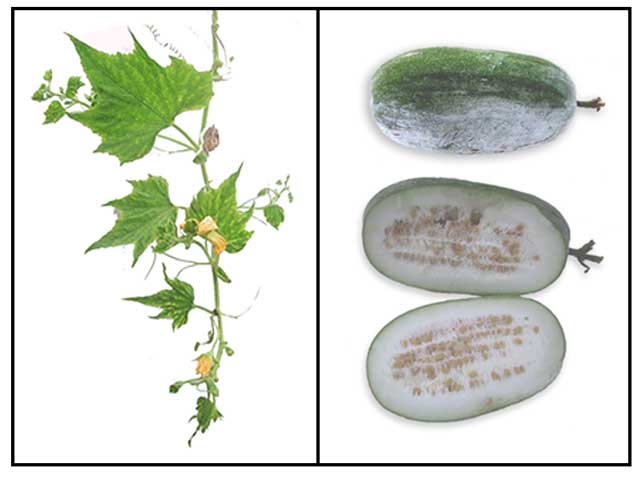
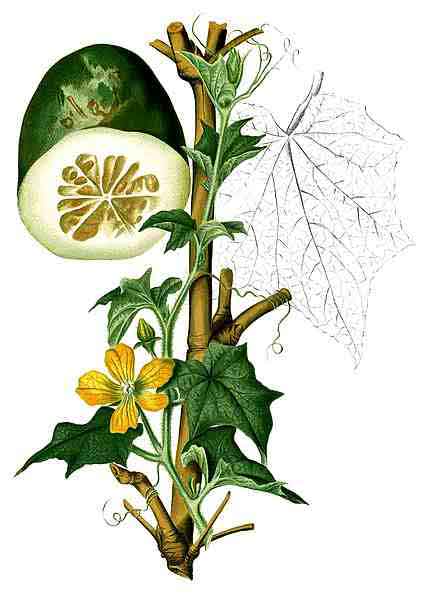
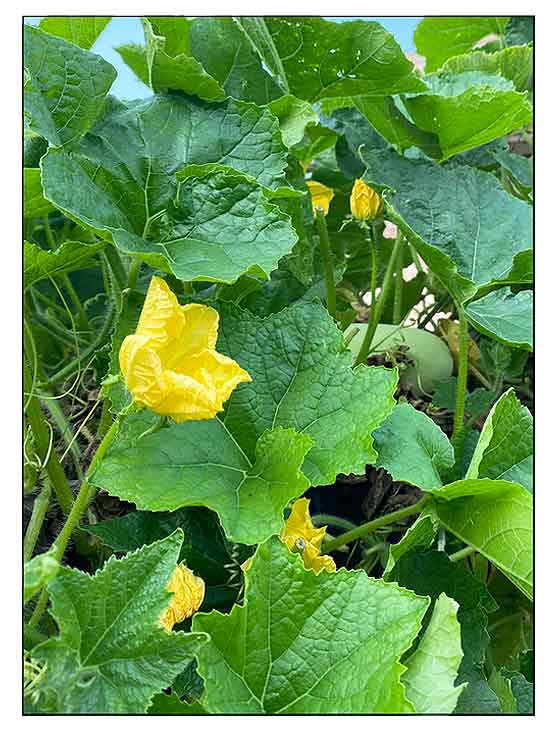
• Kondol is a rather coarse, wide-spreading, softly hairy, annual
vine with branched tendrils reaching a length of 4 to 8 meters.
Leaves are rounded or kidney-shaped, 10 to 25 centimeters diameter, 5- to
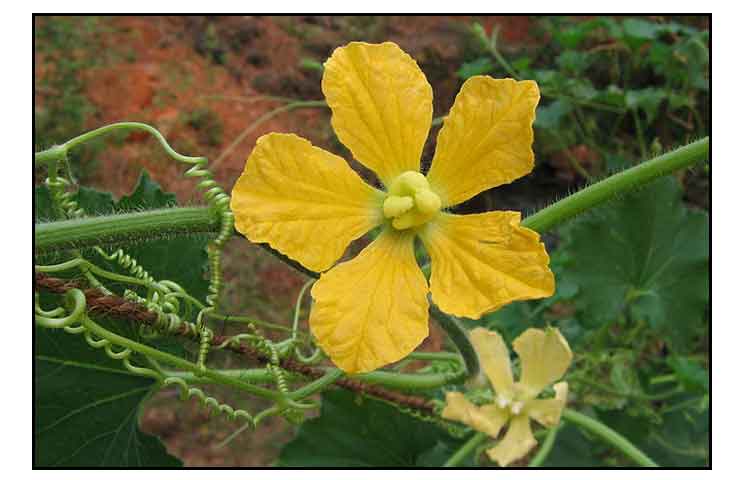
7-lobed, heart-shaped at the base. Peduncles are hairy, those of the males being 5 to 15 centimeters long and of the females much shorter. Flowers are large and yellow,
with a densely hairy bell-shaped calyx tube. Petals
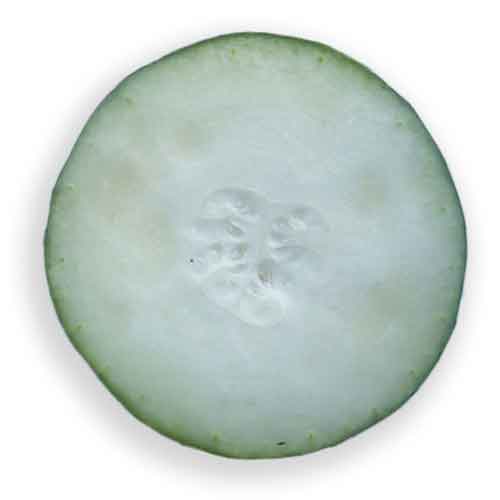
are 5 and spreading, 3 to 5 centimeters long. Fruit is ellipsoid or ovoid, 25 to 40
centimeters long, with few to many fragile hairs, green, and densely covered with a white and waxy bloom. The seeds are many,
oblong, and compressed.
• An annual, herbaceous vine. It has a twining growth form and climbs with the aid of tendrils. FOLIAGE: Leaves are large, simple and coarsely textured, 10 to 15cm in width and are 5 lobed; alternately arranged along the stem. STEMS: Stems are covered with coarse hairs. FLOWERS: Flowers are yellow and originate from the leaf axils. FRUITS: Fruit is cylindrical to oblong and is dark green in color with white flesh. The mature fruit can grow up to 30 to 45cm long and has a waxy coating, allowing it to be kept for long periods of time. (74)
Distribution
- Introduced to the Philippines.
-
Cultivated for the edible fruit.
- Occasionally
wild.
- Also occurs in India to Japan, Malaya and Polynesia in general cultivation.
 Constituents Constituents
- Major constituents of B. hispida fruits are volatile oils, flavonoids, glycosides, saccharides, proteins, carotenes, vitamins, minerals, ß-sitostrin and uronic acid. (45)
-
Amino acids, mucins, mineral salts,
vitamins B and C, fixed oil, 44%; starch, 32%; an alkaline, cucurbitine; an acid resin; the proteids,
myosin and vitellin; and sugar, 4%.
- Phytochemical studies indicate two triterpenes, alunsenol and mutiflorenol,
with mast cell stabilizing effects in rats.
- Major constituents of the fruit are triterpenoids, flavonoids, glycosides, saccharides, carotenes, vitamins, ß-sitosterin, and uronic acid.
- Fruits yielded three new triterpenoids (3α,29-O-di-trans-cinnamoyl-D:C-friedooleana-7,9(11)-diene , oleanolic acid 28-O-β-d-xylopyranosyl-[β-d-xylopyranosyl-(1→4)]-(1→3)-α-l-rhamnopyranosyl-(1→2)-α-l-arabinopyranoside, and oleanolic acid 28-O-β-d-glucopyranosyl-(1→3)-β-d-xylopyranosyl-[β-d-xylopyranosyl-(1→4)]-(1→3)-α-l-rhamnopyranosyl-(1→2)-α-l-arabinopyranoside), together with 12 known compounds (multiflorenol, isomultiflorenyl acetate, stigmasterol, stigmasterol3-O-β-d-glucopyranoside, α-spinasterol, α-spinasterol 3-O-β-d-glucopyranoside, β-sitosterol, daucosterol, arbutin, nicotinic acid, (+)-pinonesinol, and ethyl β-d-glucopyranoside). (27)
 - Phytochemical analysis of seeds revealed dietary fiber of 58.43%; crude fat and crude protein were 20.7o and 11.63%, respectively. Seed oil consisted mainly of linoleic acid, accounting for 67.37% of the total fatty acids, along with palmitic, oleic, and stearic acids at 17.11, 10.21 and 4.83%, respectively. (45) - Phytochemical analysis of seeds revealed dietary fiber of 58.43%; crude fat and crude protein were 20.7o and 11.63%, respectively. Seed oil consisted mainly of linoleic acid, accounting for 67.37% of the total fatty acids, along with palmitic, oleic, and stearic acids at 17.11, 10.21 and 4.83%, respectively. (45)
- Phytochemical screening of various extracts of fruit yielded the presence of carbohydrates, phenols, alkaloids, cardiac glycosides, amino acids, reducing sugar, sterols, phytosterols, coumarin, anthocyanin and betacyanin, flavonoids, tannins, terpenoids, and saponins. (47)
- Phytochemical screening of various extracts (methanol-M, chloroform-C, water-W) of fruit rind yielded alkaloids (M), glycosides (CW), flavonoids (CMW), carbohydrates (MW), phenolic compounds (CMW), steroidal compounds (MW), and resin (C). (see study below) (52)
- Study of nutritional composition (%) of winter melon seed oil yielded crude protein 16.57 ± 0.05, crude fat 34.12 ± 0.40, crude fiber 21.53 ± 0.03, and ash 2.7 ± 0.01.On GC analysis, the most abundant fatty acid was linoleic acid (80.07%), palmitic, oleic, stearic, and linoleliadic acids were 11.71%, 4.10%, 3.74%, and 0.37%, respectively. (57)
- Nutrient values per 100 g of edible portion: (Proximate) water 96.10 g, energy 13 kcal or 54 kJ, protein 0.40 g, total lipid (fat) 0.20 g, ash 0.30 g, carbohydrate, by difference 3.00 g, total dietary fiber 2. g; (Minerals) calcium 19 mg, iron 0.40 mg, magnesium 10 mg, phosphorus 19 mg, potassium 6 mg, sodium 111 mg, zinc 0.61 mg, copper 0.023 mg, manganese 0.058 mg, selenium 0.2 µg; (Vitamins) vitamin C 13 mg, thiamin 0.040 mg, riboflavin 0.110 mg, niacin 0.400 mg, pantothenic acid 0.133 mg, vitamin B6 0.035 mg, total folate 5 µg; (Lipids) total saturated free fatty acids 0.016 g, total monosaturated FA 0.037 g, total polyunsaturated FA 0.087 g, cholesterol 0; (Amino Acids) tryptophan 0.002 g, lysine 0.009 g, methionine 0.003 g. (59)
Properties
• Considered astringent, anthelmintic,
aphrodisiac, demulcent, diuretic, febrifuge, styptic, tonic.
• Seed is anthelmintic, anti-inflammatory.
• Fruit is nutritive, tonic, diuretic, alterative, and styptic.
• Studies have suggested
antiangiogenic, antiulcer, antioxidant, gastroprotective, bronchodilatory, antinociceptive, antidiabetic, anthelmintic, hepatoprotective, antidiarrheal, antifungal, renoprotective, antipyretic, anti-obesity, anti-vascular inflammatory, neuroprotective, immunomodulatory properties.
Parts
utilized
Whole fruit with seeds and
skin.
 Uses Uses
Edibility / Nutrition
• Edible: Flowers, fruit, leaves, seed.
• Unripe fruit is boiled and eaten as vegetable or included in a variety of dishes.
• Ripe fruit is peeled and candied; used
in pickles, curries and preserves.
• The fried seeds eaten as a delicacy.
• Young leaves and flower buds steamed and consumed as vegetable.
• Pulp is a source of vitamins B and C.
• In the Philippines, it is candied and used as pastry filing for hopia; also as ingredient in soups and stir-fries.
Folkloric
• In the Philippines fresh fruit is made into a syrup and used for disorders of the respiratory tract.
• Fresh fruit also used for hemoptysis and other hemorrhages of the internal organs.
• Fruit used as laxative, diuretic, tonic, aphrodisiac, cardiotonic; used for urinary calculi, epilepsy, schizophrenia, jaundice, dyspepsia, fever, and menstrual disorders. (45)
• Fresh juice used as vehicle for administering pearl-ash for first-stage phthisis. Also used, with or without liquorice, for insanity, epilepsy, and other nervous disorders.
• Used as antidote for various vegetable poisons, mercurial and alcoholic poisoning.
• Juice of cortical portion used with powdered saffron and red rice bran for diabetes.
• Preserve used for piles and dyspepsia as anti bilious food.
• Seeds applied to simple skin eruptions.
 • Seeds, deprived of the outer covering, used as vermifuge against tapeworm and lumbrici. Also, used as diuretic. • Seeds, deprived of the outer covering, used as vermifuge against tapeworm and lumbrici. Also, used as diuretic.
• Seeds, incinerated, taken internally for gonorrhea.
• Fruit rind is diuretic; ashes applied to painful wounds.
• In Indo-China, leaves and seeds used as purgative.
• Decoction of seed used for vaginal discharges and coughs.
• Fresh juice used as antidote for vegetable poisons.
• In China, popular
for its dermatologic and cosmetic applications - for facial blemishes;
moisturizing and skin softening use; anti-wrinkle and anti-aging skin
properties; preventing sun damage.
• In Japan, kondol
is a component of most traditional dermatologic formulations because
of its skin regenerative.
• Tincture or liniments made through percolation with propylene glycol
or hydro-alcoholic solution.
• In Korea, used
for diabetes and kidney problems
• In Ayurveda, used
for coughs, epilepsy, asthma, peptic ulcers. It is also the main ingredient in "Kusumanda Lehyam", used as tonic and for various conditions like epilepsy, constipation, hemorrhoids, dyspepsia, syphilis and diabetes.
• In Ayurveda,
kushmanda controls and manages vata, pitta, and blood disorders. Â In Sri Lanka, used as an antidote for vegetable poisons and for treatment of asthma, insanity, hiccough, cholera, diabetes, cough and helminthiasis. In Korea, used for diabetes. (47 )
• In India, used
for treatment of peptic ulcer: Juice is squeezed out of grated gourd,
equal amounts of water is added, taken daily on an empty stomach, with
no food intake for 2 to 3 hours.
• Fruit juice used for insanity, epilepsy.
• In Bangladesh, leaves used for the treatment of toothache, chest pains, stomach pains, and fungal infections. Fruits used for treatment of tumors, gonorrhea, helminthiasis.
(66)
• The Moronene tribe in southeast Sulawesi use shredded fruit to treat typhoid caused by Salmonella typhi. (see study below) (69)
Others
• Rituals: Traditionally used to offer 'Guruthi' instead of 'Kuruti' among Malayali Brahmins. Instead of offering someone's life in the pyre, as ash gourd is cut into two as a symbolic gesture in lieu of human sacrifice. It is also used by the Hindus as a sacrificial offering in lieu of animal sacrifice: the gourd is marked with vermillion and split into two with a sword.
Studies
• Anti-Ulcer / Fresh Juice: Study evaluated the anti-ulcerogenic activity of different extracts of B. hispida (fresh juice, supernatant and residue fraction of centrifuged juice, alcoholic and petroleum ether extract) using aspirin plus restraint, swimming stress indomethacin plus histamine and serotonin-induced ulcers in rats and mice. Results showed oral feeding of various doses of extract significantly reduced the ulcer index of various ulcerogens. The anti-ulcerogenic effect was dose-dependent in stress induced model of ulcer. Chronic toxicity studies for 3 months revealed no deleterious effect of fresh juice on various hematological and biochemical parameters. Results suggest potential for a natural antiulcer treatment. (2)
• Anti-angiogenic Effect:
Study showed the seed extract of Bh decreased bFGF-induced
endothelial cell proliferation and tube formation in a dose-dependent
manner. It showed no cytotoxicity and showed potent inhibitory effect
on bFGF-induced angiogenesis in vivo. Seed extract of BH supports its
anti-angiogenic property through inhibition of endothelial cell proliferation.
(3)
• Anti-Ulcer / Fruit: Study showed decrease in ulcer
index in animals treated with fruit extract of Bh. BH has been shown
to contain active principles – terpenes, flavonoid C, glycosides
and sterols which have antioxidant effects, probably helping inhibit
gastric mucosal damage by scavenging free radicals and repressing production
of superoxide dismutase.
• Bronchodilator Effect:
The ME of BH
showed excellent protection against histamine-induced bronchospasm probably
through an antihistamine activity (H1 receptor-antagonism). (5)
• Opioid Withdrawal Benefit:
Study showed the juice of Bh showed significant activity against
symptoms of morphine withdrawal. Results suggest a potential for Bh
in preventing the development of morphine addiction and suppression
of opioid withdrawal in animals. (6)
• Antinociceptive / Antipyretic:
Study results indicate that the ethanolic extract of
Benincasa hispida possesses potent antinociceptive and antipyretic effects
and pharmacologically justifies its folkloric use for fever and pain
conditions. (7)
• Antidiarrheal / Fruits: Study
showed the methanolic extract of fruit of Bh showed significant inhibitory
activity against castor oil-induced diarrhea and inhibited PGE2 induced
enteric pooling in rats. Results establish its efficacy as an antidiarrheal
agent. (8)
• Antioxidant / Alzheimer's disease:
Results revealed chronic treatment of Bh pulp extract markedly
decreased lipid peroxidation level, significantly increased superoxide
dismutase, CAT and reduced glutathione level in different parts of the
brain. Study showed the antioxidant property of Bh may be beneficial
in the management of colchicene-induced rat model of Alzheimer's disease. (10)
• Anorectic / Potential Anti-Obesity
Benefit : Study investigated the anorectic effect of
the methanol extract of Bh in Swiss albino mice. Results reveal, for
a the first time, a possible anorectic activity of Bh, probably through
CNS mediation, with no effect on gastric emptying. Further studies are
suggested for its antiobesity potential. (11)
• Hypoglycemic Effects: Study investigated the hypoglycemic effects of Bh in STZ-induced diabetic rats. Results showed a possibility of therapeutic or preventive use of wax gourd in diabetes mellitus. (12)
• Renoprotective: Study results showed Benincasa cerifera treatment prevented renal damage induced by ischemia/reperfusion injury in hyperlipidemic rats through decreasing of lipid peroxidation and increased antioxidant enzyme activities. (13 )
• Antifungal: Study of a methanol extract of fruit showed no inhibition on bacterial strains tested but showed significant inhibition against Candida albicans. (17)
• Anti-Inflammatory: Study of a methanolic and petroleum ether extracts of fruit of Bh produced dose-dependent and significant inhibition of carrageenan-induced paw edema, histamine induced paw edema and cotton pellet-induced granuloma in a rat model. (18)
• Anti-Urolithiatic / Seeds: Study evaluated the ameliorating effect of an ethanol extract of seeds in hyperoxaluria and renal cell injury. Results showed an anti-urolithiatic effect with reduction in stone forming constituents in the urine and decreased kidney retention that reduced the solubility product of crystallizing salts. (19)
• Hepatoprotective / Diclofenac Induced Toxicity: Study evaluated the protective role of an aqueous extract of pulps on diclofenac sodium-induced hepatotoxicity model in adult albino rats. Results showed restoration of biochemical changes produce by diclofenac to normal. The significant hepatoprotective effect was through the modulation of antioxidant-mediated mechanism. (20)
• Anthelmintic / Leaves: Study of anthelmintic activity using Pheretima posthuma as test worm showed an extract of fresh leaves with significant activity compared with standard Piperazine citrate group. (21)
• Bioactive Proteins / Cytotoxicity: Study isolated three bioactive proteins from the fruits, seeds and roots. The highest was 0.54% from the root which on cytotoxicity testing showed inhibition of proliferation of HeLa cell and K-562 cells. (22)
• Hispidalin / Cationic Bioactive Peptide / Antimicrobial / Antioxidant / Seeds: Study yielded a bioactive peptide, Hispidalin, from the seeds of Benincasa hispida. The peptide showed broad and potent inhibitory effects against human bacterial and fungal pathogens. It also exhibited DPPH free radical scavenging activity and lipid peroxidation inhibition. (23)
• Anti-Convulsant / Fruit: Study evaluated a methanol extract of fruit in various convulsive models in mice. Results showed potential anticonvulsant activity with significant inhibition of hind limb extension induced by MES and increased latency of convulsion induced by pentylenetetrazole and strychnine. (24) Study showed MEBH possesses good anticonvulsant activity at dose level of 300 mg/kg. (36) Study evaluated the anticonvulsant activity of juice and aqueous extract of Bh fruit in albino rats in an MES model. Results showed significant protection (p<0.05) against shock induced convulsions. (55)
• Anxiolytic / Analgesic / Nootropic: Study investigated the neuropharmacological activity of various extracts of B. hispida. Results showed decreased locomotor activity and exploratory behavior. There was significant prolongation of haloperidol induced catalepsy in mice and increased analgesic activity in hot plate method. Results showed potential anxiolytic, analgesic and nootropic activity. (25)
• Hypoglycemic / Analgesic / Nootropic: Study evaluated an aqueous extract of stem of B. hispida for hypoglycemic effect in alloxan-induced diabetic rabbits. The results showed significant dose-dependent reduction in blood glucose levels. (26)
• Memory and Learning Effects / Seeds: Study evaluated the nootropic potential of aqueous and methanol extracts of B. hispida on various behavioral models. Results showed dose-dependent reduction in transfer latency by elevated plus maze, water maze and object recognition task. Results conclude the methanolic extract of B. hispida can be a useful restorative agent in the treatment of dementia. (28)
• Effect on Testosterone Induced Prostatic Hypertrophy: Study evaluated effects of extracts of seed oil on hyperplasia of the prostate induced by subcutaneous administration of testosterone in rats. Results showed inhibition of testosterone-induced hyperplasia in rats, and suggests studies to evaluate its effect in human benign prostatic hyperplasia. (29)
• Hepatoprotective / Nimesulide Induced Toxicity: Study evaluated the protective role of an aqueous extract of pulps on nimesulide-induced hepatotoxicity model in adult albino rats. Results showed significant hepatoprotection through modulation of antioxidant-mediated mechanisms. (30)
• Anthelmintic / Roots: Study evaluated the anthelmintic of various extracts of root. Results showed significant anthelmintic activity against Pheretima posthuma compared to standard Piperazine citrate. Â (31)
• Anticompulsive Effect: Study of methanolic extract exhibited significant anti-compulsive effect in marble-burying behavior test in mice, which was attributed to enhanced serotonergic function. (32)
• Protective Effect on Colchicene Induced Alzheimer's Disease: Study of water extract of Benincasa hispida pulp showed a protective effect on colchicene induced experimental rat model of Alzheimer's disease. (33)
• Acute Toxicity Study: Study evaluated the acute toxicity of B. hispida fresh juice in female Swiss mice. Maximum dose of 5000 mg/kg was administered orally in juice form. No abnormalities were observed in the test animals. BH fruit juice was nontoxic up to 5000 mg/kg dose. (35)
• Antibacterial against Periodontal Pathogens / Fruit: Study evaluated crude aqueous extracts of fruit pulp and seeds for antibacterial activity against strains of A. actinomycetemcomitans (ATCC 43718), P. gingivalis (ATCC 33277), F. nucleatum (ATCC 25586), P. intermedia (ATCC 25611). Results showed B. hispida fruit has antibacterial activity against tested periodontal pathogens. (37)
• Antioxidant and Phenolic Extraction / Fruit: Study evaluated various solvents of fruit for antioxidant activities. The efficiencies of solvents for antioxidant extraction were: methanol > ethyl acetate > hexane. The phenolic content ranged between 3 mg/l to 12 mg/l. Methanol showed to be the most effective solvent for extraction. (38)
• Antibacterial / Seed Oil / B. hispida and Nigella sativa: Fixed oil of seeds of B. hispida and N. sativa showed activity against various resistant gram positive and gram negative bacteria. When used in 1:1 combination, results showed good activity against all the tested pathogens i.e., M. luteus, C. coli, S. aureus, P. multocida, P. aeruginosa and B. subtilis. (39)
• Acute and Subacute Toxicity Study: Acute toxicity study inn rodents showed a 50% aqueous ethanolic extract of B. hispida to be well tolerated up to 2000 mg/kg, without mortality or behavior changes. In subacute toxicity study at dose levels of 200 and 400 mg/kg, no significant alterations in hematological or biochemical parameters were noted. Histopathological study revealed normal liver and kidney architecture. (40)
• Hair Growth Promoting Activity / Androgen Induced Alopecia: Study evaluated the hair growth promoting activity of B. hispida on androgen induced alopecia in animal models. Study concludes the fruit promote hair growth activity. (41)
• Anxiolytic / Fruit Extracts: Study evaluated the anxiolytic effects of an alcoholic extract of B. hispida using elevated plus maze and light-dark transition test and spontaneous motor activity. Results support the potential anxiolytic activity of B. hispida. (42)
• Anti-Diabetic / Fruit and Peels: Study evaluated various extracts of peels for hypoglycemic activity in alloxan induced diabetic rats. Results showed the petroleum ether extract produced better hypoglycemic action compared to the other extracts. (43) Study evaluated extract of fruit for antidiabetic activity in streptozotocin induced diabetes in rats. Results showed both high and low dose extract had significant (p<0.01) decrease in blood glucose levels. Also, both extracts showed significant (p<0.01) decrease in serum triglycerides, VLDL, with an insignificant increase in HDL. (56)
• Anti-Hypochlorhydia / Antioxidant / Fruit: Study evaluated the effective solvent extract of fruit of B. hispida for management of hypochlorhydia in a model of male albino rats induced by oral administration of ranitidine. Results showed co-administration of an aqueous extract of BH resulted in significant correction of ranitidine-induced hypochlorhydia in rat. There was increased levels of vitamin C, pepsin, and chloride concentration in the gastric juice as well as antioxidant status (p<0.05). (44)
• Antioxidant / Antimicrobial / Seeds: In hydrogen peroxide-scavenging model, an acetone extract showed 80.1% scavenging while a H2O2 and chloroform extract showed 79% scavenging compared with ascorbic acid at 94.5%. Antimicrobial screening showed activity against test organisms A. aureus and E. coli. Antimicrobial and antioxidant activities may be due to presence of alkaloids, phenolic compounds, and flavonoid constituents. (48)
• Antiulcer / Antioxidant / Seeds: Study evaluated the free radical scavenging and antiulcer potential of B. hispida powdered seeds extracted with ethanol. Results showed concentration dependent DPPH radical scavenging activity. The ME extract inhibited gastric ulceration by decreasing gastric volume, free and total acidity. The high dose (300 mg/kg) showed reduction in the parameters comparable to standard drug ranitidine. The antiulcer activity may be due to free radical scavenging mechanism. (49)
•
Management of Dyspepsia / Pilot Study / Fruit Juice: A prospective pilot study evaluated the effectiveness of fruit juice of Ash Gourd on twenty dyspeptic patients. Results showed statistically significant improvements in several parameters, including pain (p<0.001), retrosternal burning (p<0.001), nausea (p<0.001), belching (p<0.001) and bowel habits (p<0.05). (50)
• Diuretic / Fruit Rind: Study evaluated the diuretic effect of Benincasa hispida fruit rind extract in guinea-pigs. Results showed a significant increase (p<0.001) in urinary volume together with a significant increase in sodium and chloride excretion and a decease (p<0.001) in potassium excretion. (51)
• Free Radical Scavenging Potential / Peels: Study evaluated the free radical scavenging potential of aqueous and methanolic extracts of dried ripe peels of B. hispida by DPPH assay. Extracts showed significant dose dependent radical scavenging potential with highest activity found with ME at 87.87% and aqueous activity at 85.6%, both at 100 µg/ml. (see constituents above) (52)
• Antihistamic Activity in Induced Bronchoconstriction / Flower: Study of aqueous and essential oil extracts of Benincasa hispida flower showed antihistaminic activity in histamine aerosol induced bronchoconstriction in guinea pig model. (53)
• Extraction of Riboflavin / Roots: Study investigated the presence of the bioactive compound riboflavin in the pulp of roots of B. hispida using three solvents i.e. pure water, methanol, and ethanol. The methanol (40%) extracted more compared to the other solvents. Roots yielded no riboflavin. (55)
• Antinociceptive / Anti-Inflammatory / Fruit Peel: Study evaluated a methanolic fruit peel extract of B. hispida on chemical, thermal-induced pain and egg albumin-induced inflammation and PTZ-induced convulsion in rodents. Results showed statistically (p<0.02-0.001) inhibitions. Study showed increased latencies of both clonic and tonic convulsions and delayed in mortalities. The reduction in both neurogenic and non-neurogenic pains may be attributed to active constituents such as tannins, saponins, steroid, and flavonoids. (58)
• Antidiabetic / α-Amylase & α-Glucosidase Inhibition / Antioxidant / Fruit and Seeds: Study evaluated the in vitro antidiabetic and antioxidant activities of fruits and seeds of B. hispida by measuring α-amylase and α-glucosidase inhibitory activities compared with standard drug acarbose which causes suppression of postprandial hyperglycemia. Results showed the seed extract has more α-amylase and α-glucosidase enzyme inhibitory actions than the fruit extract. The activity may be due to the presence of flavonoids. (60)
• Antidepressant-Like Activity / Fruits: Study evaluated the anti-depressant potential of Bh fruits in Swiss albino mice. A methanolic extract showed significant anti-depressant like activity in mice by inhibiting MAO-A and via interaction with dopaminergic, α1-adrenergic, serotoninergic, and GABAergic systems. (61)
• Nephroprotective / Paracetamol Induced Toxicity / Fruit: Study investigated the nephroprotective activity of a hydroalcoholic extract of Bh whole fruit in paracetamol-induced nephrotoxicity in rats. Results showed the whole fruit possesses nephroprotective activity against paracetamol induced kidney damage. Histopathological study also confirmed restoration of degenerative changes caused by paracetamol. (62)
• Gastroprotective / Antiulcer / Fruit: Study evaluated the antiulcer activity of petroleum ether and methanol extracts of B. hispida fruit against ethanol-induced gastric mucosal damage, pylorus ligated (PL) gastric ulcers, and cold restraint-stress (CRS) induced gastric ulcer models in rats. Both extracts produced significant reduction in ulcer index (p>0.05) in all models with results comparable to omeprazole-treated group. Significant reduction in vascular permeability (p<0.05) was observed. (63)
• Antioxidant / Seeds: Study evaluated the effects of water extract of dried seeds of Benincasa hispida on antioxidant activity. Phenolic and flavonoid compounds were 81,3 µg gallic acid/g and 486.8 µg catechin/g dry mass, respectively. Extract showed DPPH, ABTS, and hydroxyl radical scavenging activity in a dose-dependent manner, with maximum inhibition of 79.8, 82.3, and 95.5, respectively. Results suggest dried seeds can be a source of natural antioxidants in the food industry. (64)
• Acute and Subchronic Toxicity Study / Fruit Pulp: Study evaluated a 70% ethanolic extract of fruit pulp in rodents. GC-MS study identified dimethylsulfoxonium formyl methylide, l-(+)-ascorbic acid and 2,6-dihexadecanoate as major compounds in the extract. In acute toxicity study, there was no mortality or behavioral signs of toxicity at limit test dose of 2000 mg/kbw. In sub-chronic oral toxicity study, no changes were observed in body weight, food consumption, relative organ weights, and non-adverse hematological, biochemical, and urinary effects on prolonged oral consumption of 40, 200, and 1000 mg/kbw per day for 90 days. Results suggest dosage levels up to 1000 mg/kg is non-toxic and safe for long term consumption. (65)
• Antinociceptive / Dose-Related Effects /Leaves: Study evaluated a methanol extract of leaves of B. hispida for antinociceptive potential in acetic acid-induced gastric pain in Swiss albino mice. The extract caused significant reduction of acetic acid-induced abdominal constrictions. The number of constrictions was lowest (48.1% inhibition) at lowest dose tested of 50 mg/kbw. At higher dose, the % inhibition of constrictions decreased progressively, and was 31.4% at highest test dose of 400 mg/kbw. The progressive dose-dependent decrease of inhibitory activities suggest the presence of other constituents in the leaves, with antagonistic effects that may modulate its antinociceptive properties. (66)
• Silver Nanoparticles / Antibacterial / Anticancer / Peels: Study reports on the fast, robust, and ecofriendly synthesis of AgNPs using peel extract of B. hispida as reducing and stabilizing agents. The biosynthesized silver nanoparticles exhibited strong antimicrobial activity with MIC50s of 14.5, 8.6, 6.06, and 13.4 µg/mL against A. aureus, Micrococcus luteus, E. coli, and K. pneumonia, respectively. The AgNPs also showed potent in vitro cytotoxicity against human cervical cancer cell line with an IC50 of 0.066 µg/mL, with no cytotoxic effect on normal human primary osteoblasts cell line. Results suggest potential for several therapeutic applications. (67)
• Antiageing / Fruit: Study evaluated the anti-ageing potential of B. hispida fruit extract as skin renewal enhancer and as antioxidant. A topical cream base for effective carriage of fruit extract was developed and was tested for invitro skin renewal activity by application to the stratum corneum of human cadaver skin and by dansyl chloride fluorescence method. Results showed the cream formulation from the fruit extract has potential as an anti-ageing preparation and can be used to retard the symptoms of ageing. (68)
• Antibacterial / Salmonella typhi / Fruit: Study evaluated the bioactivity of ethanol extract of kundur fruit as antibacterial against Salmonella typhi using broth microdilution method. Results showed inhibitory activity on growth of S. typhi bacteria with MIC of 800 µg/mL, compared with chloramphenicol MIC of 8 µg/mL. (69)
• Antiageing / Antioxidant / Peel: Benincasa hispida peel is a postconsumer waste. Study evaluated BH peel extracts (95%, 50% v/v ethanol and water: B95, B50, and BW) for biologic activities. Extracts showed high flavonoid content (212.88 mg QE/g extract) and phenolic content (131.52 mg GAE/g extract) and high antioxidant activities by DOPH, ABTS, and lipid peroxidation inhibition assays. The 95% ethanol extract showed inhibitory effects against collagenase and hyaluronidase with values of 41.68 and 29.17%, which related to anti-aging activities. HPLC analysis of B95 yielded rutin. Extracts were not toxic to fibroblast cells and was non irritating to hen's egg chorioallantoic membrane, which indicate safe use. Results suggest the peel extracts have potential as antioxidant and anti-aging agents for food and cosmetic applications. (70)
• Alleviation of Amyloid Pathology in Alzheimer's Model / Fruit: Alzheimer's disease is a progressive neurodegenerative disorder with cognitive and memory impairment. Study evaluated the effect of Benincasa hispida fruit extract in a rat model of Alzheimer's disease. Cognitive deficits were tested with behavioral tests like Morris water maze test, Y-maze and rota-rod test. Aluminum chloride (AlCl3) induction altered the behavioral profile and produced significant alterations in the cortical and hippocampal regions of the brain. Extract treatment alleviated the acetylcholine, dopamine and serotonin neurotransmitter levels, along with increased antioxidant markers such as SOD, CAT, GSH and decreased oxidative stress marker MDA. Inflammatory cytokine levels of TNF-α, IL-1ß were decreased in Alzheimer-induced rats. The neuroprotective activity was confirmed by histopathological studies of hippocampal CA3 fields. (71)
• Anti-Vascular Inflammatory Activity: Study evaluated the mechanism of anti-vascular inflammatory activity of aqueous extract of B. hispida (ABH) in human umbilical vein endothelial cells (HUVECs). ABH inhibited high glucose-induced cell adhesion molecules (CAMs) surface and protein expression, resulting in reduced adhesion of U937 monocytes. ABH inhibited mRNA expression level of MCP-1 and IL-8. Pretreatment of HUVECs with ABH blocks NF-kB activation via blocking of phosphorylation and degradation of its inhibitory protein, IkB-α. ABH also reduced NF-kB promoter activity. Results suggest ABH reduced high-glucose-induced CAMs activation by inhibiting monocyte adhesion, ROS, and NF-kB in HUVECs. (72)
• Immunomodulatory : Study evaluated the immunomodulatory effects of fermented Benincasa hispida extract (HR1901-BS) on RAW 264.7 macrophages. HR1901-BS affected macrophage activation by inducing significant high dose dependent NO production and increasing the release of pro-inflammatory cytokines in RAW264.7 macrophages. Study suggests the immunomodulatory effect occurred mainly as a result of activation of cyclooxygenase-2 (COX-2), inducible NO synthase (iNOS), and mitogen-activated protein kinase (MAPK)/nuclear factor-kB (NF-kB) pathways. Results suggest potential as functional material that enhances immune responses through macrophage activation. (73)
Availability
- Cultivated for edible fruit.
- Occasionally, wild. |


.jpg)

