Gen info
- Barleria is a genus of plants in the family Acanthaceae, which includes 303 species native to the tropics and subtropics.
- Barleria prionitis is widely spread as an ornamental and weed.
- The plant was described by Carl Linnaeus in his fundamental work Species Plantarum in 1753.
Botany
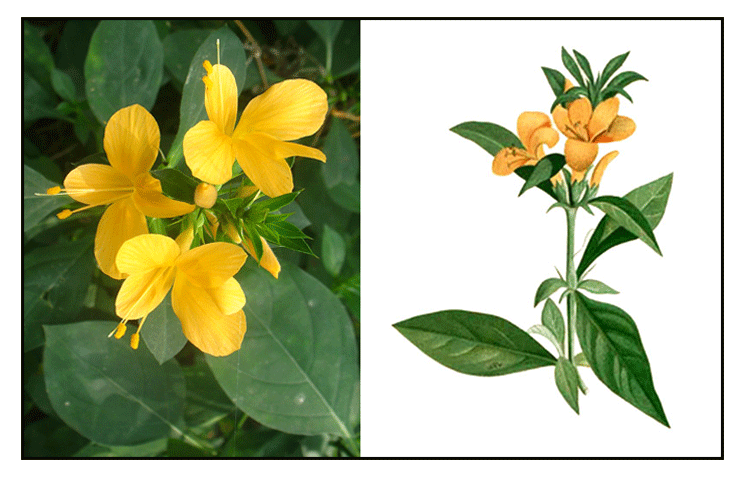
• Kolinta is an erect, smooth, branched shrub, growing up to 1 to 2 meters high, with slender axillary spines. Leaves are elliptic to elliptic-ovate, 6 to 12 centimeters long, narrowed, and pointed at both ends. Flowers are yellow and axillary, with the upper ones in spikes. Bracts and calyx are green, with the outer bract usually foliaceous. Corolla is about 4 centimeters long.
Distribution
- Native to the Philippines.
-
In thickets and waste places, in and about towns, at low altitudes.
- Also native to Assam, Bangladesh, China South-Central, Eritrea, Ethiopia, India, Jawa, Laccadive Is., Laos, Lesser Sunda Is., Madagascar, Malaya, Maldives, Myanmar, Nepal, Nicobar Is., Pakistan, Saudi Arabia, Sri Lanka, Sulawesi, Thailand, Vietnam, West Himalaya, Yemen. (22)
 Constituents Constituents
- Large amount of neutral and acid resin soluble in light petroleum ether.
- Leaves yield alkaloids, glycosides and tannin.
- Phytochemical analysis of
leaves yielded alkaloids, flavonoids, steroids, saponins, tannin, and phenolic compounds. (See study below) (18)
- An ethanolic extract yielded a new compound, balarenone (1), along with three known compounds, pi- pataline (2), lupeol (3) and 13,14-seco-stigmasta-5,14-diene-3-α -ol (4) and three different derivatives of compound (2), 7,8-epoxypipataline (5), 8- amino-7-hydroxypipataline (6) and 7,8-dibromopipataline (7). (See study below) (20)
- Phytochemical analysis of hydromethanolic extract of whole plant yielded glycosides, saponins, flavonoids, steroids, and tannins. (Maji et al., 2011). Ethanolic extract yielded balarenone, pipataline, lupeol, prioniside A, prioniside B, and prioniside C. (Ata et al., 2007; Kosmulalage et al., 2007). Aerial parts yielded glycosides viz., barlerinoside, verbascoside, shanzhiside methyl ester, 6-O-trans-p-coumaroyl-8-O-acetylshanzhiside methyl ester, barlerin, acetylbarlerin, 7-methoxydiderroside, lupulinoside. (Taneja and Tiwari, 1975; Chen et al., 1998; Singh et al., 2005; Ata et al., 2009). (23)
- Study isolated two new iridoid glycosides (1 and 2), together with known compounds barlerin (3) and verbascoside (4). (see study below) (29)
 Properties Properties
- Considered diaphoretic, diuretic, expectorant, febrifuge.
- Studies have shown antimicrobial, anthelmintic, anticataract, antifertility, antioxidant, antidiabetic, anti-arthritic, nootropic, immunomodulatory, anti-inflammatory, hepatoprotective, antioxidant, analgesic, nephroprotective properties.
Parts used
Leaves, tops, roots, juice.
Uses
Folkloric
- In the Philippines, decoction of leaves and tops used for bathing in cases of febrile catarrh.
-
Whole plant used for urinary and paralytic affections, rheumatism, jaundice, hepatic obstruction and dropsy.
- Root decoction or infusion used as mouthwash to treat toothache and bleeding gums.
- In Abyssinia, used as febrifuge.
- Paste of roots is applied to boils and glandular swellings.
- In the Konkan, dried bark is given in whooping cough; for anasarca, the juice of the fresh bark with milk.
- In catarrhal afflictions of children with fever and phlegm, two teaspoons of a mixture of the juice of leaves in honey or sugar and water, twice daily.
- For rain soaked feet, juice of the leaves applied to the feet to prevent cracking and laceration.
- Juice of leaves mixed with honey applied to bleeding gums; also used as ear drops for otitis.
- In indigenous systems of medicine in India, stem, leaves and flowers are used for fever, toothaches, inflammation, gastrointestinal disorders, whooping cough. Roots used as tonic and diuretic.
- In Thailand and India, decoction of leaves and flowers used for viral fever.
- In West Bengal used by the Santals as abortifacient: 3 gm of fresh root is crushed with about 100cc of pochai (alcohol from rice) or Mahua (alcohol from flowers of Bassia latifolia, given once daily in the early morning for 3 to 5 consecutive days in induce abortion up to 3 months pregnancy.
- In Ayurveda, known as sahachara, baana, kurantaka, kuranta, koranda, korandaka, shairiya and pita-saireyaka. (23)
- In India, flowers are used internally for the treatment of migraine, internal abscesses, edema, hemoptysis, urethral discharges, seminal disorders and to reduce obesity. Leaves used for the treatment of gastric ulcers.
Others
- Dye: Study have suggest plant as a source of a natural dye. (see study below) (39)
- Cosmetics: Plant extracts incorporated in herbal cosmetics and hair products to promote skin and scalp health. (45)
Studies
• Anti-Inflammatory / Anti-Arthritic: Study of 'TAF' fraction from methanol-water extract of B prionitis exhibited significant anti-inflammatory activity against different animal test models and significant anti-arthritic activity in adjuvant-induced polyarthritis test in rats. (1)
• Hepatoprotective: Study ethanol extract of aerial parts exhibited significant and concentration dependent hepatoprotective activity against carbon tetrachloride, galactosamine and paracetamol induced hepatotoxicity in rats. (2)
• Anti-Diabetic / Leaves: Study of the alcoholic leaf extract of Barleria prionitis showed a significant decrease of blood glucose levels and glycosylated hemoglobin. (3)
• Antifertility / Reduction of Spermatogenesis: Study of isolated fractions of BP root methanolic extract in rats showed a significant reduction of spermatogenesis, with significant reduction of sperm motility. (4)
• Antifertility / Spermatogenesis Effects: Study showed root extract to exhibit interference with spermatogenesis. The antifertility effects seem to be mediated by a disturbance in testicular somatic cells functions (Leydig and Sertoli cells) resulting in the physio-morphological events of spermatogenesis. (7)
• Antinociceptive / Anti-Inflammatory Activity / Flowers: Results showed the ethanolic extract of the flower of B. prionitis possess significant anti-inflammatory and antinociceptive activity. (5)
• GTS (glutathione S-transferase) and Acetylcholinesterase Inhibition: Screening of crude extracts of B prionitis showed GST inhibitory activity and AChE inhibition. GTS are considered responsible for decreasing the effectiveness of anticancer / antiparasitic agents and AChE inhibitors have potential applications in the treatment of cardiac disorders and Alzheimer's disease.(6)
• Antifungal / Antimicrobial / Bark: Study of methanolic extract of bark showed more potent activity against all test oral fungi (S. cerevisiae, C. albicans strains) than the standard drug Amphotericin B. Even crude extracts showed good activity against dental caries-causing oral pathogens. (8)
• Anti-Inflammatory / Roots: Various root extracts were tested for anti-inflammatory activity using carrageenan-induced rat paw edema. The aqueous extract was the most active with significant dose-dependent anti-inflammatory activity. (9)
• CNS Activity / Antidepressant Effect: Study evaluated the CNS activity of a 70% ethanol extract of leaves in Swiss albino mice. Results suggested B. prionitis exhibited antidepressant activity in the tested animal models. (11)
• Topical Anti-Inflammatory: Study evaluated the topical anti-inflammatory activity of different species of Barleria against croton oil induced edema in female rats. The chloroform extract of B. prionitis showed the best topical activity with 88.31 per cent inhibition of ear edema. (13)
• Mast Cell Stabilization and Membrane Protection: Study evaluated the membrane stabilization and mast cell protection activity of a hydroalcoholic extract of B. prionitis whole plant. Results showed dose-dependent inhibition of hypo-saline induced erythrocyte membrane hemolysis and induced mast cell degranulation . The results validate the anti-inflammatory activity and supports its traditional usage for inflammatory disorders. (14)
• Anti-Diabetic / Leaves and Roots: Study evaluated the antidiabetic activity of various parts of B. prionitis using alloxan induced hyperglycemic rats. Alcoholic and aqueous extracts of leaf and root caused significant reduction in blood glucose, an effect almost equipotent to chlorpropamide. (15)
• Antibacterial / Leaves: Study evaluated various extracts of B. prionitis against S. aureus, B. subtilis, P. vulgaris, K. pneumonia, E. coli and P. aeruginosa. Results showed significant activity against all tested pathogens. (16)
• Antimicrobial / Bark Extracts / Oral Diseases: Study evaluated various bark extracts for antifungal activity on two Candida albicans strains and Saccharomyces cerevisiae causing oral diseases in humans and antibacterial activity against four oral bacteria, viz., S. mutans, S. aureus, Pseudomonas sp., Bacillus sp. The methanolic extract showed more potent activity against all tested oral fungi than standard drug amphotericin B. The methanolic extract was also most effective against all four oral bacteria. (17)
• Antihypertensive Activity / Leaves: Study evaluated the antihypertensive activity of a methanolic extract of leaves using DOCA salt induced antihypertensive model. Results showed significant antihypertensive effect. Phytochemical analysis yielded alkaloids, flavonoids, steroids, saponins,, tannin and phenolic compounds. (18)
• Nootropic Activity / Memory Function / Leaves: Study evaluated a leaf extract for effects on cognitive dysfunction and influence on brain cholinergic system in experimental rats. Results showed the leaf extract enhances memory function possibly mediated through the brain cholinergic system. (19)
• Antibacterial / Glutathione S-Transferase and AChE Inhibitory Activity: Study yielded a new compound, balarenone (1) along with three known compounds 4, 5 and 6, three derivatives of compound 2 (5,6 and 7). Compounds 1,2, and 4 exhibited antibacterial activity against B. cereus and P. aeruginosa. Compounds 1-4 showed activity against GST and AChE. (See constituents above) (20)
• Immunomodulatory Activity / Aerial Parts: Study investigated in vivo and in vitro immunomodulatory activities of the iridoids fractions of B. prionitis aerial parts. Results showed potent immunostimulatory activity, stimulating both the specific and non-specific immune mechanisms. (21)
• Anti-Arthritic Activity / Leaves: Study investigated the anti-arthritic potential of ethyl acetate fractions of chloroform extract of leaves of B. prionitis against formaldehyde-induced acute non- immunological and Freund's Complete Adjuvant-induced chronic immunological arthritis in rats. Results showed dose-dependent and significant inhibition of edema in both acute and chronic models. (24)
• Anticataract Potential / Leaves: Study evaluated the anticataract potential of B. prionitis using Selenite and Galactose induced cataract models. Results showed oral administration of Barleria prionitis significantly delayed the onset and progression of cataract in Selenite as well as Galactose induced cataract. BP reverses cataract parameters by virtue of its antioxidant potential. (25)
• Antioxidant Potential / Leaf and Stem: Study investigated the antioxidant potential of different extracts of BP leaf and stem, measured against DPPH as compared to standard ascorbic acid and BHA. Methanolic extracts of both leaf and stem should highest IC50 values of 63.41±0.32, 81.69±0.40 respectively. Antioxidant activity was attributed to phenolic contents. (26)
• Gastroprotective / Anti-Ulcer / Leaves: Study evaluated the gastroprotective activity of leaf extracts using experimental in-vivo models. The chloroform extract and ethyl acetate fraction prevented gastric ulceration caused by indomethacin. Also, the EA fraction inhibited gastric secretion in pylorus ligated rats. (27)
• Effect on Oral Health as Mouthwash: Study evaluated the efficacy of Barleria prionitis extract mouthwash in comparison with gold standard chlorhexidine (CHX) mouthwash on oral health. Results showed CHX and B. prionitis were statistically equally effective against dental plaque. Results suggest antimicrobial potential and supports its folklore use as preventive remedy against oral microbial diseases. (28)
• Iridioids / Anti-Viral: Study isolated two new iridoid glycosides (1 and 2), together with known compounds barlerin (3) and verbascoside (4). A 3:1 mixture of 1 and 2 were shown to have potent in vitro activity against respiratory syncytial virus with EC50 2.46 µg/ml and IC50 of 42.2 µg/ml. (29)
• Silver and Gold Nanoparticles / Catalytic Potential / Leaves: Study reports on the rapid, efficient, eco-friendly synthesis of silver and gold nanoparticles using Barleria prionitis leaf extract. Both Ag and Au nanoparticles exhibited efficient catalytic reduction of o-nitrophenol to o-aminophenol. (30)
• Gastroprotective in Various Ulcer Models / Antioxidant / Leaves: Study evaluated the gastroprotective effect and in vivo antioxidant potential of a standardized iridoid fraction from B. prionitis leaves against different gastric ulcer methods in rats. The extract showed a dose dependent ulcer protective effect in pylorus ligation, aspirin, cold restrained stress and ethanol induced ulcer models. Treatment showed a decreased in acid-pepsin secretion and enhanced mucin and mucosal glycoproteins. The BPE reduced the ulcer index with a significant decrease in LPO and an increase in CAR activity in the CRS-induced model. (31)
• Antioxidant: Study evaluated the antioxidant activity of various fractions (hexane, chloroform, ethyl acetate, and butanol) of 90% methanolic extract using DPPH assay and ascorbic acid as standard. The ethyl acetate soluble fractions showed maximum activity followed by butanol, chloroform, methanol, and hexane fractions. (32)
• Antibacterial / Aerial Parts: Study evaluated the antimicrobial effects of B. prionitis ethanol extract of leaves against five pathogenic bacteria. Best results were seen against P. aeruginosa, followed by B. thruengenesis, C. diphtheria, S. typhi, and C. pneumonia. Phytochemical screening of leaves yielded alkaloids, flavanoids, saponins, and tannins. (33)
• Antimicrobial / TNF-Alpha Inhibitory Activity: Study evaluated the antimicrobial activity of aqueous and ethanolic leaf extracts of Barleria prionitis and A. grandiflora in the treatment of oral ailments such as gingivitis.
Both extracts showed significant antimicrobial potency. The cytokine level significantly increase by Streptococcus mutans was significantly reduced in a dose dependent manner by ethanolic extracts in S. mutans stimulated HGF cells. Both ethanolic extracts EBG and EBP showed 65.32 ± 1.087 and 75.0425 ± 1.268 ∞ inhibition of TNF-α at tested concentrations. (34)
• Antimicrobial / Common Respiratory Tract Infections / Aerial Parts: Study evaluated the antimicrobial potential of B. prionitis aerial parts against bacterial and fungal infections. Maximum inhibition zone was found against S. pneumonia (19.40 ± 0.64 mm), followed by S. aureus, P. aeruginosa, S. pyogenes, H. influenza, and Candida albicans. (36)
• Antipyretic / Leaves: Study of a methanolic leaf extract of Barleria prionitis in albino rats using Brewer's yeast induced pyrexia method showed significant antipyretic activity. Paracetamol was used as standard. (37)
• Synergistic Composition with B. prionitis / Hepatoprotective / Immunomodulatory: Invention presents a synergistic composition of bioactive fractions consisting of iridoid glucosides, acetyl barlerin, and shanzhiside methyl ester isolated from Barleria prionitis along with the process of isolating the bioactive fraction. The invention relates to use for treatment of mammals for hepatotoxicity, stress, and immunodeficiency with synergistic bioactive composition. (38)
• Natural Dye / Antifungal / Aerial Biomass: Study the natural dye extracted from aerial parts of Barleria prionitis and different kinds of textile fabrics dyed with the natural dye for antifungal activity against standard strains of Aspergillus flavus, A. niger, and A. parasiticus, Fusarium moniliforme and Penicillium canescens. The highest antifungal growth reduction was noted at 500 µg/ml concentration of the natural dye. MIC ranged between 22.50-23.50 µg/mL. Dyed silk, wool, and cotton fabrics showed remarkable antifungal efficacy against all test fungi. Results suggest B. prionitis as a potential source of natural dye with functional properties in providing a protective finishing for various types of textile fibers. (39)
• Anti-Parkinsonism: Study investigated the aqueous extract of Barleria prionitis. for in vivo antioxidant and anti-parkinson properties and neurotransmitter level using MPTP induced parkinson and Rotenone induced Parkinson models. Levodopa was used as standard for both models. Results showed significant anti-parkinsonism activity in MPTP and rotenone model in mouse and rats, respectively. Mode of action was attributed to decreased lipid peroxidation due to presence of flavonoids, polyphenols and glycosides. Extract treated groups woe better results compared with MPTP and Rotenone-induced group and standard L-dopa treated group. (40)
• Platinum and Palladium Nanoparticles / Anticancer / Leaves: Study reports on the synthesis of platinum nanoparticles (PtNPs) and palladium nanoparticles (PdNPs) using Barleria prionitis leaf extract. Both PtNPs and PdNPs were tested for anticancer activity against human breast adenocarcinoma (MCF-7) cell lines and showed reduced viability up to 60.08 ± 2.4% and 57.22 ± 1.68%, respectively. (41)
• Anthelmintic / Fruit: Study evaluated the anthelmintic activity of aqueous and ethanolic extracts of whole plant of B. prionitis against Pheretima posthuma in measures of time of paralysis and time of death. Albendazole was used as standard. Results showed both extracts significantly caused paralysis (p<0.01) in worms in lower doses (50, 75, and 100 mg/ml) and caused death of worms at higher dose of 100 mg/ml compared to standard drug. (42)
• Nephroprotective / Adriamycin Toxicity / Whole Plant: Study evaluated aqueous extracts of three medicinal plants for protective effects against adriamycin (ADR) induced nephrotoxicity in Wistar rats. Lyophilized powder of aqueous leaf extracts of A. moschatus and A. falcatus and whole plant extract of B. prionitis were used at doses of 200, 400, and 600 mg/kg. The extracts exhibited relatively high antioxidant activity in vitro. The three plant extracts significantly attenuated the elevations in serum creatinine, blood urea nitrogen, and urine protein loss in a dose dependent manner in ADR induced nephrotoxic rats (p<0.001). Serum albumin and total protein were significantly increase (p<0.001), along with corroborating histopathological evidence of nephroprotective activity. Results showed significant nephroprotective activity against ADR induced nephrotoxicity. (46)
• Amelioration of DOX-Induced Acute Kidney Injury: Doxorubicin (DOX) is a chemotherapeutic drug with potential nephrotoxic effects used in cancer chemotherapy. Study evaluated the cellular mechanisms underlying the protective effects of B. prionitis extracts in DOX-induced acute renal injury. Treatments with BP extracts (hexane, ethyl acetate, n-butanol, and water) significantly reversed DOX-induced elevations in serum and urine biochemmical markers of nephrotoxicity, along with reduction in levels of tumor necrosis factor-α, interleukin-1ß, and malondialdehyde in kidney homogenates of rats. Immunohistochemical expression of pro-apoptotic B-cell associated X protein was reduced while anti-apoptotic B-cell lymphoma gene product 2 protein was increased in kidney tissues after treatment. Results showed significant amelioration of DOX-induced AKI. Expression of BCl-2 and Bax revealed the anti-apoptotic effects of B. prionitis. BP reversed DOX-induced inflammatory changes via expression of COX-2. (47)
Availability
Wild-crafted. |


_in_Hyderabad,_AP_W_IMG_9993.jpg)


