 Gen info Gen info
- Cucurbita maxima, one of at least five species of cultivated squash, is one of the most diverse domesticated species. The species originated in South America from the wild subspecies Cucurbita maxima subsp. andreana over 4,000 years ago. (51)
- Cucurbita maxima, known for modern varieties as Hubbard, Delicious, Marblehead, Boston Marrow, and Turks Turban, originated in northern Argentina near the Andes or in certain Andean Valleys. (51)
Botany
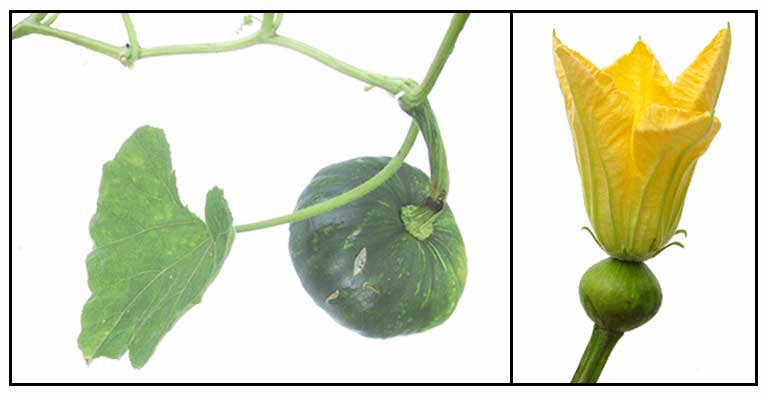
• Kalabasa is a coarse, prostrate
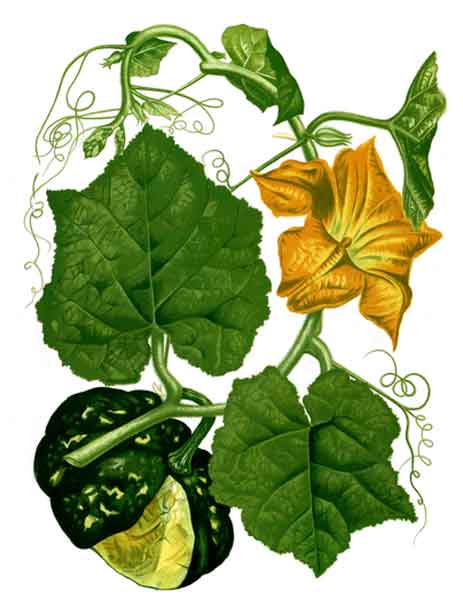
or climbing, annual, herbaceous vine, reaching a length of 4 meters or more. Leaves
are hispid, rounded, 15 to 30 centimeters in diameter, heart-shaped at the base,
shallowly 5-lobed, with finely toothed margins, and often mottled on the upper surface. Flowers are bell-shaped,
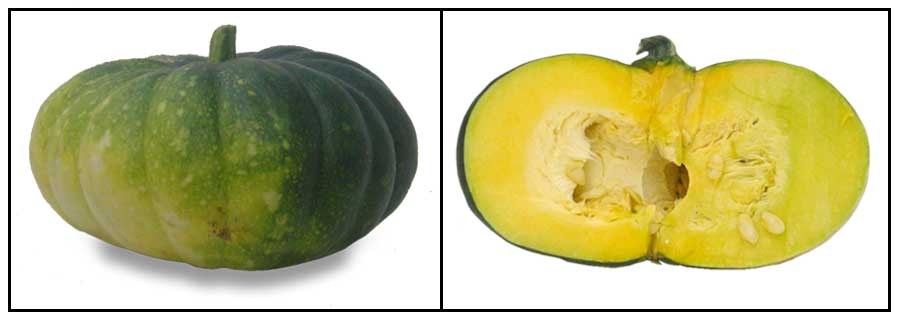
erect, yellow and about 12 centimeters long, the corolla limb is about as wide, and 5-toothed. Fruit is large, variable in shape, fleshy, with a yellow pulp.
Seeds are ovoid or oblong, compressed, and about 1.3 centimeters long.
Distribution
- Naturalized.
-
Widely cultivated throughout
the Philippines as a vegetable produce.
- Occasionally found as an escape.
- Planted in all warm countries.
- Native to Argentina Northeast, Argentina Northwest, Bolivia. (24)
 Constituents Constituents
• Phytochemical screening yielded carbohydrates, steroids, proteins and amino acids.
• Fruit contains
fat, 10%; pentosan, 5.2 %; protein, 14.2%; and ash, 9/3%.
• Seeds yield proteins (24-36.5%) and oil (31.5-51%).
• Seeds
contain fixed oil, 20-25%; a proteid, edestin. The seed's active principle
is a pepo-resin found in the cotyledons.
• Curcurbitin, a constituent in pumpkin seeds has shown anti-parasitic
activity in the test tube.
• Seed extract yielded carbohydrates, saponins, and flavonoids.
• Proximate analysis of powdered seed yielded moisture 4.06%, ash 3.80%, crude fiber 2.91%, total lipid 36.70%, total protein 34.56%, total soluble protein 18.10%, sugar 1.08%, and starch 2.15%. Mineral composition yielded nitrogen 5.53%, phosphorus 0.71%, sodium 4.80 Cmol/kg, potassium 20.00 Cmol/kg, Calcium 4.40 Cmol/kg, Magnesium 348.7 ppm, iron 290.0 ppm, copper 70 ppm, zinc 39.9 ppm, and manganese 17.9 ppm. (32)
• Lipid analysis of pumpkin seed oil yielded an oil content of 12% with oleic acid 40.58%, stearic acid 27.06%, palmitic acid 17.39%, and linolein acid 14.97%. (see study below) (32)
• Study on seeds isolated three new mutiflorane-type triterpene esters, i.e., 7α-hydroxymultiflor-8-ene- 3α,29-diol 3-acetate-29-benzoate (1), 7α-methoxymultiflor-8-ene-3α,29-diol 3,29-dibenzoate (2), and 7β-methoxymultiflor-8-ene-3α,29-diol 3,29-dibenzoate, along with known compound, multiflora-7,9(11)-diene- 3α,29-diol 3,29-dibenzoate (4). (see study below) (3)
• Proximate analysis of leaves showed ash 12.9%, fiber 11.21%, protein 14.21%, lipid 6.31%, carbohydrate 69.22%, moisture content 74.41%, and caloric value of 348.98 Kcal.
Vitamin content at mg/100g of leaves showed vitamin 49.81 for vitamin A and 31.42 for vitamin C. (35)
• Phytochemical analysis of leaves yielded alkaloids ++, tannin +++, flavonoids ++ and cardiac glycosides +++; negative for terpenes and saponins. (35)
 • Phytochemical screening of ethanol and chloroform extracts of pulp yielded polyphenols, alkaloids, flavanoids, carbohydrates, terpenoids, tannins, saponins, proteins, and amino acids. Glycosides were found in chloroform extract only.
(36) • Phytochemical screening of ethanol and chloroform extracts of pulp yielded polyphenols, alkaloids, flavanoids, carbohydrates, terpenoids, tannins, saponins, proteins, and amino acids. Glycosides were found in chloroform extract only.
(36)
• Protein and antioxidant levels and activities in C. maxima pulp tissue showed protein 74 mg/g, vitamin C 12 mg/g, vitamin E 15 mg/g, reduced glutathione 52.7 mg/g, catalase 40.8 µmoles of H2O2, DOD 102 µg of pyrogallol, glutathione peroxidase 5.7 µmoles of GSH. (36)
• In a study for volatile components, the dominant fruit component was heneicosane (46.5%), followed by benzaldehyde, tricosane, eicosane and pentacosane. Dominant leaf volatiles were (2E0-hexenal (46.2%), nonadecane, benzaldehyde, terpenes (E)-ß-damascone and (E)-ß-ionone while seeds yielded hetadecane (22-3%), tetradecane, octadecane, hexadecane, tridecane and benzaldehyde. (see study below) (38)
• Phytochemical screening of an aqueous extract of leaves yielded alkaloids, flavonoids, terpenoids, steroids, protein
and amino acid, tannin, saponin, carbohydrates, with an absence of cyanogenetic glycosides, anthroquinone, glycosides, cardiac glycosides, fixed volatile oils, and mucilage. (see study below) (42)
Properties
• Considered anti-inflammatory, antipyretic, diuretic, tonic,
vermifuge.
• Studies suggest antimicrobial, anti-inflammatory, antigenotoxicity, analgesic, antipyretic, antidiabetic, antihyperlipidemic, antioxidant, melanogenesis inhibitory, immunomodulatory, anticarcinogenic, anthelmintic, hepatoprotective, anti-thrombotic, anti-platelet aggregation, burn wound healing, anxiolytic, antidepressant, memory-improving, antacid, anticancer properties.
Parts
used
Fruits, seeds, stalk.
 Uses Uses
Edibility
- Widely used as a vegetable in the Philippines, baked, boiled, or stewed.
- Young shoots and flowers used as green vegetable.
-
A vegetable which is
an excellent source of vitamin B. The shoots and flowers contain calcium,
phosphorus and iron. The fruit contains calcium and vitamin A.
- Smaller new leaves are used as salad ingredients, while stems are chopped and boiled with other vegetables. (48)
- Seeds are a good source of protein, zinc, and other vitamins; dried and eaten raw or baked.
- In India, fruit is largely used in curries.
- Fruit makes an excellent substitute for pumpkin in pies.
Folkloric
• In India, fruit pulp is often used as poultice
for carbuncles, boils and ulcers.
• Dried pulp, in the form of confection, used as remedy for hemoptysis and hemorrhages from the pulmonary tract.
• For venomous insect bites, the fruit stalk in contact with
the ripe gourd is cut, dried, and made into a paste and applied to venomous insect bites, especially centipedes.
• The fresh seeds, pulped or in emulsion, are used as anthelmintic. Seeds are eaten
fresh to expel worms from the stomach. For tapeworms, seeds are given with sugar at bedtime, followed with a dose of castor oil in the morning.
• Seed oil used as nervine tonic.
• In Brazil, pumpkin seeds are
used for stomach pain, as anti-inflammatory, antipyretic and anthelmintic.
• In China, pumpkin seeds have
been used for acute schistosomiasis.
• In Thailand, seeds used for kidney
stones.
Others
• Oil: Seed contains an oil. Used for lighting.
• Cosmetic: Fruit can provide a face-mask for dry skins.
• Ritual: In India, fruit used in worship ritual.
Studies
• Antimicrobial / Anti-inflammatory /
Neuro Effects : Extracts of leaves, fruits and flowers of
C. maxima were subjected to pharmacologic and microbiological studies.
Results showed complete inhibition of B. subtilis and partial inhibition
of E. coli. Fruits and leaves showed neuro effects: decrease motor
activity, ataxia, temporary palpebral ptosis among others. Ethyl acetate
extracts of flowers showed decreased respiratory rate, analgesia,
diarrhea and exophthalmos. (2)
• Toxicity evaluation of Cucurbita maxima
seed extract in mice: Study evaluated acute and subacute toxicity effect of hydroalcoholic extract from seeds in mice. Hydroalcoholic extract of CM seeds
had a considerable safety margin and devoid of acute toxicity. The average lethal dose (DL50) is higher than 5000 mg/kg. Results suggest the hydroalcoholic extract from C. maxima seeds at dose of 5000 mg/kg has a considerable safety margin, devoid of acute toxicity. (3)
• Antigenotoxicity / Spinasterol: Study on antigenotoxic constituents of squash flowers
showed isolate SQFwB2D (spinasterol) from the chloroform extract to possess the
most antigenotoxicity, decreasing the mutagenicity of tetracycline
by 64.7%. (4)
• Pumpkin Seed Oil
/ BPH: Pumpkin seed oil has been approved by
the Germany's Commission E since 1985 for the treatment of BPH (benign
prostatic hyperplasia).
• Antiparasitic: Study
showed that pumpkin seed can produce an anthelmintic effect. There was alteration in helmintic motility and a protheolithic effect. Egg destruction was noted in the gravid proglottids. (5)
• Hypoglycemic: Study
evaluated the hypoglycemic activity of fruit juice and hydro-alcoholic extract of C. maxima in STZ-induced diabetic rats. Both caused significant decrease in hyperglycemia, with the extract showing more hypoglycemic effect than the fruit juice. (8)
• Immunomodulatory / Seeds: Cm seeds were tested for immunomodulatory effects using a dexamethasone-induced immunosuppression model in rabbits. Results showed Cucurbita maxima possesses potential to act as an immunomodulator. (9)
• Antidiabetic / Aerial Parts: Study of antidiabetic activity of methanol extract of aerial parts in Wistar albino rats against STZ-induced diabetes showed fasting blood glucose reduction in a treatment-duration dependent manner. (10)
• Anticancer / Aerial Parts: Study evaluated the antitumor activity of a methanol extract of C. maxima Duschesne aerial parts on Ehrlich Ascites Carcinoma model in mice. Results revealed significant anticancer activity attributed to its cytotoxicity and antioxidant properties. (11)
• Sterols / Antimicrobial Activity / Flowers: Study of flowers afforded a 4:1 mixture of spinasterol and 24-ethyl-5a-cholesta-7,22,25-trien-3ß-ol. Results showed slight activity against fungi A. niger and C. albicans and bacteria B. subtilis and P. aeruginosa. (12)
• Anthelmintic / Schistosomiasis: Study of a decoction prepared from C. maxima var. alyaga seeds showed a killing effect on S. japonicum somulae in vitro, with a dose-effect relationship in the mean percentage somula death. (13)
• Hepatoprotective / Seeds / Leaves: Study showed the hepatoprotective activity of methanol extracts of C maxima and Legenaria siceraria seeds against paracetamol-induced hepatotoxicity. (14) Study evaluated the effects of C. maxima leaf extract in acetaminophen-induced liver injury in Wistar rats. Results showed decreased levels of elevated AST and ALT. Hepatic tissue showed reduced liver damage caused by oxidative stress, which in turn activated autophagy. (57)
• Anthelmintic Activity / Comparative Study: Study compared the in-vitro anthelmintic activity of Asparagus racemosus and C. maxima against Indian model. Both ethanolic and aqueous extracts of both plants showed significant anthelminthic activity, with the EE of A. racemosus showing better activity. (15)
• Human Overactive Urinary Bladder / Pumpkin Seed Oil: Study evaluated the effect of pumpkin seed oil from C. maxima on urinary dysfunction in human overactive bladder. Pumpkin seed oil significantly reduced the degree of OABSS (overactive bladder symptoms score). (16)
• Anti-Inflammatory / Fruit: Study evaluated a methanol extract of fruit for anti-inflammatory activity in rats using a carrageenan induced paw edema model. Results showed potent anti-inflammatory activity. Standard reference drug was indomethacin. (17)
• Humoral Immune Response / Seeds: Study evaluated the humoral immune response in rabbits treated with Cucurbita maxima seeds. Dexamethasone caused significant decreases in antibody titer and immunoglobulin concentration whereas dexamethasone plus cucurbita maxima and dexamethasone plus levimasole showed significant increase in these entities. Results showed C. maxima seed powder has the ability to modulate humoral immune response in normal and immunosuppressed rabbits. (18)
• Cell Mediated Immune Response / Seeds: Study evaluated C. maxima seeds for its immunomodulatory effects using a dexamethasone induced immunosuppression model in rabbits assessing cell mediated immune response. Results showed C. maxima seed has the potential to reverse dexamethasone induced cell mediated immunosuppression in rabbits. (44)
• Protease Inhibitory Activity / Seed Coat Extracts: Cucurbita maxima and Citrullus lanatus seed coat extracts showed good protease inhibitory activity. (19)
• Corrosion Inhibition: Study evaluated the inhibitive action of peel of Cucurbita maxima on mild steel corrosion. Results showed the extract functions as a good corrosion inhibitor with IE increasing with extract concentration. (20)
• Anti-Inflammatory / Seed Extract / Foregut Induced Injury: Results showed CMSE has the ability to maintain foregut mucosal integrity normalizing redox system activity and inflammatory mediators. (21)
• CNS Stimulant Activity / Seed Oil:Study evaluated the CNS stimulant activity of crude drug extract in swiss albino mice. Results showed a petroleum ether extract showed good CNS stimulant effect that can be explored for therapeutic use as alternative treatment in medical conditions associated with dizziness and sedation. (22)
• Anti-Giardial Activity:Study evaluated the antigiardial activity of C. maxima, D. cucurbita pepo, and L. siceraria. Cucurbita maxima petroleum ether extract of seeds showed the highest activity against Giardia lamblia. The activity could be due to the presence of triterpene (cucurbitacins). (23)
• Anthelmintic:Study evaluated the antiparasitic activity of C. maxima using canine tapeworms on exposed albino rats. Results showed an anthelmintic effect at MIC of 23 gr. of pumpkin seed in 100 cc of water. Superficial non-erosive gastritis was noted in rats after 4 hours of 9 gr/kg. (25)
• Antidiabetic / Antihyperlipidemic:Study evaluated the antidiabetic and antihyperlipidemic effect of various extracts of seeds of C. maxima in STZ-induced diabetic wistar albino rats. Results showed significant reduction (P<0.05) in blood glucose and significant decrease in total cholesterol, LDL, VLDL, triglycerides, and marked increase in serum insulin and HDL-cholesterol. (26)
• Cytotoxicity / Seeds: In brine shrimp lethality assay, the LD50 of a methanol extracts and petroleum ether fraction of Pumpkin seed were 31.70 ppm and 21.95 ppm respectively. (27)
• Antibacterial / Seed: Study
of ethanol seed extract showed a spectrum of inhibition on Staph aureus, B. subtilis, P. mirabilis, K. pneumonia and E coli.
• Diuretic: Study
of a hydroalcoholic extract showed significant (p<0.01) diuretic activity at the dose of 300 mg/kg when compared to control acetazolamide. (28)
• Toxicity Study / Aerial Parts: Study
in mice evaluated the safety of methanol extract of aerial parts. Extract was well tolerated up to 2g/kg in acute toxicity study. In subacute toxicity study, it exhibited no significant alterations in any parameters. (29)
• Analgesic Study / Aerial Parts: Study
evaluated the analgesic effect of hydroalcoholic extract of CMD in a formalin model in rats. Results showed reduction of acute pain and chronic pain in all concentrations. Naloxone inhibited the analgesic effect of the extract. (30)
• Lipid Composition / Seeds: Lipid analysis of pumpkin seed oil yielded an oil content of 12% with oleic acid, stearic acid, palmitic acid, and linolein acid. The high degree of unsaturation makes it suitable as a drying agent, and the lower fatty acid content makes it suitable for edible use. (see constituents above) (32)
• Triterpene Esters / Cytotoxicity and Melanogenesis Inhibition / Seeds: Study on seeds yielded three new multiflorane-type triterpene esters (compounds 1-3). Compound 1 exhibited melanogenesis inhibitory activity. Compounds 1 and 3 showed weak cytotoxicity against HL-60 and P388 cells. (33)
• Dried Vegetable Snack with High Carotenoid Content: Study evaluated cultivars of C. maxim for use as ready-to-eat dried snacks with high carotenoid content. The cultivar 'Amazonka' showed a potential for production of chips with high beta-carotene content (200 µg g-1). Results suggest winter squash can be exploited as a novel product with attractive taste and color to serve as a valuable source of carotenoids in human diet. (34)
• Antibacterial / Leaves: Study of C. maxima leaf extract showed significant antibacterial activity against Staphylococcus aureus, Bacillus subtilis, Pseudomonas aeruginosa, and Escherichia coli. (see constituents and nutrient analysis above) (35)
• Anti-Diabetic / α-Amylase and α-glucosidase
Inhibitory Activity / Seeds: Study investigated the α-amylase and α-glucosidase inhibitory activities of aqueous extract of C. maxima seeds in vitro. Results showed appreciable α-amylase inhibitory activity of 46.03±1.3% with IC50 of 7.00±0.29 mg ml-1, together with substantial α-glucosidase inhibitory effect of 35.11±1.04% with IC50 at 8.11±0.36 mg ml-. Study suggest a potential herbal candidate for the management of postprandial hyperglycemia associated with T2DM. (37)
• Volatiles and Fatty Oil: Study evaluated the volatile fractions from fruit, leaf, and seed of pumpkin (C. maxima) and oil extracted from seeds, together with fatty acid composition and antioxidant activity. Seed oil is richest linoleic acid (46.1%), oleic acid, and palmitic acid. Radical scavenging activity of the seed oil was 43.9%. (see constituents above) (38)
• Anti-Cancer / Human Liver Cancer / Flowers: Study evaluated the anticancer activity of compounds isolated from an ethyl acetate fraction of C. maxima flowers against human liver cancer HepG2 cell line by MTT assay. All concentrations of the isolated compound showed anticancer activity via apoptosis induction. (39)
• Anti-Prostate Cancer Activity / Desmosterol / Seed: Study of methanol seed extract identified desmosterol as a predominant compound. Docking studies of the compound against androgen receptor showed a high binding affinity score. Results suggest that desmosterol compound from the plant may render anticancer activity against Androgen Receptor. (40)
• Antihypertensive: Study evaluated a methanolic extract of C. maxima on systolic, diastolic, mean blood pressure and heart rate in a rat model. The methanolic extract significantly prevented the increase in SBP, MBP, DBP, and heart rate of glucose induced hypertensive rats. (41)
• Neuroprotective /
ß-Amyloid Toxicity / Leaves: Study evaluated the neuroprotective effects of an aqueous extract of leaves of C. maxima in vivo on transgenic Aü42 model of Drosophila melanogaster, a novel model system for a study of Alzheimer disease. Results showed potential in vivo neuroprotective activity on D. melanogaster against beta amyloid induced neuronal death. The activity may be due to polyphenolic content, DL-methionine. (see constituents above) (42)
• Comparative Anthelmintic Activity / Seeds: In an in vitro evaluation of anthelmintic activity of Zingiber zerumbet rhizomes and Curcuma maxima seeds on a Pheretima posthuma mode, ZZ showed better activity than C. maxima. (43)
• Amoebicidal / Antimicrobial / Antioxidant / Leaves and Seeds: Study evaluated the amoebicidal activities of two medicinal plants used in Sudan viz. Adansonia digitata leaves and Cucurbita maxima seeds against E. histolytica trophozoites in vitro. Ethanolic extracts of C. maxima exhibited 100% inhibition at concentration of 500 µg/ml compared with metronidazole at 80% inhibition. The plants also showed high antimicrobial activity in tested bacterial and fungal strains. The CM extract also showed moderate antioxidant activity via DPPH free radical assay. (45)
• Antimicrobial / Flowers: Study investigated the antimicrobial activity of C. maxima flowers. Results suggested a compound isolated from ethyl acetate fraction showed superior antibacterial and antifungal activity against organisms such as S. typhi, E. coli. E. faecalis, B. cereus, C. lunata, and C. albicans. (46)
• Anthelmintic / Seeds: Study evaluated the anthelmintic effect of pumpkin seeds (Cucurbita maxima) against Aspiculuris tetraptera in naturally infected mice. Results showed the efficacies for water or ethanol extracts of seed and ivermectin were 81, 85, and 91% compared with negative control, respectively. Results showed high anthelmintic activity against nematodes and supports its continued use in traditional medicines for the treatment of helminthiasis. (47)
• Diuretic / Seeds: Study evaluated the diuretic activity of C. maxima seeds at doses of 150 mg/kg and 300 mg/kg compared to standard drug furosemide. Results showed significant increase in urinary volume, urinary and serum electrolytes secretion. The activity was more significant at 300 mg/kbw. However, effect was not as strong as standard drug furosemide. (48)
• Hematologiical Activity / Phenylhydrazine Induced Anemia / Pulp: Phenyl hydrazine produces free radicals during metabolism. A hydroalcoholic extract of Cucurbita maxima pulp showed hematologic activity against phenyl hydrazine induced anemic rat. At doses of 150 and 300 mg/kg showed significant action against the anemia. (49)
• Sensory Acceptability in Baking: Study evaluated the sensory acceptability of squash of varied quantities of squash in baking cake, in measures of appearance, taste, color, texture, and general acceptability. Results showed significant differences in general sensory acceptability. Being cheap, very nutritious, and locally abundant, results suggest its use should be maximized as a key ingredient in baking cake. (50)
• Anti-pyretic / Seeds: Study evaluated the anti-pyretic activity of pulverized squash seeds on induced pyrexia in male albino rabbits. Paracetamol was used as control. Results showed 250 mg of pulverized squash seeds can lower Brewer's Yeast-induced pyrexia. However, the effect was not at par with paracetamol administration, but undeniably obvious compared to negative control (distilled water). (52)
• Seed Oil: Study evaluated the chemical composition and bioactive compounds of pumpkin seed oil of the 'Bejaoui' Tunisian cultivar. The seed oils contained substantial amounts of fatty acids, especially oleic and linoleic acids. Extraction techniques showed significant effects on antioxidant activity and γ-tocopherol. Cold pressed seed oil showed highest γ-tocopherol content (599.33 mg/kg) and highest oxidative stability (384 h). The chloroform/methanol extracted seed oil, which was rich in total phenolics (54.41 mg GAE/kg) was a more effective scavenger of DPPH radicals. Results suggest cold press extracted seed oil has potential for product innovation in industrial, nutritional, cosmetic,, and pharmaceutical fields. (53)
• Analgesic / Anti-Inflammatory / Seeds: Study evaluated the safety profile and analgesic and anti-inflammatory activity of ethanol extract of Cucurbita maxima and Cucumis sativus seeds. Acute toxicity testing by Lorke's method showed the extracts to be safe. Eddy's hot plate and tail immersion methods and rat hind paw edema method showed significant analgesic and anti-inflammatory activity, with effects comparable to aspirin and brufen. (54)
• Anticancer / Antioxidant / Leaves: Study evaluated the phytochemical composition, in-vitro antioxidant and cytotoxicity effects of extracts of C. maxima leaves. The methanol extract showed higher phenolic and flavonoid content and significant DPPH scavenging activity. In-vitro cytotoxicity against HepG2 (hepatocellular liver carcinoma) showed IC50 of 108.72 µg/ml at 48 hours. (55)
• Immunostimulant on Humoral and Cellular Immunity / Seeds: Study evaluated the immuno-
modulatory effects of C. maxima seeds
on rabbit immune cell proliferation and functions, including IgG production, cytotoxicity, and phagocytosis. Results showed significant stimulation of thymocyte proliferation with 285.7% response, along with 146.5% increase in cytotoxicity in response to aqueous extract. There was notable enhancement in complement activity by 119.9% suggesting potential to modulate both cellular and humoral immunity. Both EtOAc and aqueous extracts led to reduction in macrophage phagocytic function. The ethanol extract showed greater effectiveness against Bacillus, E. coli, and Staphylococcus. Antioxidant activity by DPPH, FRAP), and ABTS methods showed robust effects with all extracts, relating to high levels of phenolic and flavonoid content. (56)
• Anti-Thrombotic / Anti-Platelet Aggregation / Seeds: Study evaluated the antiplatelet activity of aqueous, ethanolic, and methanolic extracts from pumpkin seeds. Results showed dose-dependent inhibition of platelet aggregation induced by adenosine diphosphate, thrombin receptor activator peptide 6 (TRAP-6) and collagen. The extracts inhibited P-selectin secretion and glycoprotein IIb/IIIa activation on TRAP-6 activated platelets. The high fatty acids and plant-based proteins could be related to the high antiplatelet activity. Results suggest potential for prevention of thrombotic events. (58)
• Burn Wound Healing / Seed Oil: Study evaluated the ability of C. maxima seed oil for its ability to heal burn wounds. The seed oil was extracted by hot and cold method, from which alkaloids, flavonoids, saponins, and tannins were identified. Results showed the 100% and 75% were the best concentrations for treatment of burn wound. The 75% contained a vaseline-based ointment, which help in keeping the skin wet to avoid shrinkage and help rehabilitation of skin epithelial cells. (59)
• Anxiolytic / Antidepressant / Memory Improving / Seeds: Study assessed the neuropharmaco-logical benefits of C. maxima seeds evaluating four central nervous system-related functions i.e., anxiety, depression, memory, and motor coordination. Results showed C. maxima exhibited anxiolytic and antidepressant effects with memory improvement. No remarkable effects were observed on motor coordination. Norepinephrine was elevated, which could to linked to the antidepressant effects. The biological effects may be due to the presence of secondary metabolites, such as cucurbitacin, beta-sitosterol, polyphenolic compounds, citrulline, kaempferol, arginine, ß-carotene, quercetin, and other antioxidants. (60)
• Antacid Activity / Seed Powder: Study evaluated the acid-neutralizing capacity of sprouted seeds powder using Fordtran's titration method. The powder was tested against 0.1M hydrochloric acid. Results showed the sprouted seeds exhibited significant antacid potential with potential for future herbal formulations for treatment of acidity and related conditions. (61)
• Anticancer / Antioxidant / Antimicrobisl / Seeds: Breast cancer is the most frequent cancer in women worldwide. Study evaluated C. maxima aqueous seed extract for anti-inflammatory, antioxidant, antimicrobial, and anticancer activity. MCF-7 breast cancer cells were used to test for in-vitro anticancer activity. The extract showed high anti-oxidant activity and antimicrobial activity against all tested microorganisms. The MTT assay showed IC50 of 45.40 µg/ml of extract. The Ao/EtBr staining proved the methanol extract possess protective activity against MCF-7 cell lines. (62)
Availability
- Commercial vegetable
cultivation.
- Pumpkin seed oil in the cybermarket.
- Seeds, seed oil in the cybermarket.
|


