 General info General info
- Senegalia is a genus of flowering plants in the family Fabaceae. Until 2005, its species were considered members of Acacia. The genus was considered polyphyletic and required further division, with the genera Parasenegalia and Pseudosenegalia accepted soon after. (3)
- Senegalia regata is a spiny climbing shrub native to China and tropical Asia.
- Historical snippet: The taxa was first described in 1928 by two American botanists, Nathaniel Lord Britton (1859-1934, co-founder of the New York Botanical Garden), and Joseph Nelson Rose (1862-1928, of the Smithsonian). (34)
- Archaeobotany: Pre-Harappan Banawali (2750-2500 BC), Haryana revealed traces of a mixture of Shikakai with soap nuts and Amla (Indian gooseberry), exhibiting ancient roots of South Asian hygiene. (34)
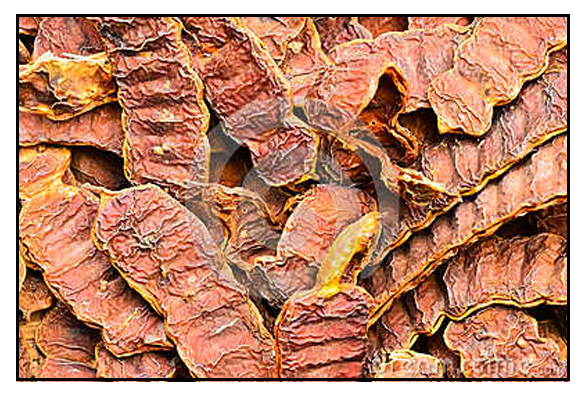
- Etymology: The specific epithet rugata derives from Latin rugatus, meaning "wrinkled", referring to the state of dried pods. (34) The genus name Senegalia refers to a country of plant origin. Acacia derives from the Greek word akakia, meaning "a thorny tree", or from Proto-Indo-European root ake, meaning "point, barb, or thorn."
 Botany Botany
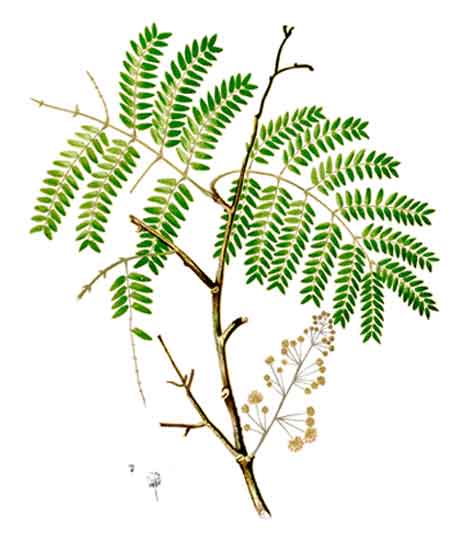
• Acacia concinna is a scandent, prickly shrub or climber reaching a height of 4 to 5 meters. Branches are gray and armed with short, sharp prickles. Leaves are pinnately compound, 15 to 25 centimeters long, and with 8 to 10 pairs of pinnae. Rachis has one gland near the base, and one of two near the apex. Leaflets number 20 to 32 pairs on each pinnae, are linear-oblong, 8 to 10 millimeters in length, with a pointed tip and subtruncate base. Midrib is oblique. Panicles are terminal, in the upper axils, and ample. Heads are yellow, about 1 centimeter in diameter. Pods are straight, somewhat fleshy, flat, 7 to 10 centimeters long, and about 2 centimeters wide.
• A woody climber, shrub, or small tree up to 5 meters (16 ft) tall, with numerous spines. Leaves are bipinnate. Cream to pale-yellow flowers, though buds are red to purplish-red and when the flowers are open they appear cream. The seed pods are distinctive. When fresh, they are smooth, thick, and fleshy; however, when they dry, they become wrinkled, blackish, and very hard. (34)
Distribution
- Native to the Philippines.
-
In Benguet, La Union, and Ilocos Sur Provinces in Luzon, in thickets at low and medium altitudes.
- Also native to Andaman Is., Assam, Bangladesh, Cambodia, China South-Central, China Southeast, East Himalaya, India, Jawa, Laos, Lesser Sunda Is., Malaya, Maluku, Myanmar, Nepal, New Guinea, Sulawesi, Sumatera, Thailand, Vietnam. (13)
 Constituents Constituents
- Soft parts of the dried berries contain 5% saponin.
- Pods have yielded several saponins including kinmoonosides A-C, triterpenoidal prosapogenols names concinnosides A, B, C, D and E with four glycosides, acaciaside, julibroside A1, albiziasaponin C and their aglycone, acacic acid lactone.
- Phytochemical screening of the plant yielded flavanoids, saponins, terpenoids and tannins.
- Phytochemical screening of pods yielded alkaloids, flavonoids, phytosterols, saponin, tannins, phenolic compounds, gums and mucilage. (see study below) (6)
- The pods contain
several saponins, highly polar compounds, such as prosapogenol, and monoterpene glycoside in in various plant parts. The bark yields high levels of saponins, which are forming agents and natural surfactants.
Properties
- Pod is acid, bitter, and singularly pungent; considered deobstruent, astringent and detergent.
- Studies have suggested antibacterial, antioxidant, antiviral, antifungal, antithrombotic, antioxidant, antidermatophytic, anti-obesogenic, insecticidal, ovicidal, contraceptive, immunomodulatory, hepatoprotective, anthelmintic, hypolipidemic, mosquito larvicidal, diuretic, wound healing, antilipogenic, anti-obesity, biodegradable surfactant, methane mitigating, pancreatic lipase inhibitory, lipolysis enhancing properties.
Parts used
Fruit, leaves, bark.
 Uses Uses
Edibility
- Seeds, leaves, flowers and shoots eaten as vegetable.
- In Cambodia, young leaves are included in salads. (13)
- In Thailand, young shoots and leaves cooked in a soup; fruits are eaten raw or cooked. (13)
- Leaves have an acidic taste; used in chutneys.
- Young leaves used as substitute for tamarind (Tamarindus indica) in making chutney.
Leaves can be curried with salted fish and coconut.
- Seeds edible after roasting.
- Young shoots used to make pickles or cooked as vegetable.
Folkloric
- Pods used as deobstruent in cases of jaundice and other biliary derangements.
- Decoction of pods used for biliousness and as purgative.
- Fruit dressed and soaked in water for an hour, filtered, and drunk as an infusion for constipation or jaundice.
Fresh, tender leaves made into chutney by grinding and mixing with kali Mirch, tamarind pulp, and salt, eaten twice daily for jaundice. (28)
- For skin disorders, itching, psoriasis, pimples, 1 tbsp of powder is boiled in water, and applied on affected areas. For hyperpigmentation, paste of powder
prepared by adding water is applied to affected areas. (28)
- For bad breath and gum infection, boiled powder in water is used as gargling solution.
For dandruff, boiled powder solution is also used for washing the hair. (28)
- Decoction of pods used for washing wounds and facilitating wound healing.
- Fruit pods, leaves and bark are dried, powdered and made into paste to make a hair cleanser.
- In India and Sri Lanka, decoction of pods used for washing the hair to promote hair growth and remove dandruff.
-
In India, infusion of leaves used for treatment of jaundice.
- Leaf infusion used for treatment of malaria.
- In Nigeria, stem bark used for skin diseases and as anti-dandruff. (25)
- In Thailand, dried pods use as laxative, antidandruff, antitussive and for skin diseases.
- In Myanmar, India, and Thailand, leaves used to prevent diabetes and skin diseases.
- Pods are used as anti-dandruff shampoo; also to promote hair growth, and as expectorant and purgative. The saponins from the bark has been used for spermicidal activity.
(31)
- In Cambodia, fruits used externally for treatment of abscesses, eczema, and leprosy; taken internally as laxative. Fruit pulp used as diuretic and emetic. Seeds reputed to delivery in childbirth easier. In Thailand, traditional healers use leaves for treatment of irregular menstruation. Bark is chewed and kept in mouth as quid to counter toothache. In traditional Indian medicine, infusion of leaves used for treatment of jaundice. (34)
- The Mullukurumbas of Nilgiris, Wester Ghats, India, used seed powder for baths for skin diseases.
(37)
Other
 - Fish poison: In Bengal, saponins from plant pods used as fish poison. (3) - Fish poison: In Bengal, saponins from plant pods used as fish poison. (3)
- Cosmetic: Ingredient in many cosmetic products, especially for hair and skin care, targeting aging and acne. Shikakai is claimed to promote hair growth, reinforce hair strands, and reduce hair loss when used daily.
Shampoo: Traditionally used for hair care in the Indian subcontinent since ancient times. It is traditionally used as shampoo and added in synthetic Ayurvedic shampoos. It is prepared by grinding dried fruit pods, leaves, and bark into a powder, and then made into a paste. While the shampoo does not produce normal amount of lather as a sulfate containing shampoo, it is considered a good cleanser, mild, with low pH, and does not strip hair of natural oils. Also, an infusion of leaves is used in anti-dandruff preparations. In Myanmar, fruit is mixed with bark of taya (Grewia) tree and sometimes lime, to make traditional tayaw kinpun shampoo. (34)
- Ritual: Use for spiritual cleansing during the Thai New Year. In the northern part of Thailand, the pods are used as an ingredient in traditional Thai holy water in a ritual of sacrifice for senior people. (31)
In royal hair-washing ceremony, Burmese kings wash their hair with tayaw kinpun, in the belief that use of the shampoo wouuld cast away bad luck and briing good luck. It remains a custom among Burmese people to wash their heads with tayaw kinpun, especially on Burmese New Year's day to wash away impurities and bad omens of the past. In Thailand, dried fruit used in holy water to pay respect to the elderly and to evict wickedness. (34)
Studies
• Antidermatophytic: Study pod extracts (ethanol, ethyl acetate, and hexane extracts) showed significant antidermatophytic activity against Trichophyton rubrum, T. mentagrophytes, T. violaceum, Microsporum nanum and Epidermophyton floccosum. (1)
• Immunological Adjuvant Activity / Vaccine Adjuvant: Study of methanolic fractions showed Th1 and Th2 helper cell activity. At dose of 40 µg it can be used as a vaccine adjuvant to increase immune responses. (5)
• Hepatoprotective: An ethanolic extract of pods of Acacia concinna showed significant protective activity in a CCl4-induced liver damage model. (3)
• Antifungal : Study of extracts was done against 35 isolates of dermatophytes and isolates of C. albicans, Cryptococcus neoformans and Penicillium marneffei. Results showed antifungal effectiveness.
• Antibacterial / Fresh Pods: The benzene, methanol and aqueous extracts of fresh pods of A. concinna showed maximum activity against K. pneumonia, B. subtilis, E. coli. (see constituents above) (6)
• Contraceptive: Study in female rats fed with fraction of AE of Acacia concinna showed arrest in the diestrus stage, reduction in pregnancy and implantation, depletion in FSH, LH and estrogen levels. Results showed the acetone fraction of aqueous extract of Acacia concinna can be used as herbal contraceptive without any undesirable side effect. (7)
• Cytotoxic Saponins / Kinmoonosides / Human HT-1080 Fibrosarcoma Cells / Fruits: Study yielded three saponins, kinmoonosides A-C together with a monoterpenoids from a methanolic extract of fruits. The three kinmoonosides showed significant cytotoxicity against human HT-11080 fibrosarcoma cells. (8)
• Volatile Compounds: Study for volatile compounds yielded fatty acids as main constituents, such as palmitic and linoleic acid with rather high amount of furfural and 5-methyl-2-furfural. Esters identified were methyl salicylate, methyl palmitate, isopropyl palmitate, and linalool oxide. The compounds may contribute to the aroma of Som Poy. (11)
• Insecticidal / Ovicidal: Study evaluated the larvicidal and ovicidal activity of extracts of seeds and leaves of Acacia concinna and seeds and flowers of Butea monosperma against Hyblaea puera. Results showed the methanol extract of seeds and EA extract of seeds and leaves were most effective of all extracts with a 100% egg hatch inhibition. (12)
• Siyakkai Hair Wash for Pityriasis capitis / Clinical Study: Sri Lankan use Siyakkai (Acacia concinna) hair wash as home remedy for Pityriasis capitis. Placebo-controlled study evaluated the efficacy of the hair wash prepared from 10g of powdered pods of A. concinna to 240ml of boiled water. Patients treated with SHW showed symptomatic relief in scaling, itching, dryness, and greasiness of scalp after treatment. (14)
• Antioxidant / Anti-Thrombotic: Eight plants including Acacia concinna were evaluated for antioxidant and anti-thrombotic activities. Five out of eight plants, including A. concinna, exhibited more than 85% inhibition against collagen induced platelet aggregation. Results suggest A. concinna have potential for development as an anti-thrombosis agent. A. concinna yielded polyphenol contents of 78.4±2.4 mg/g GAE and 7.8 % GAE, with DPPH IC50 of 0.35±0.018 mg/ml and IC50 Superoxide 0.30±0.013 mg/ml. (15)
• Surfactant Type Catalyst / Pods: Study reports on a simple, efficient, and environmentally benign protocol for the synthesis of 3-carboxycoumarins and cinnamic acids via Knoevenagel condensation using aqueous extract of Acacia concinna pods as a naturally occurring surfactant type catalyst. (16)
• Antioxidant: Study evaluated six Thai plant species for antioxidant activities. Tamarindus indica, Acacia concinna, and Bauhinia malabarica exhibited the most potent inhibition effect on the formation of Heinz body by acetyl phenylhydrazine. A. concinna could inhibit up to 1:40 dilution. (17)
• Novel Anti-Hepatitis C Virus Inhibitors: Study investigated the development of HCV replication inhibitors by the volatile compounds extracted from Acacia concinna which is follow by molecular docking against NS5B polymerase. The interaction of the extracted compounds showed their antiviral properties against SC5BP which could be used in further analysis for inhibition of HCV replication. (18)
• Antibacterial / Leaves / Bark: Study evaluated the antimicrobial potential of acetone extract of A. concinna leaf against five different bacterial strains. Results showed concentration dependent zones of inhibition against Mycobacterium smegmatis and Bacillus subtilis, with MICs of 2.5 mg/ml and 1.25 mg/ml, respectively. Activity could be attributable to phytoconstituents like alkaloids, tannins, and glycosides. (19) Study evaluated the antibacterial properties of a bark extract of A. concinna against bacterial isolates. Results showed good inhibitory activity against all tested pathogens. The chloroform extract showed better activity against P. aeruginosa and S. aureus. (22)
• Monoterpenoidal Carboxamide / Concinnamide / Seeds: Study isolated a new monoterpenoidal carboxamide, concinnamide, from the seeds of A. concinna. Study describes its inhibitory effects on the arachidonate 5-lipoxygenase of RBL-1 cells. (20)
• Study on Topical Microemulsion / Pod: Study evaluated the solubility and stability of A. concinna extract by loading in a microemulsion for topical application. Results showed A. concinna loaded microemulsion may be a promising carrier for development into a topical formulation and clinical trials for pharmaceutical and cosmetical applications. (21)
• Antibacterial / Anthelmintic / Leaves: Study of aqueous extract of leaves showed significant antibacterial activity against gram negative and gram positive bacterial test strains, with maximum antibacterial activity against E. coli and maximum inhibitory activity with Micrococcus luteus. The aqueous extract showed significant anthelmintic activity against earthworm Pheretima posthuma when compared to piperazine citrate at 5 mg/ml. (23)
• Antioxidant / Inhibition of Heinz Body Induction / Leaves: Study evaluated six common Thai plant species for an antioxidant activities. Three plants, T. indica, B. malabarica, and A. concinna (leaves) presented the most potent inhibition effect on hemoglobin precipitation caused by oxidants. (24)
• Antiobesogenic / Saponins / Pods: The pods of Acacia concinna is a potential candidate for treatment or prevention of obesity. Study evaluated the anti-obesogenic compounds of pods of A. concinna. Chromatographic of pod extract guided by pancreatic lipase inhibitory activity led to the isolation of saponins. Decomposition analysis of the saponins revealed the chemical composition to be acacic acid, monoterpenes, and five types of sugars (glucose, xylose, rhamnose, quinovose, arabinose). LC-MS analysis showed the saponins to be a mixture of various derivatives of monoterpenes and sugar units/ The saponins strongly inhibited pancreatic lipase activity with IC50 of 7.9 µg/mL and reduced lipid accumulation in 3T3-L1. adipocytes at 6.3 µg/mL. The saponins also enhanced lipolysis at 3T3-L1 adipocytes by mediating the activity of protein kinase A and extracellular signal-regulated kinase, pathways, suggesting this mechanism is partly responsible for the reduction of lipid content in adipocytes. Results suggest a potential source of anti-obesogenic agent for the treatment and prevention of obesity. (26)
• Antifungal / Pods: Study evaluated the the bioactive compounds and inhibitory potential against the protein responsible for fungal disease causing skin and oral infections. Molecular docking analysis was done against the virulent protein. Geranyl acetone showed the highest binding capacity against candida-pepsin-1 followed by trans-linalool oxide, methyl salicylate, cis-linalool oxide, and 5-methyk-2-furfural. The study focused on targeting the potential dug against enzymes that reduces the cost spent on clinical trials and development of therapeutic products. . (27)
• Allelopathic Potential for Weed Control / Pods: Study evaluated aqueous methanol extracts of pods of Acacia concinna for allelopathic activity and isolation of allelopathic substances. Results showed inhibition of shoots and roots of cress Lepidium sativum), lettuce (Lactuca sativa), alfalfa (Medicago sativa), rapeseed ( Brassica napus), barnyard grass (Echinochloa crus-galli), among others at concentration of 3 and 1 mg dry weight equivalent extract/mL. Growth decreased as concentration of the pod extract increased. The inhibition on roots was stronger than the shoots of test plants. Column chromatography isolated the inhibitory substance ACP-1, which inhibited the shoots and roots of cress by 27.1 and 14.4% of control length, respectively. Results suggest A. concinna has allelopathic activity and ACP-1 may be responsible for this activity. The pods and pod extract may have potential for use in weed management and control. (30)
• Used as naturally occurring surfactant catalyst / Pods: Study reports on an efficient, environmentally benign method for the synthesis of 1,2-disubstituted benzimidazole derivatives using aqueous extract of Acacia concinna pods as a naturally occurring surfactant type catalyst. The surfactant medium was found superior and additive free. Study shows a simple, economically viable and biocompatible catalytic system suggested the possible utility of the present protocol for the large scale construction of benzimidazole derivatives. (32) Study evaluated Acacia concinna as an alternative to synthetic surfactants that are toxic, environmental and health hazards. Acacia concinna pericarp extract is rich with surfactant properties. Proposed natural surfactants enjoy a dual nature, compatible to interact with cationic and anionic dyes. Self degradation of proposed surfactant was observed in ambient temperature and in both aerobic and anaerobic conditions. Study suggests the use of natural surfactant as green substitute to synthetic surfactant. (44)
• Silver Nanoarticles / Antibacterial / Fruits: Study reports on a rapid and eco friendly synthesis of AgNPs using Acacia concinna fruit extract. The plant extract was as both capping and reducing agent. The AgNPs were investigated for activity against E. coli. (33)
• Chemostable Protease / Seeds: Study reports on the isolation, purification and partial characterization of protease from S. rugata seeds. Proteases play an important role in physiological functions of plants and animals. They constitute one of the largest group of enzymes with industrial importance viz: in the food industry for tenderizing meat, brewing, cheese elaboration and bread making. Proteases are wildly used in leather processing for soaking, dehairing, and baiting to remove protein and bloodstain from the skin. Purified protease from S. rugata seeds have very high potential for use as alternative to commercially available proteases. (35)
• Hypolipidemic / Antioxidant / Leaves: Study evaluated the antioxidant and inhibitory activity of water extract of S. rugata leaf on cholesterol synthesis in vitro, and its lipid-lowering activity in cholesterol diet-induced hypercholesterolemic rats. The extract exhibited superoxide radical scavenging activity (IC50 44.90 mg/ml) and dose-dependent inhibitory effect on HMG-CoA reductase (IC50 71.38 mg/ml). The likely mechanism might involve inhibition of HMG-CoA reductase and the antioxidant effect may diminish the incidence of atherosclerosis. Further studies are suggested to isolate the bioactive constituents and to develop a standardized hypolipidemic medicine from S. rugata leaf extract. (36)
• Mosquito Larvicidal / Pods: Study evaluated EESR (ethanol extract of S. rugata pods), PESR (petroleum ether extract of pods), PUFA (polyunsaturated fatty acids) emulsion (PFE) for larvicidal activity against 50 larvae each of four mosquito species. Results showed concentration dependent larvicidal actions of PFE and PESR and potential of S. rugata as environmentally friendly alternative in reducing chemical use for mosquito control. (38)
• Antibacterial / Nanoparticles: Study evaluated Acacia concinna for bioactive compounds and biologic activities. Flavonoids and phenols were present in significant amounts. A. concinna showed significant antimicrobial activity against Z. mobilis, E. coli, and S. aureus with MIZ of 24, 22, and 20 mm respectively. A. concinna AgNPs also showed potent antimicrobial activity.. Extracts showed substantial antioxidant, antihyperlipidemic, antidiabetic, anticancer (MCF-7) and anti-urease (antiulcer) properties. (39)
• Apoptosis Induction / Human Colon Cancer HCT116 Cancer Cells: Study evaluated the impact of A. coccina extract on apoptosis induction and mechanism of effect in KRAS-mutated human colon HCT116 cells. Results showed HCT116 cells exposed to the extract showed reduced cell growth and prompted apoptosis, evidenced by increase in chromatin condensation, apoptotic bodies, the sub-G1 apoptotic cell population, and disrupted MMP. Results demonstrated AC extract could inhibited cell growth via ROS-induced ER stress associated with apoptosis and regulate the MAPK, PI13K/Akt, and
Wnt/ß-catenin signaling pathways in HCT116 cells. Study suggests potential of extract as novel candidate as natural cancer resource for colon cancer treatment. (40)
• Diuretic / Pods: Study evaluated an EEAC for phytochemical constituents, toxicity studies, and diuretic activity using concentration of 500 and 1000 mg/kg in Wister albino rats. Oral toxicity study showed safety up to a dose level of 5000 mg/kbw. The highest dose significantly (p<0.05) and markedly increased urine output. At 1000 mg/kg urinary electrolyte excretion was significantly (p<0.05) increased, along with significant (p<0.01) saluretic and good natriuretic effect, which was attributed to flavonoids, saponins, and alkaloids. Results supports the traditional use as diuretic. (41)
• Wound Healing / Pods: Study evaluated ointment formulations (5% and 10% w/w) of pods extract for wound healing activity in excision and incision wound models in rats. Both 5% and 10% formulations showed significant dose-dependent wound healing activity evidenced by increased % wound contraction, reduced epithelization period, and tensile strength. Activity was attributed to phyto-
constituents such as flavonoids, saponins, alkaloids, and tannins. (42)
• Anti-Adipogenic / Anti-Lipogenic: Study evaluated Acacia concinna and Cymbopogon nardus for effects on lipid metabolism. Plants were extracted in 50% (v/v) aq. methanol and resuspended in 10% DMSO and tested in 3T3-L1 adipocytes and NCTC 1469 hepatocytes. In 3T3-L1 adipocytes, A. concinna plants downregulated adipogenesis genes, lipogenesis genes, and lipolytic genes. In NCTC 1469 hepatocytes, A. concinna lowered all target gene expressions. Results suggest potential for combating obesity through improvement of lipid metabolism, which can act as anti-adipogenic and anti-lipogenic agents. (43)
• Herbal Liquid Shampoo Formulation: Study reports on the formulation of a safe and efficient herbal liquid shampoo containing natural ingredients, which clears sebum, dirt, dandruff, promotes hair growth, strengthens and darkens hair. Ingredients selected were shikekai, ritha, amala powder, fenugreek powder, and tulsi powder. The formulated shampoo exhibited satisfactory results and found in compliance with liquid shampoo properties, showed good cleaning action, and foaming capacity. (45)
• Mitigation of Livestock Methane / Pods: Several herbs are used to mitigate methane emission in livestock. Study evaluated shikakai pods nutritional composition and potential for methane mitigation. Shikakai pods concentrations of 20, 40, 60, 70, and 100 were used. Phytochemical screening showed presence of alkaloids, flavonoids, tannins, phenol, saponins, carbohydrates, proteins, amino acids, phytosterols, and terpenoids in water, methanol, and ethanol extracts of pods. Results showed that among different doses studied in vitro, shikakai pods at 100 mg resulted in lower (53.11%) methane production per 100 mg of truly digested substrate compared to control group. (46)
• Inhibition of Pancreatic Lipase / Enhancement of Lipolysis / Saponin: Acacia concinna has been found to have high anti-obesogenic potential. Study evaluated the anti-obesogenic potentials of A. concinna saponins for lipase inhibition and enhancement of lipolysis in 3T3-L1 adipocyte. Results showed the saponin is an efficient lipase inhibitor and lipolysis enhancer. The saponin also reduced lipid accumulation in mature adipocytes. Results suggest potential for saponin for treatment of obesity. (47)
Availability
- Wild-crafted.
- Tablets, Shikakai powder and shampoo in the cybermarket.
|


.jpg)


