
Gen info
- Jatropha is a genus of flowering plants in the spurge family, Euphobiaceae. It contains approximately 180 species of succulent plants, shrubs, and trees. Most are native to the Anmericas, with 66 species found in the Old World.
- Jatropha contains compounds that are highly toxic.
- Species have been used for basket making, tanning, and dye production.
-
Etymology: Jatropha derives from the Greek words "jatros" meaning doctor, or physician and "trophe" meaning food or nutrition; hence, physic nut.
- Invasiveness: in 2005, Western Australia banned J. gossypiifolia as invasive and highly toxic to people and animals. It is declared a noxious weed in Puerto Rico. In northern Australia, it is naturalised, including Queensland where it is listed as a Class 2 declared pest plant. (52)
 Botany Botany
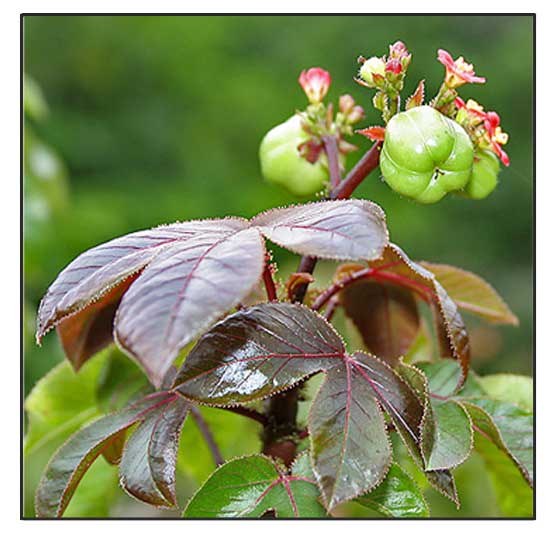
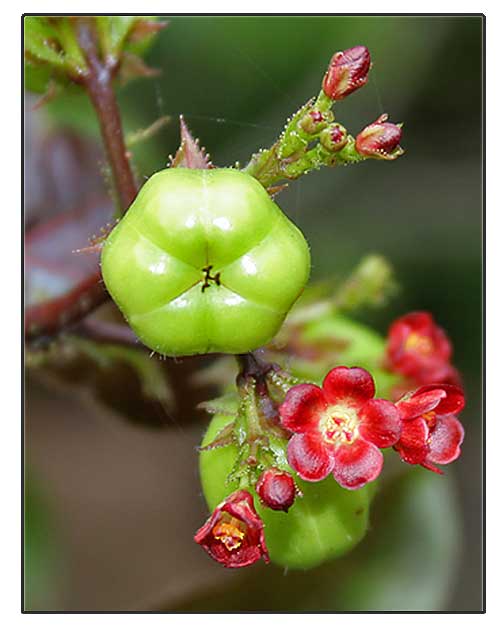
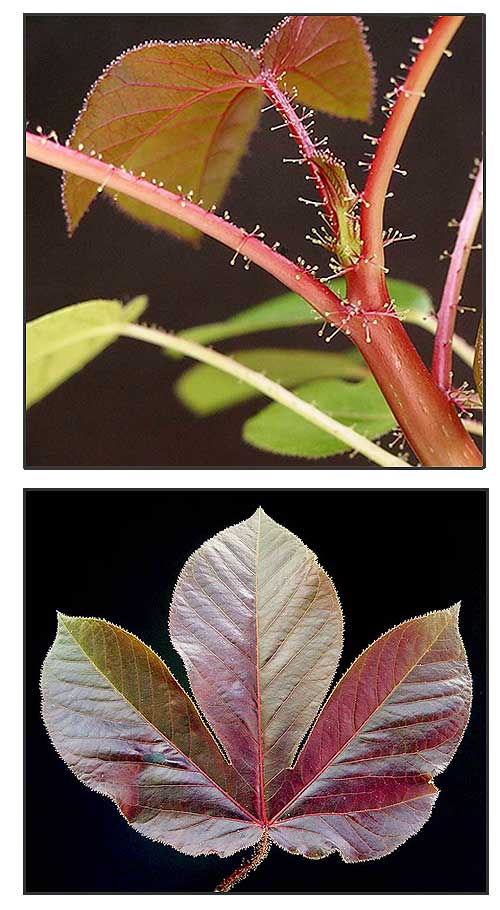
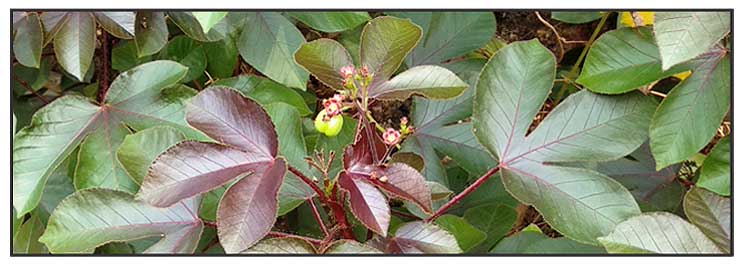
• Tuba-tuba is an erect, branched shrub usually less than one meter high. Petioles, leaf margins and inflorescences are covered with numerous, capitate-glandular hairs. Leaves are shining, smooth, palmately 3- or 5-lobed, 7 to 12 centimeters long, the lobes oblong-ovate and the younger leaves being purplish. Flowers are purple, small, borne on cymes. Capsules are usually 3-lobed, about 1 centimeter long.
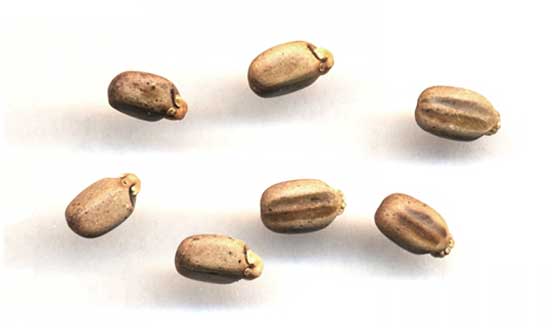
• Shrubs, purplish green and glandular hairy on younger parts. Leaves in close spiral, deeply 3-5-lobed, 7-11 x 8-12 cm, orbicular-cordate, margin with gland-tipped hairs, lobes obtusely acuminate, 5-nerved; stipules glandular-hairy; petiole 3-10 cm long, glandular-hairy. Flowers red with yellow center, unisexual in axillary and terminal monoecious corymbose cymes. Bracts linear-lanceolate, glandular-hairy. Male perianth lobes free, biseriate, reddish-brown, outer c. 5 mm long, lanceolate, inner ones c. 4 mm long, obovate, villous at base within. Stamens 8-10. Female tepals 5. Stamens 8, biseriate. Ovary 3-celled; ovules solitary in each; styles 3, connate below. Capsule 1.3-17 x 1-1.4 cm, 3-lobed. Seeds oblong, 3-gonous.
(India Biodiversity Portal)
Distribution
- Introduced.
-
Naturalized. (66)
-
In waste places at low altitudes in Amburayan; in Ilocos Sur, La Union, Pangasinan, Rizal Provinces in Luzon; and in Biliran, Leyte, Negros, Cebu, and Mindanao.
- Now pantropic.
- Native to Argentina Northwest, Aruba, Bahamas, Bolivia, Brazil North, Brazil Northeast, Brazil South, Brazil Southeast, Brazil West-Central, Cayman Is., Colombia, Costa Rica, Cuba, Dominican Republic, Ecuador, El Salvador, French Guiana, Guatemala, Guyana, Haiti, Honduras, Jamaica, Leeward Is., Mexico Gulf, Mexico Northeast, Mexico Northwest, Mexico Southeast, Mexico Southwest, Netherlands Antilles, Nicaragua, Panamá, Paraguay, Peru, Puerto Rico, Southwest Caribbean, Suriname, Trinidad-Tobago, Turks-Caicos Is., Venezuela, Venezuelan Antilles, Windward Is.
 Constituents Constituents
- Roots yield a very toxic alkaloid, jatrophine, 4 %.
- Stem yields an active principles, a glucoside and a resin.
- Reported to contain psychoactive substances: protease curcain, the alkaloid jatrophine, the cyclic heptapeptide, cyclogossine A, saponins and numerous fatty acids.
- Latex yielded a new cyclic octapeptide, cyclogossine B, together with the known cyclic heptapeptide, cyclogossine A.
- Study of ethanol extract of leaves yielded the presence of phenols flavones, glycosides, steroids, alkaloids, and quinines. Quantification yielded 3.35 mg/kg of alkaloids, 3.60 mg/kg flavonoids, 0.22 mg/kg tannins, and 0.12 mg/kg glycosides. Elemental analysis yielded high level of calcium (3.89%) and iron (85 ppm). HPTLC confirmed the presence of alkaloids, quercetin and fraxetin. GC-MS analysis yielded p-cymene, fumaric acid, 12-octadecanoic acid, 1-heptadecanol and yashabushiketol. (see study below) (15)
- Study of leaves for major inorganic constituents yielded 2.09% moisture, 2.49% organic carbon, 1.21% nitrogen, 3.02% potassium, 0.05% sodium, 3.89% calcium, 3.06% magnesium, 2.09 ppm zinc, 0.40 ppm copper, 85.19 ppm iron, 50-56 ppm manganese, and 0.02 ppm molybdenum. (see study below) (15)
- Methanol and ethanol extracts yielded alkaloids, phenols, steroids and glycosides.
- Various extracts of leaves yielded saponin, tannin, flavonoid, organic acid, glycosides, diterpene, alkaloids, steroids, xanthoprotein, and starch.
-Study of leaf essential oil for volatile components yielded main constituents of sesquiterpenoid germacrene D-4-ol (23.3%), hexahydrofarnesylacetone (15.4%), δ-cadinene (7.7%), tetradecanal (6.8%) and cubenol (6.1%). (23)
- Proximate analysis of J. gossypiifolia leaf yielded crude fat 6.36%, crude protein 14.80%, carbohydrate 34.18%, ash 9.38%, crude fiber 10.31%, moisture content 24.97%, caloric value 253.16 kcal/100g. (24)
- GC-MS analysis of leaf ethanol extracts yielded 18 compounds
with lanosterol (32.47%) and (-)-globulol (18.96%) peak areas. (32)
- GC-MS analysis of methanolic extract of leaves yielded 34 phytoconstituents. Major constituents identified were 1-Monolinoleoylglycerol trimethylsilyl ether (9.58%); 2, 4-heptadienal (E,E) (6.77%); carotene, 1,1’,2,2’-tetrahydro-1,1’-dimethoxy (4.92%); ergosta-5,22-dien-3-ol, acetate (4.59%); lanosterol (31.8%) and stigmasterol (2.07%). Cardenolide and bufadienolide derivatives and various fatty acid derivatives like docosanoic acid, 1,2,3-propanetriyl ester; 9,12,15-octadecatrienoic acid, triolein etc. also reported in GC-MS analysis. (36)
- HPLC analysis of leaf extract confirmed the presence of C-glycosylflavonoids (orientin, isoorientin, vitexin, and isovitexin) as major compounds. (see study below) (58)
- Elemental analysis of dried leaf powder in order of concentration showed: Ca > Mg > Zn > Cu > Cd =As = Hg.
Concentration of trace elements (Cu, Zn, Ca, Mag) were within limits and for heavy metals (Cd, As, Hg) below detection limits compared to standard values, suggesting safety. (65)
- Methanol leaf extract of leaves yielded cardiac glycosides, steroids, triterpenes, tannins, and flavonoids. (see study below) (74)
 Properties Properties
- Studies suggest hemostatic, wound healing, analgesic, anti-inflammatory, antimicrobial, antidiabetic, hepatoprotective, insecticidal, antidiarrheal, genotoxic, antioxidant, anticancer, anti-plasmodial, anti-fertility, acetylcholinesterase and butyrylcholinesterase inhibitory, anticonvulsant, antivenom, antiedematogenic, antibacterial, antileishmanial, analgesic, hypolipidemic, diuretic, anti-biofilm, tocolytic, smooth muscle relaxant, antiemetic, thrombolytic, anticariogenic, lipoxygenase inhibitory properties.
Parts used
Leaves, roots, latex, bark, seeds.
 Uses Uses
Edibility
- In Nigeria, young leaves used in making soup. (see nutrient analysis above 24 and toxicity concerns)
Folkloric
- In the Philippines, cataplasm of fresh leaves is applied to swollen breasts.
- In Venezuela, roots are used in leprosy; decoction of leaves used as purgative and stomachic.
- Latex used on ulcers.
- Latex topically used for treatment of wounds and venomous
animal bites. Seeds and fruits used for treatment of influenza; also used as sedative, analgesic, and anti-diarrheal. (48)
- In Antilles, leaves are used as febrifuge for intermittent fevers.
- Decoction of bark used as emmenagogue.
- Leaves applied to boils and carbuncles, eczema and itches.
- In the Gold Coast, leaves and seeds used as purgative.
- Leaves are boiled and used as baths for fevers.
- Juice used for sores on babies' tongues.
- In the Gold Coast, the pith of old, thick stems yield a yellowish, brown substance which is placed in a clean cloth and squeezed into the nostrils, causing the patient to sneeze and cure the headache.
- Decoction of leaves used for venereal disease and as blood purifier.
- Seeds contain an oil which is purgative and emetic.
- Oil from the seeds used for leprosy.
- The Madoerese used the roasted seeds as purgative.
- In Bangladesh, bark decoction used as emmenagogue. Leaves used as purgative; applied to boils, eczema and itches. Sap from leaf petioles mixed with molasses to treat dysentery. Seed oil used for skin diseases, but reported to cause insanity. Regular brushing of the teeth with twigs help prevent teeth and gum disease. (19)
- In Nigeria, used in the treatment of ringworm, malaria, tumors, typhoid fever, tuberculosis, and dysmenorrhea. (24) In Northern Nigeria, widely used for treatment of epilepsy and childhood convulsions. (74)
- In Trinidad, leaf decoction is used for bathing wounds; poultices used for sores and pain. Stem sap used to stop bleeding and itching of cuts and scratches. Leaf bath used for sore, sprains, rash, and bewitchment in Latin America and the Caribbean. (42)
- Seeds and fruits used against influenza and as sedative, analgesic and anti-diarrheal. Latex is topically applied for treatment of wounds and
venomous animal bites. Diluted form used by indigenous peoples for treatment of diarrhea. (53)
- In Brazil, used for hypotensive, spasmolytic, and tocolytic purposes. (70)
Others
- Illuminant: Seeds contain 36% oil; used as an illuminant in Africa.
- Fire barrier / Magical powers: In Africa, swaths are planted around villages as fire barriers. Also believed to protect against lightning, snakes and violence.
- Abortion tonic: Described in The American Instructor, a reference book written by Benjamin Franklin, as an abortion tonic, along with pennyroyal. The herb has been traditionally used as an oral contraceptive and abortifacient, and ethanol extracts have shown effectiveness in reducing fertility in rats. (52)
Toxicity
• Toxins:Red physic nut contains toxins in the seeds, sap and other tissues which could be fatal to humans. Although, poisoning cases are rare, the use of seeds in herbal medicine should be avoided.(•) Toxicity is primarily related to the latex and seeds. Latex, which is extremely caustic and irritating to the skin and mucous membranes, is released from the aerial parts of the plant by mechanical injury. (53) (see studies below: 37, 44, 63)
Studies
• Hemostatic / Procoagulant: A study investigating the coagulant activity of J gossypifolia stem latex as a hemostatic agent showed it to have procoagulant activity through precipitation of coagulant factors. (2)
• Hemostatic / Safety Studies: The efficacy of stem latex in stopping bleeding from the nose, gums, and skin has been established. Study on the safety of the stem latex on Wistar albino rats showed no adverse effects on liver, kidney and bone marrow functions. (7)
• Anti-Inflammatory / Analgesic / Aerial Parts: Study of the methanolic and petroleum ether extracts of Jatropha gossypifolia aerial parts showed greater anti-inflammatory and analgesic activities compared to standard drugs, indomethacin and diclofenac. The methanolic extract showed more activity than the PE extract in the treatment of pain and inflammation. (3)
• Hepatoprotective: Study showed J gossypifolia with strong hepatoprotective action against carbon tetrachloride induced hepatic damage in rats. Petroleum ether extracts showed maximum protectivity. (4)
• Antibacterial / Leaves: Study on ten human pathogens showed methanol and ethanol extracts of leaves of Jatropha gossypifolia to have antimicrobial activity against S. typhi, S. aureus and P. aeruginosa. Phytochemical screening revealed phlobatannins and tannins in the methanol extract of JG. (5) Solvent extracts of leaves exhibited considerable antibacterial activity against Bacillus subtilis and Escherichia coli. (21)
• Insecticidal / Leaves: Extract from senescent leaves of J. gossypifolia had significant toxicity against Spodoptera litura. (8) Leaf extract showed insecticidal activity against second instar of Spodoptera exigua. (9)
• Analgesic / Neuropharmacologic / Anti-Diarrheal / Fruits / Leaves: In vitro study evaluated a methanol extract of fruits. Results showed highly significant analgesic activity by acetic acid induced writhing inhibition test. It showed significant sedative effect and highly significant anxiolytic activity. It also showed highly significant anti-diarrheal activity. (12) Study of methanolic extract of leaves of J. gossypiifolia showed highly significant (p<0.001) analgesic activity with inhibitions of writhing response, significant (p<0.05) sedative effect in the hole cross test, and highly significant (p<0.001) anxiolytic activity in the hold board test, and highly significant (p<0.001 anti-diarrheal activity in castor oil induced diarrhea. (25)
• Antimicrobial / Anti-Inflammatory / Bark: Study evaluated J. gossypifolia bark extracts for antimicrobial and anti-inflammatory potential. The methanol extract showed prominent antimicrobial activity. Both methanol and petroleum ether extracts significantly reduced carrageenan-induced paw edema in rats. (13)
• Antioxidant / Phytochemical Content: Study evaluated the phytochemical composition and in vitro antioxidant potential of J. gossypiifolia. Ethyl acetate extract of J. gossypiifolia showed high vitro antioxidant activity by DPPH radical scavenging assay. Presence of high levels of potassium, calcium, magnesium, iron and manganese on elemental analysis of leaves suggests a potential natural source of essential micronutrients. (see constituents above) (15)
• Anti-Inflammatory / Membrane Stabilization Method / Leaves: Study evaluated the anti-inflammatory activity of aqueous and alcoholic extract of leaves by in vitro HRBC membrane stabilization method. The aqueous extract at 200 µg/ml showed significant activity when compared with standard drug Diclofenac. (16)
• Anticoagulant / Antioxidant
/ Leaves: Study evaluated the anticoagulant and antioxidant activities of J. gossypiifolia leaves. A crude leaf extract showed significant anticoagulant activity in aPTT test, with no activity noted in PT test, suggesting preferential activity toward the intrinsic and/or common pathway of coagulation. No effect was seen in the fibrinolytic system. The residual aqueous fraction showed significant antioxidant activity in all models tested. Results suggest a potential new source of bioactive molecules. (17)
• Antioxidant / Cytotoxicity on HeLa Cell Line: Study for antioxidant potential showed an IC50 of >250 mg/mg by nitric oxide scavenging assay and 25.33 mg/ml by reducing power assay. It showed significant in vitro cytotoxity activity on HeLa cell lines. (18)
• Anticarcinogenic Against Cypermethrin-Induced Genotoxicity / Leaves: Study evaluated the protective effect of methanolic extract of Jatropha gossypiifolia leaves against Cyp-induced genotoxicity in rats using alpha-lipoic acid (α-LA) as standard drug. The ME of leaves showed potential to ameliorate Cyp-induced genotoxicity in mice. Toxicological testing showed the extract to be safe at the investigative doses. (22)
• Nutrient Potential of Leaves: Study of leaves of J. gossypiifolia showed a substantial amount of nutrients: proteins, carbohydrates, fibers, vitamins (C, E, and K), and minerals. Secondary metabolites such as alkaloids, carotenoids, phenolics, flavonoids, tannins and sterols were present in appreciable amounts. Study suggests consumption of J. gossypiifolia in sufficient amount can contribute greatly to human nutritional requirement. (24)
• Wound Healing / Roots: Study evaluated the wound healing potential of various ointment preparations from root extracts of J. gossypifolia. Results showed significant (p<0.01) increase in breaking strength of incision wounds. In diabetic rats, the methanol and aqueous extracts exhibited extraordinary wound healing capacity and elevated hydroxyproline content. Increased hydroxyproline content signify increased collagen deposition in wounded tissues as evidenced from histopathology. (26)
• Local Anesthetic Activity: Study evaluated the local anesthetic activity of aqueous and methanolic extracts of J. gossypiifolia by plexus anesthesia in frogs. Results showed significant local anesthetic activity which could be attributable to the presence of alkaloids, tannins, and resins. (27)
• Antidiabetic / Roots: Study evaluated the antidiabetic activity of successive extracts of roots of Jatropha gossypiifolia in an alloxan induced diabetic mice model. A methanol extract showed significant reduction in plasma glucose, followed by the aqueous extract. (28)
• Purgative / Antipyretic / Leaves: Study of ethanolic and acetone extract of leaves showed significant antipyretic and purgative activities. Phytochemical screening yielded primary metabolites such as sugars, amino acids, proteins and chlorophyll and secondary metabolites like alkaloids, flavonoids, and tannins. (29)
• Piscicidal / Anti-AChE Activity / Apigenin / Latex: Study of latex powder and apigenin from Jatropha gossypiifolia plant showed strong piscicidal and dose-dependent anticholinesterase (anti-AChE) activity on fish Channa punctatus. The inhibition of the enzyme may be through activation of protein kinase C. (30)
• Jatrophone / Cytotoxic Diterpenes
/ Stem Bark: Study of two Jatropha plants: J. gossypiifolia and J. curcas yielded three diterpenes: jatrophone from the stem bark of J. gossypiifolia and curcusone B and jatropholone A from stem barks of J. curcas. Jatrophone from J. gossypiifolia showed better anticancer potency than curcusone B and jatropholone A from J. curcas against HeLa and WiDr lines, and better than anticancer standards, Tamoxifen and Doxorubicine. (31)
• Antihyperglycemic / Antihyperlipidemic: Study of J. gossypiifolia methanol extract in STZ-nicotinamide induced diabetic model showed antihyperglycemic and antihyperlipidemic activities as evidenced by a significant increase in HDL and decrease in creatinine, triglycerides, total cholesterol and VLDL, along with a significant decrease in liver function parameters such as SGOT and SGPT and significantly increased liver glycogen content. (33)
• Antiophidic / Snake Venom Inhibition / Leaves: Study evaluated the antiophidic properties of Jatropha gossypiifolia. An aqueous leaf extract was able to inhibit enzymatic and biologic activities induced by Bothrops jararaca snake venom in vitro and in vivo. The inhibition of myotoxic action of B. jararaca was almost 100%. The antiophidic activity may be due to an inhibitory action upon snake venom metallo-proteinases (SVMPs) and/or serine proteinases (SVSPs), including fibrinogenolytic enzymes, clotting factors activators, and thrombin-like enzymes. (34)
• Antiemetic and Gut Modulatory Activities / Validation of Folkloric Use: An ethanolic extract of Jatropha gossypifolia showed significant antiemetic potential (p<0.05) against different emetogenic stimuli, when compared to chlorpromazine. The extract exhibited spasmogenic effect when applied to isolated rabbit jejunum. Atropine blocked the spasmogenic effect while spasmolytic effect was observed, suggesting involvement of muscarinic receptor activation. H. gossypifolia caused relaxation of high K+ induced contraction and shifted Ca++ concentration response curve to the right similar to verapamil, thus confirming Ca++ channel inhibitory activity. Results provide pharmacological validation of antiemetic and gut modulatory (spasmogenic and spasmolytic) activities validating its folkloric use. (35)
• Acute Toxic Effects on Fish and Mice: Study evaluated the possible toxic effects and mortality caused by crude latex and compound apigenin from leaves of J. gossypifolia on freshwater snakehead fish, Channa punctatus and Swiss albino mice Mus musculus. Against C. punctatus, toxicity was both time- and dose-dependent, while in mice, toxicity was only study dose-dependent with much higher LC doses. (37)
• Antibacterial Against Human Pathogens / Leaves: Study evaluated the antibacterial activity of aqueous and ethanol extract of various plant parts of J. gossypifolia using disc diffusion method. The extracts were active against both gram-positive and gram-negative bacteria. Leaf extract were more effective against S. aureus. (38)
• No Visceral Histopathological Alterations / Air-Dried Leaves: Study evaluated the histopathological alterations in male Wistar rats treated with ethanol extract of air dried leaves of J. gossypifolia, given daily for 30 days at doses of 62.5, 1225, and 250 mg/kg doses. Results suggested J. gossypifolia probably has no deleterious effect on the visceral organs (kidneys, livers, and hearts) in male rats. (39)
• Jatrophone / Anticancer Activity /
Hepatocellular Cancer Cell HepG2 / Stem Bark: Jatrophone isolated from the stem bark of J. gossypifolia. Study evaluated the cytotoxic effect of Jatrophone against against human liver cancer cell line He[G2 1886 using MTT assays. Results showed cytotoxic potency against liver cancer cell line GepG2 1886 with IC50 of 3.2 µM. Jatrophone also showed IZZC50 values of 8.97, 5.13, and 2.5 µM against human colon cancer line WiDr, cervix cancer cell line HeLa and stomach cancer AGS, respectively. Jatrophone showed better anticancer activity against liver cancer cell line HepG2 than standard anticancer drugs such as sorafenib and ATO (Arsenic Trioxide). (40)
• Hypoglycemic / Flavonoids: A chromatographic fraction administered intraperitoneally in mice reduced glucose by 42% in a mouse model of T2DM. A flavanone was purified from the active fraction. Study a flavanone purified from an active fraction, with previously reported activity of stimulating in vitro glucose uptake in a concentration dependent manner. Study indicated extracts of J. gossypifolia enhance glucose uptake in cultured myotubes and adipocytes and also improve glucose tolerance in an in vivo model. (41)
• Exacerbation of Potassium Bromate-Induced Clastogenicity, Hepatotoxicity and Lipid Peroxidation / Leaves: Study investigated the anti-clastogenic and hepatoprotective effects of ethanolic leaf extract of J. gossypifolia in potassium bromate-induced toxicity in rats. Results showed the ethanolic leaf extract may not have a protective role against chromosomal and liver damage in KBrO3-induced toxicity, and, in fact, may have complicating effects. (43)
• Genotoxic Potential of Latex: Study evaluated the toxic, cytotoxic, and genotoxic effects of the latex of J. gossypifolia using Allium cepa as test system. The latex showed significant decrease in root mean growth value as well as mitotic index. Concentrations of 1.25, 2.5 and 5 mL/L induced significant chromosome adherences, C-metaphases and/or chromosome bridges, as genotoxic effects. Results caution that its used for medicinal purposes may be harmful to humans especially if ingested. (44)
• No Effect on Erythrocyte Osmotic Fragility: Study investigated the effect of an ethanolic extract of plant on erythrocyte osmotic fragility in male Wistar rats. Results showed the ethanol extract probably has no significant effect on erythrocyte osmotic fragility in male rats, vis-a-vis. it is probably ineffective in the treatment of hemolysis. (45)
• Antiplasmodial / Leaves: Study evaluated the in vivo antiplasmodial effect of ethanol extract pf J. gossypiifolia leaves and fractions in Plasmodium berghei infected mice. Phytochemical screening of leaves yielded saponins, tannins, phlobatannins, alkaloids, flavonoids, terpenoids, and cardiac glycosides. The fractions exhibited moderate to good prophylactic and curative activities, with the ethyl acetate showing the best activity in both test models. Results suggest the leaf extract and fractions are safe and possess antiplasmodial activity, which confirm its folkloric medicinal use. (46)
• Anticancer Diterpenoid / Root Bark: Study evaluated the anticancer activity of root extract of J. gossypifolia. Phytochemical analysis isolated a new diterpenoid along with four well-known compounds. The new compound showed proliferation inhibitory activity against A-549 human cancer cell line. (47)
• Platinum Nanoparticles / Antibacterial / Leaves: Study reports on the green synthesis of platinum nanoparticles using Jatropha gossypifolia and J. gaundulifera leaf extracts. The platinum nanoparticles showed good activity against Gram-positive and Gram-negative pathogenic bacteria. (49)
• Antihyperlipidemic Effect of Tannins in Nicotinamide Induced Diabetes: Study evaluated the anti-diabetic and anti-hyperlipidemic activity of isolated tannins from methanolic extract of J. gossypiifolia in streptozotocin-nicotinamide induced diabetic male wistar rats. Results showed anti-diabetic and anti-hyperlipidemic effect in tannin treated rats. (50)
• Antidiabetic / Anti-Ulcer / Roots, Leaves, Stem Bark: Study evaluated the α-glucosidase and
α-chymotrypsin enzyme inhibitory activity of J. gossypiifolia as treatment for diabetes and ulcers using standard in vitro inhibition assays. The n-butanol and ethyl acetate fraction showed maximum enzyme inhibition for α-glucosidase with 678.93 and 67.67 with IC50s of 218.47 and 213.45 µgml, respectively. Acarbose exhibited enzyme inhibition activity of 92.14 with IC50 of 3824 while chemostatin exhibited 93.67% enzyme inhibition and IC50 of 8.24 µg/ml. Results suggest the presence of bioactive secondary metabolites with enzyme-inhibiting activity lends support to use of the plant for management of diabetes and ulcer. (54)
• Anticonvulsant / Roots, Leaves, Fruits: Study evaluated the anticonvulsant activity of leaf, root, and fruit extracts of J. gossypiifolia using picrotoxin-induced seizure models in mice. The leaf extract significantly reduced the frequency of myoclonic jerks (p=0.0001) and decreased duration of clonic convulsions (p=0.019). Root extract significantly and dose-dependently reduced the frequency of myoclonic jerks (p=0.001) and only decreased frequency of tonic convulsions at 100 mg/kg (p=0.006). Fruit extract significantly and dose-dependently reduced frequency of myoclonic jerks (p=o.0001) but increased the duration of both clonic and tonic convulsions. Results showed leaves and roots of Jatropha gossypiifolia produced anticonvulsant activity probably via enhancement of GABAergic transmission or activation of GABA receptors, which support the traditional use of the plant for epileptic fits. (55)
• Antifertility / Leaves: Study evaluated the antifertility activity of J. gossipiifolia leaves extracts in rats. Estrogenic activity was evaluated in immature rats using ethinyl estradiol as standard. Anti-implantation and early abortifacient activity was evaluated in female Wistar rats by number of implantations and implantation resorptions. Results showed ethanolic and aqueous extracts exhibited significant estrogen-like activity at 400 mg/kg p.o. by increasing uterine weight . Ethanolic extract at 400 mg/kg p.o. significantly decreased number of implants and increased number of resorptions. Results showed anti-fertility activity as suggested by traditional use. Results are also consistent with literature reports on antifertility effects of flower extracts. (56)
• Antivenom / Antiedematogenic / Antibacterial / Leaves: Study compared aqueous leaf extracts of two Brazilian Jatropha species most used for snakebites (Jatropha gossypiifolia and J. mollissima) (AEjg and AEjm) on their ability to inhibit local edematogenic activity of Bothrops erythromelas snake venom in mice and their in vitro antibacterial activity and phytochemical profile. While no differences were observed by oral route (p>0.05), intraperitoneal route of AEjg showed anti-edematogenic activity significantly higher (p<0.001) than AEjm. In antimicrobial assay, only AEjg showed antibacterial activity against S, epidermis, S. aureus, and B. cereus. Flavonoids were the major compounds in both extracts, and higher content of C-glycosylated flavonoids in the most active species suggest potential for Jatropha gossypiifolia as complementary treatment for local effects induced by Bothrops venoms. (57)
• Anti-Inflammatory Gel / Leaves: Study evaluated topical anti-inflammatory potential and safety of a polaxamer-based herbal gel from aqueous extract of J. gossypiifolia leaves. Topical anti-inflammatory activity was evaluated in ear edema induced by single application of croton oil in mice. Jatropha gossypiifolia extract showed significant acute anti-inflammatory activity in the ear edema model, with significantly increased activity when the extract was incorporated in polaxmer gels. The gel/extract preparations significantly reduced levels of edema, nitrite, and MPO enzyme in mice ears, with intensity similar to anti-inflammatory drug dexamethasone. A gel with 1% extract showed significantly anti-inflammatory activity in chronic inflammation test, reducing ear edema, lipid peroxidation and depletion of reduced glutathione, similar to dexamethasome. Gel formulation showed pH compatible to human skin and showed no toxicity in mice, indicating safety for topical use and treatment of cutaneous inflammatory diseases. (see constituents above) (58)
• Antidiabetic / Hypolipidemic / Stem: Study evaluated the antidiabetic and hypolipidemic effects of active fractions (chloroform fraction of 95% ethanolic extract and butanol fraction of aqueous extract) of J. gossypiifolia in various measures in diabetic rats. Results showed the chloroform fraction of 95% ethanolic extract exhibited a favorable effect in reducing severity of hypoglycemia, hyperlipidemic, modulating effect on carbohydrate metabolizing enzymes, decline in increased level of renal and hepatic function markers and improved glucose tolerance activity. (59)
• Gastroprotective / Antiulcer / Powdered Fresh Plant Parts: Study evaluated a methanol extract of powdered fresh plant parts for gastroprotective activity in aspirin plus pylorus ligation ulcer model in Wistar rats in measures of ulcer index (UI), gastric juice volume, pH, total acidity, and total acid output. Extract doses of 100 and 200 mg/kg significantly (p<0.001) attenuated the ulcer score and anti-secretory parameters in aspirin plus pylorus ligation rats. Extract also attenuated (p<0.001) ulcer score in ethanol-induced ulcer model and lipid peroxidation level and significantly increase level of glutathione peroxide, catalase, and SOD activity. Phytoconstituents such as alkaloids, glycosides, flavonoids, and terpenes may play a major role in its gastroprotective effects in rats. (60)
• Chronic Toxicological Study / Aerial Parts: Study reports on the observed changes in Wistar rats under 13-week treatment with oral doses of ethanolic extract (EE) of J. gossypiifolia. Most significant toxic signs indicated a reduction in central nervous system activity and digestive disturbance. Histo-
pathologic analysis showed hepatotoxicity and pulmonary damages. Lethality was 46.6% among males under higher experimental dose (405 mg/kg) and 13.3% both in females under higher dose and among animals treated with 135 mg/kg of the product. Data show the significant oral chronic toxicity of EE of J. gossypiifolia in rats. (61)
• Macrocyclic Diterpenoid: Jatrophone / Antiplasmodial, Anti-leishmanial, Analgesic / Roots: Study evaluated the biologic activity of Jatrophone, a macrocyclic diterpenoids isolated from the roots of J. gossypiifolia. Jatrophone showed significant antiplasmodial and antileishmanial activities with IC50s of 0.55, 0.52 and <0.4 µg/mL for P. falciparum D6 strain, P. falciparum W2 strain, and L. donovani, respectively. Jatrophone showed significant analgesic effect with % reduction in acetic acid-induced writhes of 54.03 and 66.35% at 5 and 10 mg/kg respectively. No significant antibacterial activity was seen against test organisms. (62)
• Diuretic / Anti-Glycemic / Leaves: Study evaluated the diuretic and antihyperglycemic activities of J. gossypiifolia on STZ-induced diabetic rats. Results showed graded doses of extract significantly increased the diuretic effect. It regulated renal function in homeostatic state. Graded doses significantly reduced STZ-induced increased blood glucose levels compared to glibenclamide and diabetic controls. Extract also maintained normal body mass indexes, biochemical and anatomical structure. (63)
• Antimicrobial / Antibiofilm / Floral Extracts: Study evaluated the phytochemical composition, antimicrobial, and antibiofilm properties of J. gossypiifolia floral extracts. The extracts and major compound (vitexin) showed different degrees of activity against strains of S. aureus, E. coli, K. pneumonia, A. baumannii, and S. mutans and moderate degree against P. aeruginosa. Methanolic extracts showed higher antibacterial activity than methylene chloride extract. MICs ranged from 50 to >400 mg/mL. Vitexin exhibited significant biofilm attenuation against S. aureus, A. baumannii, and P. aeruginosa biofilm with maximum activity at 78, 156, and 525 mg/mL doses, respectively. (64)
• Acetylcholinesterase and Butyrylcholinesterase Inhibitory: Inhibition of AChE and BuChE, which breakdown acetylcholine and butyrylcholine are considered a promising strategy in the management of Alzheimer's disease (AD). Study evaluated the AChE and BuChE inhibitory activity of extracts from different plant parts (leaves, stem bark, roots) of J. gossypiifolia. Results showed roots dichloromethane fraction (65.43), roots methanol fraction (652.79), and leave dichloromethane fraction (57.71) showed significant AChE inhibitory activity compared to other fractions and compared to standard serine (91.29). Roots DCM fraction (80.46) and JGLE (77.34) showed significant BuChE enzyme inhibitory activity compared to other fractions and standard serine (82.872). Highest AChE and BuChE inhibition was observed with leaf extracts of EA fraction. Results support the traditional use of the herb in the manage-ment of AD. (65)
• Wound Healing / Cicatrizant Potential / Leaves, Branches, Stems: Study investigated the cytotoxic, antimicrobial, and cicatrizant potential of leaves, branches, and stem of J. gossypiifolia. Detected metabolites included tannins, steroids, flavonoids, flavones, and xanthones. Stem extract exhibited cell viability above 80%. Leaves were moderately cytotoxic. Branches showed no cell viability. Extracts inhibited the growth of S. aureus, S. epidermis, and P. aeruginosa at different concentrations. Scratch assay showed the methanolic fraction of leaves allowed cellular migration 45% more than control. Further studies were suggested for isolation of active principle and wound healing phytotherapic potential. (68)
• Tocolytic / Relaxant Effect on Smooth Muscle / Aerial Parts: Study evaluated an ethanolic extract and fractions of aerial parts for effects on calcium-evoked uterine smooth muscle contraction. The ethanolic extract and fractions reduced calcium-evoked contractile response of the uterine smooth muscle, corroborating its ethnopharmacological application as tocolytic remedy. (69)
• Antiemetic / Antinociceptive / Cytotoxic / Thrombolytic / Stem and Leaves: Study evaluated a methanolic extract of leaves and stem for antiemetic, antinociceptive, cytotoxic, and thrombolytic activities. The leaf extract at 2.5 mg/ml showed maximum thrombolytic activity (27.25%) with streptokinase as positive control. Leaves and stems portions showed considerable cytotoxic property with IC50s of 0.000109 and 0.00532 µg/ml, respectively. The methanolic extracts of leaves and stems showed potent antiemetic activity at highest concentration with metoclopramide as positive control. Crude ME of leaves and stems showed 31.07% and 30.79% writhing inhibition in test animals with Diclofenac Na as standard. (70)
• Anticariogenic / Naringenin / Roots: Study evaluated the anticariogenic effect of 14 crude extracts from 7 medicinal plants and one isolated molecule on survival and growth of selected cariogenic bacteria. Antibacterial activity was evaluated by disc diffusion method. Fraction 3 from most active extract showed broad spectrum activity against tested cariogenic bacteria with MIC range of 125-500 µg/ml. The active compound from F3 was identified as naringenin, which showed anticariogenic activity with MIC of 125 µg/ml against E. coli and Enterococcus faecalis, 250 µg/ml against K. pneumonia and Lactobacilluds species, and 600 µg/ml against P. aeruginosa. Results suggest naringenin as a natural anticariogenic agent to control oral diseases. (71)
• Anti-Inflammatory / Lipoxygenase Inhibitory / Leaves: Study investigated the presence of lipoxy-genase inhibitors in different leaf extracts of J. gossypiifolia. Among tested extracts, the dichloro-methane (92.0), butanol, and ethyl acetate fractions showed maximum lipoxygenase inhibition while hexane and crude methanol fraction showed minimum activity. (72)
• Anti-COVID-19 Potential: SARS-Cov2, the COVID-19 main protease is a good target for potential inhibitors. 6LU7, the crystal structure of COVID19 has been used for docking with natural compounds from Jatropha gossypiifolia and J. curcas. For J. gossypiifolia, 2,24,25-Trihydroxylanosta-1,7-dien-3-one, Cleomiscosin A, Citlalitrione, Gossypifan, Jatrophenone, Jatropholone A and B, Gadain, Gossy-pidien, Falodone and Gossypiline have good binding affinities than Azythromycin (control sample). Best score is for Cleomiscosin A at -8.2 Kcal/mol. All the compounds are R05 satisfied, with food HIA scores and good pharmacokinetic properties. Study suggests anti-COVID-19 potential for the two plants. (73)
• Anti-Seizure Activity / Leaves: In Nigeria, leaves are widely used for treatment of epilepsy and childhood convulsions. Study evaluated the anti-seizure activity of methanolic leaf extract using maximal electroshock-induced seizures (MEST) in cockerels, pentylenetetrazole (PTZ), strychnine (STN), and 4-aminopyridine (4-AP) induced seizure models in mice. The extract at 150 mg/kg dose significantly (p≤0.05) delayed the mean onset of seizures in mice in STN model. At tested doses, the extract did not delay recovery time in MESR nor delay mean onset of seizures in PTZ and 4-AP models. (see constituents above) (74)
Availability
Wild-crafted.
|




_in_Hyderabad,_AP_W_IMG_9473.jpg)


