Gen info
- Poaceae, also called Gramineae, is a large and nearly ubiquitous family of monocotyledonous flowering plants commonly known as true grasses.
-
It includes cereal grasses, bamboos, grasses of natural grassland and species cultivated in lawns and pastures.
- With around 80 genera and around 12,000 species, Poaceae is the 5th largest plant family, following Asteraceae, Orchidaceae, Fabaceae, and Rubiaceae. (25)
- Poaceae is the most well-known family in the informal group known as grass.
- Poaceae are the most economically important plant family, which includes staple foods from domesticated cereal crops such as maize, wheat, rice, barley, and millet for people and as feed for meat-producing animals.
(25)
- Taxonomy:
Poaceae was named by John Hendley Barnhart in 1895, based on the tribe Poeae described in 1814 by Robert Brown and the type genus Poa described in 1753 by Carl Linnaeus. The term derives from Ancient Greek nóa (póa, "fodder"). (25)
- Heteropogon is a genus of annual and perennial plants in the grass family generally known as tangleheads, widespread primarily in tropical and subtropical regions.
- Etymology: The genus name heteropogon derives from Ancient Greek words heteros, meaning "different," and pogon, meaning "beard," referring to the two types of spikelets. The specific epithet contortus derives from Latin, meaning "twisted" or "contorted", describing how the seeds twist together when wet.
-
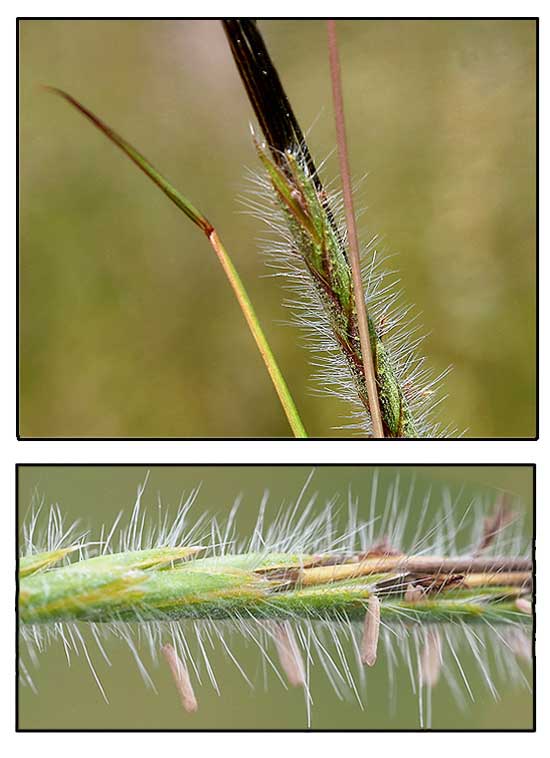
Sheep commerce hazard: The plants develop characteristic dark seeds with a single long awn at one end and a sharp spike at the other. The awn becomes twisted when dry and straightens when moistened, and in combination with the spike is capable of drilling the seed into the soil. While H. contortus is a valuable pasture species, the plant develops characteristic dark seeds with a single long awn at one end and a sharp spike at the other. The awn becomes twisted when dry and straightens when moistened, and in combination with the spike is capable of drilling the seed into the soil. In Australia, the species has been responsible for the elimination of the wool industry due to seeds embedding in the wool and skin of sheep, devaluing the wool, and even causing deaths. (26)
 Botany Botany
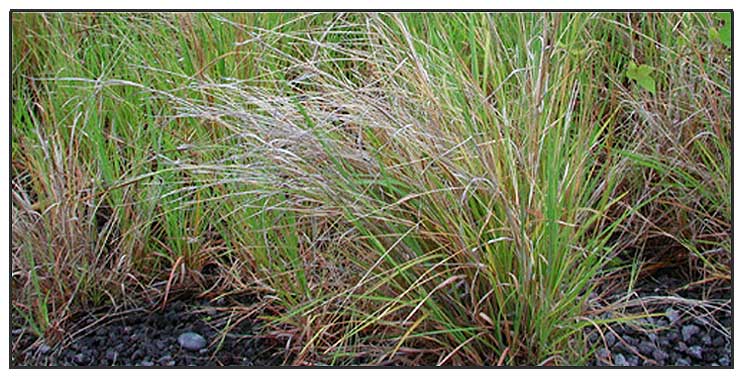
• Sibat-sibatan is a tufted or somewhat scattered grass, 1 meter high or less. Stems are compressed below, simple or somewhat branched, with solitary, terminal spikes. Leaves are flat, 10 to 20 centimeters long, 4 to 7 millimeters wide. Spikes are 10 centimeters long or less, being densely imbricated and hirsute; spikelets are about 8 millimeters long, the lower few pairs staminate or neuter, the upper ones perfect. Awn of the fourth glume is stout, twisted, geniculate and about 10 centimeters long.
• Perennial. Culms slender, tufted, usually geniculate at base, 20–100 cm tall. Leaf sheaths keeled; leaf blades flat or folded, 10–20 × 0.3–0.6 cm, scabrid or adaxial surface pilose at base, apex obtuse or shortly acute to apiculate; ligule ciliate along margin. Inflorescence terminal or racemes gathered into a scanty panicle; spatheoles linear, tightly rolled around peduncle; peduncles mostly long-exserted. Racemes 3–7 cm (excluding awns), narrowly cylindrical, 7–12-awned, (1–)3–10(–12) pairs of flat green homogamous spikelets below the awned fertile pairs. Sessile spikelet 5–7 mm, dark brown; callus 2–3 mm, fiercely pungent, brown bearded; lower glume linear becoming cylindrical at maturity, sometimes hispidulous between veins; awn 6–10 cm, dark brown, column white-hirtellous, tips of successive awns often twisting together. Pedicelled spikelet 6–11 mm, lower glume oblong-lanceolate, greenish, laterally asymmetrically winged, glabrous or sparsely to densely pilose or tuberculate-hispid or white setose. (Flora of China)
 Distribution Distribution
- Native to the Philippines. (6)
- Pantropic in distribution: Also native to Afghanistan, Albania, Algeria, Andaman Is., Angola, Argentina Northeast, Argentina Northwest, Arizona, Assam, Baleares, Bangladesh, Belize, Benin, Bolivia, Botswana, Brazil North, Burkina, Burundi, California, Cambodia, Cameroon, Canary Is., Cape Provinces, Cape Verde, Caprivi Strip, Central African Republic, Chad, China North-Central, China South-Central, China Southeast, Colombia, Comoros, Cuba, Djibouti, Dominican Republic, DR Congo, East Himalaya, Ecuador, El Salvador, Eritrea, Eswatini, Ethiopia, Fiji, Florida, France, Free State, Ghana, Guatemala, Gulf of Guinea Is., Guyana, Hainan, Haiti, Hawaii, Honduras, India, Iran, Iraq, Italy, Ivory Coast, Jamaica, Japan, Jawa, Kenya, KwaZulu-Natal, Laccadive Is., Lebanon-Syria, Leeward Is., Lesotho, Lesser Sunda Is., Madagascar, Malawi, Malaya, Mali, Maluku, Marianas, Marquesas, Mauritania, Mauritius, Mexican Pacific Is., Mexico Central, Mexico Gulf, Mexico Northeast, Mexico Northwest, Mexico Southeast, Mexico Southwest, Morocco, Mozambique, Myanmar, Namibia, Nansei-shoto, Nepal, Netherlands Antilles, New Caledonia, New Guinea, New Mexico, Nicaragua, Nicobar Is., Niger, Nigeria, Northern Provinces, NW. Balkan Pen., Oman, Pakistan, Paraguay, Peru, Puerto Rico, Rodrigues, Rwanda, Réunion, Samoa, Saudi Arabia, Senegal, Seychelles, Sicilia, Sierra Leone, Society Is., Socotra, Somalia, South China Sea, Spain, Sri Lanka, Sudan-South Sudan, Sulawesi, Sumatera, Switzerland, Taiwan, Tanzania, Texas, Thailand, Tibet, Togo, Tonga, Tunisia, Uganda, Vietnam, West Himalaya, Windward Is., Yemen, Zambia, Zimbabwe. (6)
-
Per Leonardo Co's database: Not native; naturalized. (24)
-
In open grasslands at low and medium altitudes, abundant in the Luzon Provinces of Ilocos Norte, La Union, Lepanto, Nueva Ecija, Nueva Viscaya, Pangasinan, Pampanga, Rizal and Zambales.
 Constituents Constituents
- Spear grass yields polysaccharides constituents: hemicellulose and cellulose. (see study below) (7)
- Nutrient composition analysis showed highest nutritive value during lush growth. Calcium in leaves and stems averaged
0.84% well in excess of the 0.2 to 0.3% in an animal diet. Phosphorus, however, averaged 0.13%, slightly less than 0.16% required. Crude protein and fat were comparable to alfalfa. (8)
- Study of leaves, stems, and inflorescence of H. contortus quantified the presence of sterols viz., stigmasterol, ß-sitosterol, campesterol, and ergosterol, with maximum contents by HPTLC of11.64 ± 0.17, 19.90 ± 0.18, and 16.64 ± 0.81 mg/g of dry wt w/w, for stigmasterol, campesterol, and ergosterol, respectively. ß-sitosterol was maximum in leaves at 56.52 ± 1.25 mg/g dry wt w/w. (17)
- Phytochemical screening of methanolic extract yielded carbohydrates, saponin, steroids, and triterpenoids, with an absence of flavonoids, alkaloids, and tannins. (9)
- NTPLC analysis of leaves, stems and inflorescence showed the maximum amount of kaempferol and quercetin is found in leaf extracts (35.80 and 17.01 mg/gm dry weight, respectively). (19)
- Chemical compositional analysis (% DM basis) yielded 92.31 dry matter %, 6.06 % crude protein, 31.15 % crude fiber, 9.74 % ash, 1.03% ether extract, and 4.68% silica.
(21)
- Study of whole plant for phytoconstituents showed the green-colored methanol extract to have highest yield of 4.46%, along with higher yields of various phyto-compounds (alkaloids, steroilds, phenols, flavonoids, glycosides, carbohydrates, and resins). The methanol extract showed highest flavonoid (30.07 mg quercetin equivalent (QE)/g, phenol (34.12) mg gallic acid equivalent (GAE)/g, and tannin 26.61 mg of tannic acid equivalent (TAE)/g. (see study below) (27)
- Study of aqueous and methanol extracts of fresh, air-dried, then powdered leaves yielded flavonoids, alkaloids, tannins, phenols, terpenoids and saponins. (see study below) (29)
Properties
- Awned seeds damage hides, in extreme cases penetrating to perforate the intestines.
- Studies have suggest antioxidant, mast-stabilization, anti-inflammatory,
sunscreen, broncho-relaxant, antimicrobial, antiarthritic properties.
Parts used
- Inflorescence, roots, various plant parts.
Uses
Edibility
- No information on edibility.
Folkloric
- No recorded folkloric medicinal use in the Philippines.
- Elsewhere used for dysentery, asthma, fever, myalgia, rheumatism and toothache.
- Ash of grass applied with Pongamia pinnata on piles. Paste of plant use on bites of dogs, jackals, and scorpions. For snake bites, roots are chewed or pounded and taken with water. (13)
-
The Sutos use this plant with Tribulus terestris in the treatment of rheumatism of the hands.
- In Maharashtra, India, decoction of inflorescence give three time a day as bronchodilator. (4)
- In Benin, inflorescence is an
ingredient in a decoction drunk against irritability. (11)
- In India, the Aurangabad tribe use a decoction of inflorescence as bronchodilator for asthma.
(12)
- In Ayurveda, used for eye diseases, vomiting fever, dysentery, bronchial diseases, wounds, ulcers.
(14)
- The Zulus in South Africa use the plant for treatment of burns, wounds, and rheumatism. (18)
- In the Sambhal district of Rohilkhand region of India, root paste taken orally for snake bites. (20)
- In Sri Lanka, traditional healers apply poultices or topical preparations from leaves and stems to soothe and promote healing of scalds and burns. (30)
Others
- Forage: A good forage grass; palatable to most livestock in the early vegetative stages, but intake and digestability rapidly decline as it matures. By end of the growing season, it is only eaten if supplemented with urea and molasses. (32) Sharp awns will not develop if consistently grazed. If allowed to develop, the awn seeds will damage hides and cause injury to the intestines by perforation. Another problem as forage is the wide fluctuation of growth between rainy and dry seasons.
- Ethnoveterinary:
In Pakistan, aerial parts used as fodder for digestive disorders. (21)
- Ornamental: The interesting seed head makes it a good candidate for ornamental use.
- Crafts and House Use: Culms used as thatch for huts; commonly woven into mats and handicrafts. (11) In Hawaii, pili is used to thatch hale (houses). Ruler Pilika'aiea was named after the grass, and his royal house, Pili line (Hale o Pili).
• Herbal formula: Chinese herbal formula of Heteropogon contortus, C. chinensis, S. balcalensis, and G. jasminoides used for treatment of nonalcoholic fatty liver disease. (23)
- Agroforestry: Used for erosion control and revegetation of degraded areas.
Studies
• Digestibility of Polysaccharide Constituents: In a study of the digestibility of polysaccharide constituents of spear grass in bovine rumen, hemicellulose and cellulose were digested slowly and incompletely. The resistance to complete digestion in the rumen appears to be due to physical protection by lignin. (7)
• Mast Cell Stabilization / Anti-Inflammatory / Antioxidant: Study evaluated a methanolic extract of Heteropogon contortus for mast cell stabilization (in vitro anti-histaminic) and membrane stabilization (in-vitro anti-inflammatory effects. Results showed not only antioxidant activity but also membrane and mast cell stabiization. (9)
• Bronchorelaxant / Anti-Inflammatory: Study evaluated a methanolic extract of Heteropogon contortus for bronchorelaxaton (in-vitro anti-histaminic) and in vivo anti-inflammatory effects. Study showed concentration dependent bronchorelaxant action against acetylcholine and histamine induced bronchoconstriction in tracheal muscles of guinea pig. The extract also inhibited inflammation induced by carrageenan and egg albumin. Results suggest a potential for the treatment of asthma. (10)
• Triterpenoid Lupeol / Leaves: Chromatographic evaluated the triterpenoid lupeol from methanolic extract of leaves, stem, and inflorescence of Heteropogon contortus. Results showed the present of lupeol in leaf samples at 10 mg/g of dry weight, and was absent in the other two samples. Study suggests the leaves are a good source of lupeol as alternative natural source for the synthesis of herbal drugs to control cancer and inflammation. (15)
• In Vitro Suncreen Activity / Roots: There is a demand for safe non-comedogenic, inexpensive, and efficacious plant based topical sunscreens. This study evaluated the sunscreen potential of methanolic extracts of roots of Sri Lankan grass, Heteropogon contortus. Dermatone® was used as reference agent. Results showed the root extract exhibited marked sun protection activity with SPF values of 12.85 ± 0.87, 12.80 ± 0.13, and 13.02 ± 0.03, respectively for 0.05, o.1, and 0.2 mg/mL concentration, compared to 8.21, 14.00 and 27.32 for Dermatome. The activity was attributed to flavonoids and phenols via antioxidant activity. Results suggest a safe, inexpensive, efficacious, and user-friendly sunscreen. (16)
• Antioxidant / Whole Plant: Study evaluated the crude extracts of whole plant (methanol, hydro-ethanol, and aqueous) for phytochemical contents and antioxidant activity. The methanol extract was the effective inhibitor in DPPH and methal chelation assay (IC50s 42.94 µg/mL and 100.57 µg/mL). Results suggest antioxidant properties and a promising candidate for usage in traditional medicine. (see constituents above) (27)
• Antimicrobial / Antiarthritic / Whole Plant: Study evaaluted whole plant crude extracts for metabolite profiling, antimicrobial activity, and invivo and invitro antiarthritic activity. Methanol and hydroethanol extracts showed stronger antimicrobial activity at 400 µg/ml against Escherichia coli (19 and 16.3), Bacillus subtilis (21 and 15.1), Fusarium oxysporum (14.3 and 12), and Aspergillus niger (10.6 amd 13/6) compaired to standard streptomycin and fluconazole at 10 µg/ml and 15 µg/ml. The ME showed highest inhibition percentage of protein denaturation (80.16), less than standard diclofenac sodium (93.66). On 21st day of treatment, there was significant reduction in paw diameters in treated group. Results suggest the whole plant possesses significant antiarthritic activity against adjuvant induced arthritic model and active constituents with great biological potential. (28)
• Inhibitory on Phytopathogenic Fungi / Leaves: Study evaaluted the inhibitory potential of H. contortus on some phytopathogenic fungi isolated from soil samples. Fusarium sp., Alternaria sp., and Aspergillus sp. were isolated in percentage occurrences of 34%, 42%, and 64% respectively. Study revealed inhibition of phytopathogenic fungi, which increased with increasing concentration and period of exposure. Results suggest potential for spear grass as inhibitory of phytopathogenic fungi. (see constituents above). (29)
• Silver Nanoparticles / Antibacterial / Leaves: Study reports on the environmentally friendly synthesis of silver nanoparticles using leaves of H. contortus as reducing agent. The AgNPs showed antibacterial activity against tested microorganisms viz., S. aureus, B. subtilis, K. pneumonia, and P. vulgaris. Maximum activity was observed against Staphylococcus aureus. Mechanism of activity may be due to attachment of the AgNP to the surface of cell membrane and affecting bacterial power function related to permeability and respiration. (30)
• Luteolin / Antibacterial / Leaves: Luteoliin is an important flavonoid found in vegetables and fruits such as celery, broccoli, onion leaves, carrots, peppers, cabbages and apple skin. HP-TLC rsosught to quantify the luteolin content in various extracts from aerial parts (leaves, stems, and inflorescence. Study showed the leaf sample contains maximum amount of luteolin (37.13 mg/g dw) compared to inflorescne (1.60 mg/g dw) and stem (0.53 mg/g dw). Results suggest the leaves as good source of luteolin with potential for use as an alternate natural source to synthesize herbal drugs for treatment of cancer, hypertension and inflammatory diseases. (31)
Availability
Wild-crafted.
|