 Gen info Gen info
- Alternanthera is a genus of flowering plants in the family Amaranthaceae. It is a widespread genus with most species occurring in the tropical Americas, others in Asia, Africa and Australia. The genus contains both terrestrial and aquatic species. Estimates of species in the genus is unclear, ranging between 80 and 200. POWO lists 106 species. (20)
-
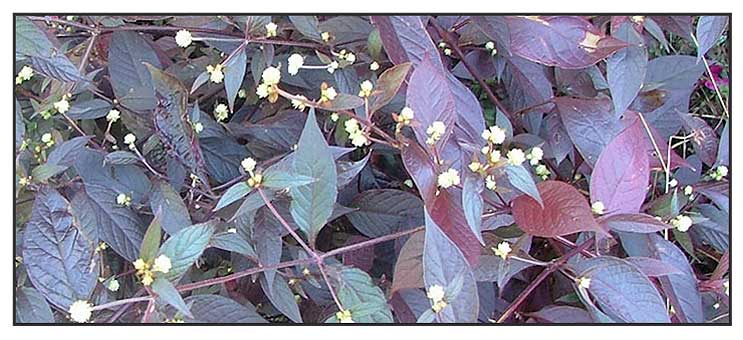
Alternanthera brasiliana, also known as large purple alternantheralo, metal weed, blood leaf, parrot leaf, ruby leaf, Brazilian joyweed, purple althernanthera, purple joyweed, is a flowering plant of the amaranth family.
- Etymology: The genus name Alternanthera derives from Latin and Greek roots: alternans and anthera respectively, referring to its anthers with alternating fertile and sterile parts. Specific epithet "brasiliana" refers to "Brazil", indicating its origin in South America.
 Botany Botany
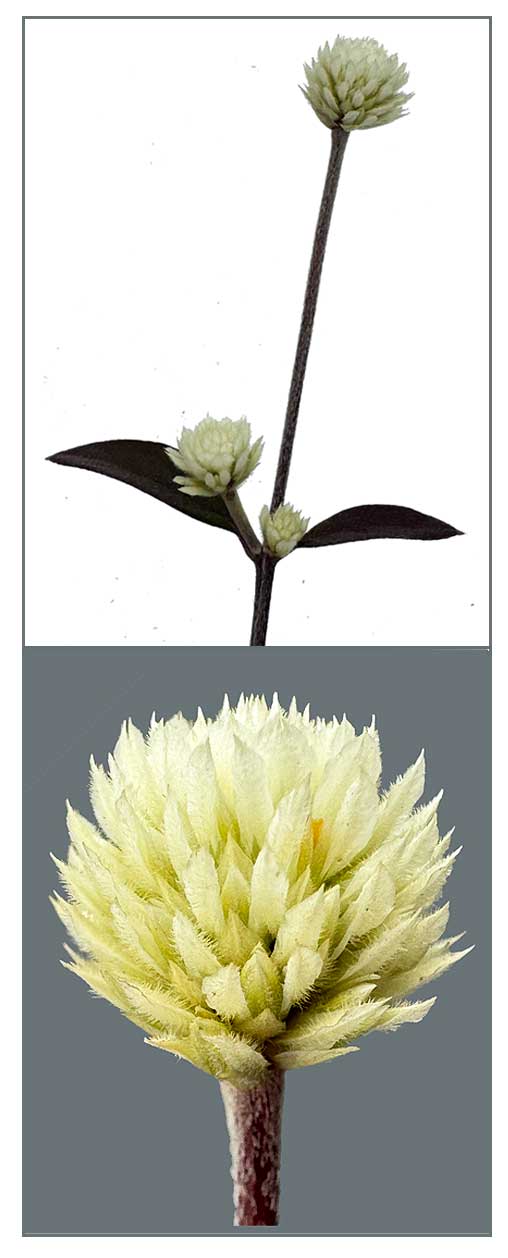
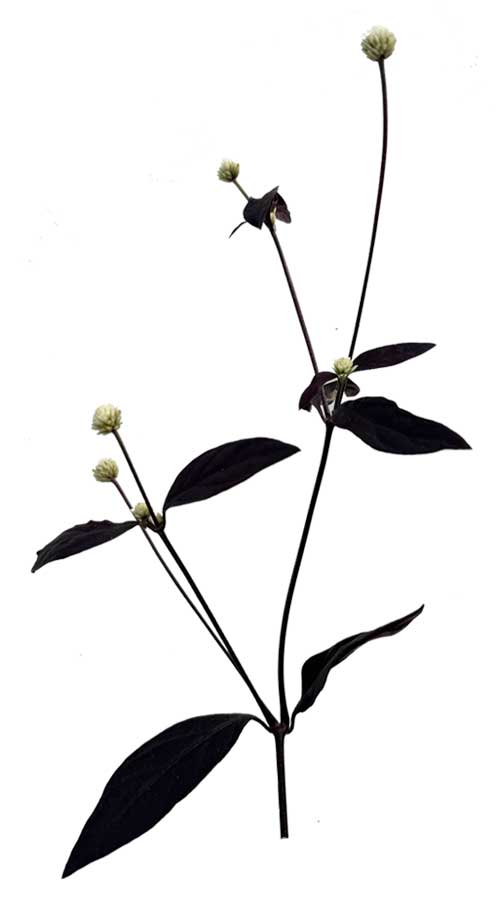
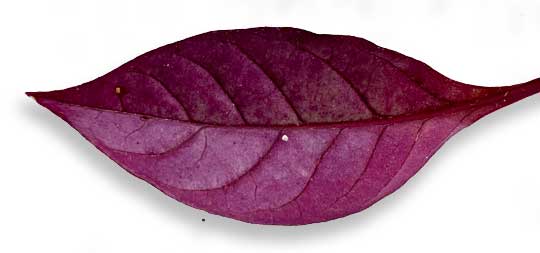
• Alternanthera brasiliana is an erect, sprawling, herbaceous plant that may grow up to 3 meters tall, though it is usually less than 1 meter as a cultivated plant. Stems range between red, green and purple, delicately hirsute when juvenile, though they'd become glabrescent as they get older. Leaves are opposite, 1–10 cm long and 0.7–5 cm wide, usually colored purple-specked or luminous reddish-purple. It may lose some of its leaves in winter, making it partially "deciduous" in places that have slightly cool winters. Flowers are vanilla-colored, pom-pom in compact clusters (7–20 mm long) in the top leaf branching and are small in shape. Clusters are rounded to slightly lengthened in shape and are foaled on stalks which are normally 3–10 cm long. It can flower any time of the year, but in temperate and cooler subtropical climates it flowers more often in winter.[ Fruit is dark brown, 1.5–2 mm long, one- seeded that's generally hidden within the older flower parts. (3)
• Herbs or subshrubs, annual or perennial, 5-6 dm. Stems erect, villous, glabrate. Leaves sessile; blade ovate to lanceolate, 1-7 × 0.7-1 cm, herbaceous, villous. Inflorescences terminal and axillary, pedunculate; heads white, globose, 0.7-1 cm diam.; bracts keeled, shorter than to equaling tepals. Flowers: tepals monomorphic, green to stramineous, lanceolate, 3-4 mm, apex acuminate, villous, hairs not barbed; stamens 5; pseudostaminodes ligulate, margins fimbriate. Utricles included within tepals, brown, ellipsoid, 2 mm, apex acute. Seeds ovoid-oblong, 1.4 mm. (Flora of North America)
• Growth form: Perennial herb up to 0.9 m tall. Foliage: Elliptic leaves are purplish-red near the center and vibrant pink/ fuschia along the leaf margin. Flowers: Small, white, pompom-shaped flowers are produced in the leaf axils (near the point of leaf attachment to the stem). (Flora & Fauna Web)
Distribution
- Naturalized.
- Native to Argentina Northeast, Aruba, Bahamas, Belize, Bolivia, Brazil North, Brazil Northeast, Brazil South, Brazil Southeast, Brazil West-Central, Colombia, Ecuador, El Salvador, French Guiana, Guatemala, Guyana, Honduras, Leeward Is., Mexico Central, Mexico Gulf, Mexico Northeast, Mexico Southeast, Mexico Southwest, Netherlands Antilles, Nicaragua, Paraguay, Peru, Suriname, Trinidad-Tobago, Venezuela, Venezuelan Antilles, Windward Is. (1)
- Has tendency to be invasive; displacing flora in new environments.
 Constituents Constituents
- Phytochemical screening of leaves revealed classes of phenolic compounds and flavonoid (52%), saturated and unsaturated fatty acids (33%), steroids, and phytosterols (8%), terpenoids (5$), and fatty alcohol esters (2%). (7)
- Qualitative phytochemical analysis of three solvent (hexane, chloroform, and methanol) extracts revealed presence of carbohydrates, alkaloids, saponins, flavonoids, phytosterols and phenols, tannins and proteins. (13)
-
Proximate analysis of shade dried leaf powder revealed moisture 68%, carbohydrate 9.5%, crude protein 4.3%, crude fat 0.4%, and energy or calorific value of 58.8 Kcal/100g. Elemental composition yielded carbon (C), hydrogen (H), nitrogen (N), sulfur (S) by CHNS analyzer yielded values of 384.7 mg/g, 59.2 mg/g, 47.8 mg/g and 6.6 mg/g, respectively. Other elements yielded calcium (Ca)18, potassium (K) 21.1, magnesium (Mg) 9.1, phosphorus (P) 1.4, copper (Cu) 0.01999., Zinc (Zn) 0.28727, sodium (Na) 0.94332 mg/g. (13)
- LC-MS/MS and GC-MS study identified 27 compounds, 5 by LC-MS and 22 by GC-MS. All compounds identified by LC-MS are flavonoids. GC-MS revealed several classes, such as hydrocarbons, diterpenes, monoterpenes, vitamin and carotenoid derivatives, phytosterols and triterpenes. (19)
Properties
- Studies have wound healing, antioxidant, antibacterial, anti-inflammatory, cytocompatibility, antinociceptive, anxiolytic, nephroprotective, diuretic, photoprotective properties.
Parts used
Leaves, leaf juice.
Uses
Edibility
- Leaves reportedly edible; cooked and used as vegetable.
 Folkloric Folkloric
- No reported folkloric medicinal use in the Philippines.
- Plant reportedly aphrodisiac; used as antiviral. (6)
- Leaf juice squeezed into vinegar and drunk as a refreshing, antidiarrheic infusion. (6)
- In Brazil, used widely as a natural antibiotic, mainly the leaves; hence, the name "penicilina". In traditional medicine used for treatment of inflammation, cough, and diarrhea. (8)
- In India, used as hemostatic.
- In southwestern states of Nigeria, used for treatment of malaria, pains, infections, and diabetes.
Others
- Fodder additive: Used in animal feed as growth promoters and for enhancement of productivity.
Studies
• Wound Healing / Antioxidant / Anti-Inflammatory: Study of evaluated the wound healing activities of A. brasiliana (Ab). in-vivo, Wistar rats with with two dorsa incisons were topically treated with 2% carbopol gel and 20% hydroalcoholic plant extract with 2% cabopol gel. In vivo, Ab presented with lower levels of inflammatory infiltrate, although with increased levels of IL-1ß and TGF-ß1. Results suggest anti-inflammatory and antioxidant activities both invivo and invitro. The extract controlled oxidative damage by antioxidants, stimulated angiogenesis and tissue formation, accelerated total re-epithelization, which is promising for wound healing. (4)
• Anti-Inflammatory / Analgesic / Locomotor Effect Healing / Antioxidant / Anti-Inflammatory: Study evaluated the pharmacological activity of A. brasiliana aqueous extract. Anti-inflammatory activity was indicated by significant reduction of 19.8% and 23.9% for 200 and 400 mg/kg (p<0.05) of polymorphonuclear cells in pleural exudate. Analgesic activity was suggested by significant reduction (p<0.01) of number of abdominal contractions. No anxiolytic effect was observed, but there was an increase in number of rearings in the group of rats treated with 100 mg/kg dose (p<0.05). Results suggest potential pharmacologic effect on inflammation and pain. (5)
• Phytochemicals and Anti-Infective Activity / Review: Study reviewed the evidence and evaluated the use of A. brasiliana for treatment of infectious diseases. Several extract studies have showed low activity against pathogens, including gram-negative and gram-positive bacteria, parasitic protozoa, and fungi. Only two studies have shown high activity against herpes simplex virus, Mycobacterium smegmatis, and Candida albicans. Despite wide use as a natural antibiotic by traditional communities, studies have showed low activity to inactivity against several pathogens. (see constituents above) (7)
• Wound Healing / Leaves: A previous study showed promising wound healing activity of methanol extract of leaves (MEAB) in normal excision and incision wound models. Study evaluated the wound healing activity in relation to antioxidant enzyme profile during cutaneous excision immunocompromised wound after topical application of 5% w/;w ointment of MEAB in rats. Immunocompromised state was induced by pretreatment with hydrocortisone (HC) in male rats. MEAB or Himax (standard drug) was applied topically twice daily. Results showed showed significant wound healing activity evidenced by significant increase in enzymatic and nonenzymatic antioxidant parameters. Histopathological study showed collagen deposition, fibroblast proliferation, angiogenesis, and development of basement membrane. (8)
• Biological Evaluation / Fresh Leaves: Study evaluated the phytochemical profile and biological activities of various extracts of A. brasiliana fresh and shade-dried leaves. GC-MS analysis revealed compounds known fro antioxidant, antibacterial, and anti-inflammatory activities. Aqueous extracts showed greater antibacterial inhibition and strong antioxidant potential by lipid peroxidation assays. Cytocompatibility in human dermal fibroblasts showed the fresh aqueous and dried aqueous extracts were safe at low concentrations. Overall, aqueous extracts, especially fresh leaf extract, were superior in phytochemical content, antibacterial efficacy, antioxidant activity, and cytocompatibility. (9)
• Antinociceptive / Callus Culture: Study evaluated A. brasiliana for antinociceptive activity in two classical model of pain in mice: writhing test and formalin test. Extracts exhibited antinociceptive effects in mice, more effective than plant extract. Activity seemed related to presence of steroids and/or terpenes. (10)
• Sub-Acute Toxicity Study / Anticancer / Leaves: Study evaluated invivo and invitro toxicity effects and cytotoxicity of hydroethanolic leaf extracts of A. brasiliana. Subacute toxicity testing with 2000 mg/kbw for 14 days produced no toxicity symptoms. MTT assay showed significant concentration-dependent invitro cytotoxicity activity against DLA cell line. (11)
• Effect in Experimentally-Induced Inflammatory Bowel Disease: Study evaluated the effect of methanolic extract of A. brasiliana in acetic acid-induced inflammatory bowel disease (IBD) in albino rats measuring parameters of colon weight change, macroscopic and histopathological evaluation. Results showed statistically significant decrease in colonic weight, macroscopic and microscopic scores in extract treated group at dose of 600 mg/kg. (12)
• Wound Healing in Induced-Diabetic Wounds / Topical : Study evaluated the healing efficacy of topical application of A. brasiliana in experimentally induced diabetic wounds in Sprague Dawley rats. Results showed significant (p<0.05) increase in wound contraction, augmented levels of superoxide dismutase, catalase, reduced glutathione, hydroxyproline, protein, and ascorbic acid level in the treated group. The wound healing effect was attributed to antioxidant activity and phytoconstituents known for augmenting healing. (14)
• Anxioltytic / Leaves : Study evaluated an ethanolic leaf extract (ELE) for novelty-induced behavior, anxiety, sedation, and convulsion in mice. Acute toxicity study showed LD50 values ≥5000 mg/kg p.o. and 3808 mg/kg i.p. The ELE at 500-1000 mg/kg caused significant (p<0.05) increased in rearing and locomotor activities, caused increase in number of head dips at 1000 mg/kg, and significant increase in sleep latency (p<0.01) with non-significant decrease in total sleeping time induced by ketamine. The ELE did not protect against PTZ, strychnine or tonic hind limb extension on MES. Results suggest the ELE has stimulatory effect on the CNS, with moderate anxiolytic activity but lacking anticonvulsant activity. (15)
• Antinociceptive and Anti-Inflammatory in Acute Colitis Model / Leaves: Study evaluated the antinociceptive and anti-inflammatory activities of keto-alcoholic extract of A. brasiliana leaves in a mice model of acute colitis induced by 7.5% (v/v) acetic acid intrarectally and treated with extract by gavage. Invivo results showed significant decrease in number of writhing. Treated mice showed no lesions or lower-grade lesions. Plasma AST and ALT were within normal. Results showed antinociceptive/analgesic and anti-inflammatory activity without causing hepatotoxicity in mice. (16)
• Nephroprotective / Diuretic / Leaves: Study evaluated the nephroprotective effect of aqueous-ethanol extract of A. brasiliana (ABAE) against cisplatin-induced kidney injury and diuretic effect in rats. The ABAE protected the rats from toxic effects of cisplatin. ABAE enhanced urine output. Increasing dose (300 mg/kg) produced maximum nephroprotection and diuresis. Acute toxicity testing showed LD50 >3000 mg/kg. The ABAE posed no toxicities on kidney, liver, and heart evidenced by histopathological, hematological, and serum biochemical analysis. HPLC-DAD analysis of ABAE revealed presence of betanin, kaempferol, gallic acid, p-coumaric acid, and oxalic acid. (17)
• Photoprotective / Flavonoid-Enriched Extract / Leaves: Study reports on the pharmacognostic characterization of powder of A. brasiliana, optimized extraction of total flavonoids, and preparation of gel with photoprotective effect from addition of flavnoid-enriched extract. The final gel formulation presented a SPF-UVB above 20 after a stability study. (18)
Availability
- Wild-crafted.
- Ornamental weed.
|


