 |

Plant Pharma |
Plant Pharma - Alternative? . . . Not |
Big Pharma • The Real Alternative Medicine |
 |
Long long long before Big Pharma, Plants were also unholy ingredients to shamanic and witchcraft concoctions and brews. Since ancient times, psychoactive plants have provided for hallucinogenic effects, mystical experiences, religious rituals and ceremonies. Alas, also for homicidal ends. Too, for millennia animals have utilized plants and leaves for healing needs (Zoopharmacognosy). Ancient naturalists, Aristotle, Pliny the Elder, Aelian et al have recorded animal use of plants to treat wounds, repel parasites, and neutralize poisons. (Indeed, in the medicinal forest where I live, I have watched cats and dogs seeking out plants and leaves to chew on to alleviate their veterinary discomforts.) Since Paleolithic times, or since the creationists' Garden of Eden, plants have provided for the healing needs of mankind. Medicinal plants were not "alternative." Ancient pharma-cologists, physicians and alchemists have been pounding, grinding, boiling, distilling herbs, spices, leaves and roots for their healing recipes. Plants were the essentials, the sine qua non of the ancient apothecary's bag, foundational to almost all traditional healing ways. Until . . .
In that backdrop of millenia of plant medicinal use, the WHO estimates 80% of the world population, 170 of 194 member states, still rely on medicinal plants for health and healing. In developing countries, the reliance is as high as 70-95% for primary health care from over 60,000 plant species. For the most part, in developing nations, use of medicinal plants continue to be folkloric: a trove of oral traditions, culture-rooted, myth-laden, now exponentially enriched by the scientific validations. The Ecosystem of Pharmaceuticals With prescription medications, biologic activity is attributable to a single component—plant-derived or synthesized—with single-target specificity. Medicinal plants, on the other hand, offer a wide range of biologic effects from a gang of phytoconstituents providing pleiotropic and synergistic effects. It is the rare medicinal plant with a single biologic activity; rather, many exhibit a dizzying spectrum of biologic activities: antioxidant, antimicrobial, anti-inflammatory, immuno-modulatory, hepatoprotective, cardioprotective, neuroprotective, etc etc etc. Science did not render plants "alternative", rather, it provided validation. The past century has seen the enlightening effects of science on the folklore of medicinal plants, stripping off millenial layers of myth and magic. Globally, about 50,000 to 80,000 plant species are used for medicinal purposes. Approximately 25% to 40% of prescription drugs worldwide comes from plants. There are about 120 such active compounds being in current use. In the U.S., at least one ingredient in 25% of prescription medicines come from plants. Of the 252 drugs considered by the WHO as basic and essential, 11% are exclusively of plant origin, with a significant number of synthetic drugs coming from natural precursors. In the U.S. about 25% of prescription medications contain active ingredients from higher plants. Another estimate is that 60% of anti-tumor and anti-infectious drugs on the market and under clinical trial were of natural origin (Yue-Zhong Shu, 1998). (1) Approximately 121 medicinal items were developed throughout the course of the last century using traditional knowledge gathered from diverse sources. With prescription medications, biologic activity is attributable to a single component, which is often plant-derived or synthesized, with single-target specificity and limited clinical utility. Medicinal plants, on the other hand, offer a wide range of biologic effects from a gang of phytoconstituents or secondary metabolites, such as flavonoids, terpenoids, alkaloids, etc etc etc with pleiotropic and synergistic effects, working their way via different mechanisms and physiological pathways or targets. It is the rare medicinal plant with a single biologic activity; rather, many exhibit a dizzying spectrum of biologic activities: antioxidant, antimicrobial, anti-inflammatory, immunomodulatory, hepatoprotective, cardioprotective, neuroprotective, etc . Commerce of Big Pharma It was for Big Pharma (Eli Lilly and Co., Pfizer, Johnson & Johnson, Merck, Roche, among others) along with government funded research to take the deep dive into the micro-, the nano-, and the molecular of pharmaceuticals. It has made immeasurable contributions to research and development (15% to 20% of revenue, $87 billion to $100 billion annually), including clinical trials, drug delivery and formulations, and drug-safety monitoring. Big Pharma: The Real Alternative Medicine . . . For the Rich Herbal Medicine. . . Alternative? . .. Not. By the sheer number of users, its millenia history of use, its foundational presence in almost all systems of traditional medicine, past and present, its immeasurable contributions to the ecosystem of prescription medicines, I posit: herbal medicine—plant pharma—is not alternative. It is the mainstay of health and healing. In my more than 25 years of compilatory work on medicinal plants, 1,750-plus to date, I have been joyed by countless eureka moments of discovery — the beauty and the healing powers of the plants. As a physician, it was an easy crossroad to traverse, the familiar lexicon of the medicinal plant world's phytoconstituents and scientific studies. Alas, in the end, it leaves me disheartened: scouring through thousands of endemic and native plants unstudied and understudied, and tens of thousands of scientific studies validating the medicinal properties of plants dumped into a dustbin of short-lived, soon-forgotten studies. So, again, my clarion call. Whenever possible, the study of medicinal plants should be included in all educational curricula, An Elementary and High School introduction into the wonderful and magical world of flora. In college, incorporate into or replace the predictably forgettable semesters of compulsory chemistry. And in medical curriculum: the study of medicinal plants, including thousands of understudied and unstudied Philippine endemic plants that will most certainly reveal to be a treasure trove of medicinal properties—as a stand-alone subject or integrated into the subject of pharmacology where the study of medicinal herbs will inevitably opens corridors into a rich world of plant science, phytoconstituents, and biologic activities; in the end, to provide science to the traditional healing ways of albularyos and medicos. Perhaps, to bring medicinal plants to another crossroad, a science-validated renaissance of medicinal plant use. I rest my case. |
 |
© Godofredo U. Stuart Jr., M.D. / StuartXchange |
| Donate |
September 2026

 |
| PHOTOS / ILLUSTRATIONS |
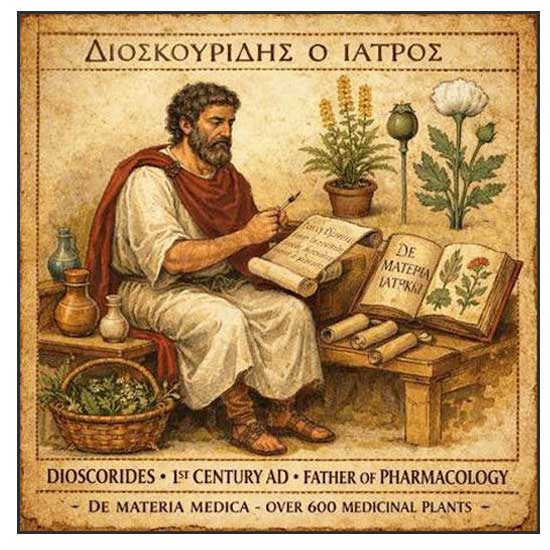
| IMAGE SOURCE: Dioscorides: Greek physician of 1st Century AD, considered father of Pharmacology, who wrote De Materia Medica, describing over 600 medicinal plants and their uses / Mabelf589 |
| IMAGE SOURCE: Pedanius Dioscorides (c40-c90AD) / Wikipedia |
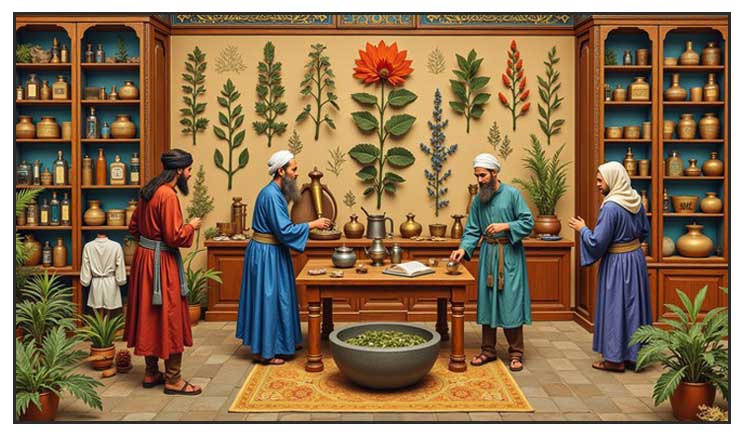
| IMAGE SOURCE: Ancient Healing Arts / Click on image or link to go to source page / StockCake |
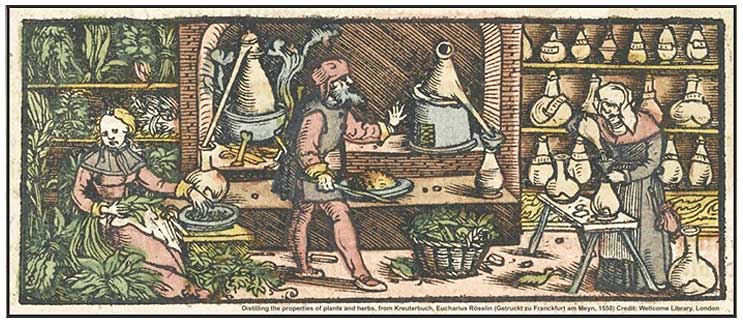
| IMAGE SOURCE: Illustration: Distilling the properties of plants and herbs / Kreuterbuch, Eucharius Rosslin, 1550 - Welcome Library, London / Click on image or link to go to source page / herbalreality |
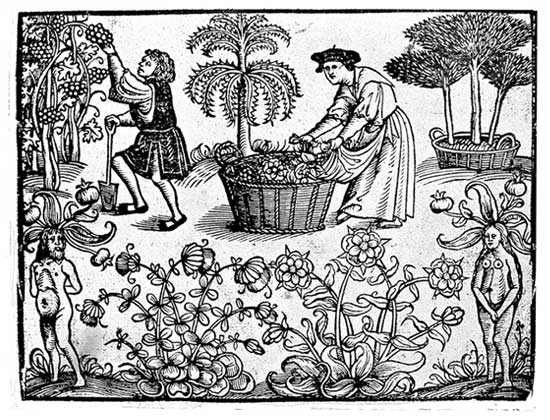
| IMAGE SOURCE: Illustration: Woodcut from the Title Page of the "Grete Herball" 1526 / Welcome Library / CC BY 4.0 / Welcome Library, London / Click on image or link to go to source page / herbalacademy |
Additional
Sources and Suggested Readings |
• |
DOI: It is not uncommon for links on studies/sources to change. Copying and pasting the information on the search window or using the DOI (if available) will often redirect to the new link page. (Citing and Using a (DOI) Digital Object Identifier) |
| List of Understudied Philippine Medicinal Plants |
| New plant names needed The compilation now numbers over 1,7500 medicinal plants. While I believe there are hundreds more that can be added to the collection, they are becoming more difficult to find. If you have a plant to suggest for inclusion, native or introduced, please email the info: scientific name (most helpful), local plant name (if known), any known folkloric medicinal use, and, if possible, a photo. Your help will be greatly appreciated. |
• |
 |
|

