Gen info
- Asteraceae is a large family of flowering plants consisting of over 32,000 known species in over 1,900 genera within the order Asterales. The number is rivaled only by Orchidaceae. It was first described in 1740 under the name Compositae. The family is commonly known as aster, daisy, composite, or sunflower family. Most species are herbaceous plants, which may be annual, biennial, or perennial, but also shrubs, vines, and trees. It is an economically important family, which provide food staples, garden plants, and herbal medicines.
- Bidens is a genus of flowering plants in the aster family, Asteraceae. The genus includes roughly 230 species distributed worldwide.
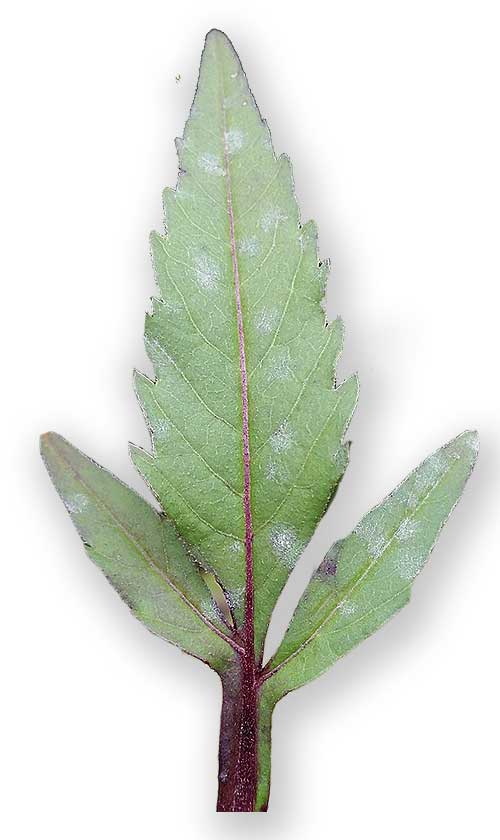
- Etymology: The genus name Bidens derives from Latin words bi- (meaning "two") and dens (meaning "tooth"), referring to the two tooth-like barbs or awns on the plant's seeds. The specific epithet tripartita derives from Latin prefix tri- (meaning "three" and partitus (meaning "divided"), referring to the three-lobed or three-parted leaf structure.
 Botany
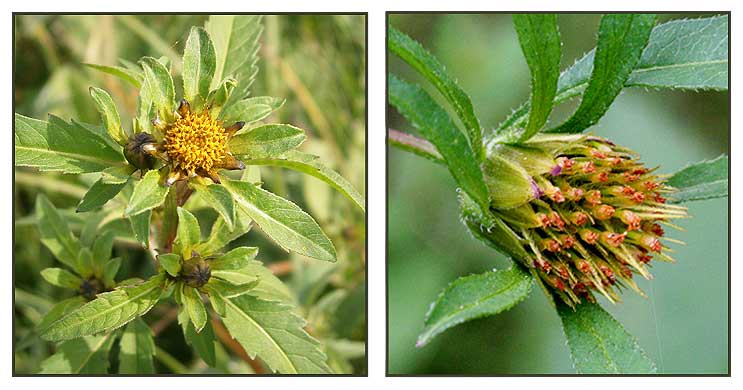
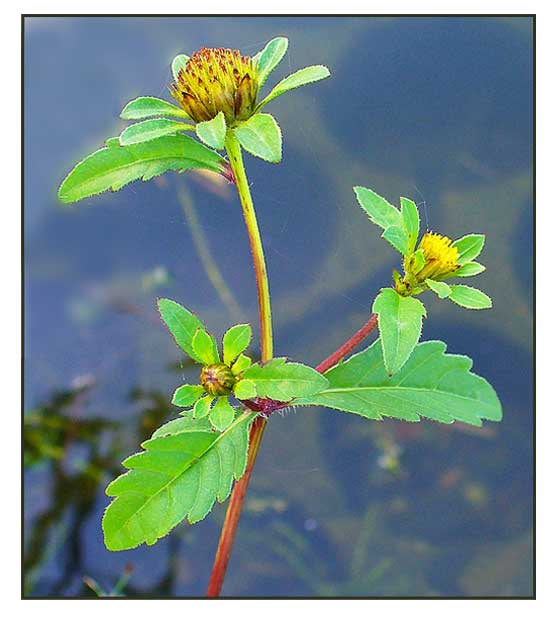
• Annuals, 10-150 cm tall. Leaves sessile or petiolate; petiole (0-)5-15(-35) mm (± winged); blade elliptic to ovate or lanceolate, 40-80(-150) × 15-40(-60) mm, sometimes laciniately 1-pinnatisect with 1-4+ lobes near base, both surfaces glabrous or hirtellous, base cuneate, margin entire or dentate to serrate, usually ciliate, apex acute to acuminate. Capitula radiate or discoid, solitary or in 2s or 3s; peduncles 10-40(-80) mm; calycular bracts (2-)6 or 7(-10), spreading, oblanceolate or lanceolate to linear, ± leaflike, 7-35(-60) mm, abaxially hispidulous near bases, distally glabrous, margins entire or serrate, sometimes sparsely ciliate; involucres campanulate to hemispheric or broader, (4-)5-7(-12) × (3-)6-12(-15) mm; phyllaries (6 or)7 or 8(-13), elliptic-ovate to ovate-lanceolate, (4-)6-9(-12) mm. Ray florets usually 0, sometimes 1-5; lamina orange yellowish, 4-8 mm. Disk florets (5-)20-60(-150); corollas pale yellow to orange, (2-)3-4 mm, apex 4- or 5-toothed. Achenes blackish to purplish or brown, ± flattened, sometimes weakly 3(or 4)-angled, usually cuneate to linear, outer (3-)6-7(-10) mm, inner (4-)6-9(-11) mm, faces ± 1-veined, usually smooth, seldom notably tuberculate, glabrous or sparsely strigillose, margin proximally antrorsely to patently, distally retrorsely, barbed, apices ± truncate to concave; pappus 0, or of 1-3(or 4) erect to spreading, retrorsely barbed awns (0.2-)2-3(-6) mm. (Flora of China)
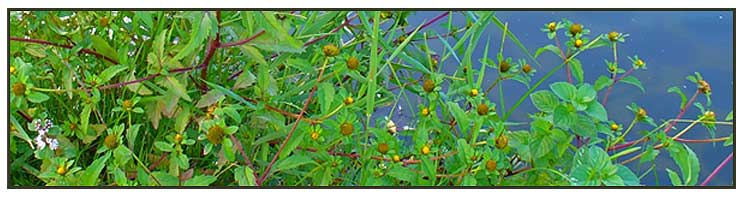
• Bidens tripartita is an annual species with rigid stems and fibrous roots, with a typical habit measuring 20-100 centimeters tall. Leaves are often deeply lobed. Flower heads are discoid and lacking ray flowers. Fruits are achenes. (3
• Botanical hazards: Seed coats have reflexed prickles that allow them to adhere to clothing, animal fur, etc. when growing by a pond's edge, the seeds have been known to kill goldfish by adhering to their gills.
Distribution
- Native to the Philippines. (1) (2)
- Also native to Afghanistan, Alaska, Albania, Alberta, Algeria, Altay, Amur, Assam, Austria, Baltic States, Belarus, Belgium, British Columbia, Bulgaria, Buryatiya, California, Central European Russia, China, Corse, Czechia-Slovakia, Delaware, Denmark, District of Columbia, East Aegean Is., East European Russia, East Himalaya, Finland, France, Germany, Great Britain, Greece, Hungary, Inner Mongolia, Iran, Iraq, Ireland, Irkutsk, Italy, Japan, Jawa, Kazakhstan, Khabarovsk, Kirgizstan, Korea, Krasnoyarsk, Krym, Lebanon-Syria, Manchuria, Manitoba, Mongolia, Nansei-shoto, Nebraska, Nepal, Netherlands, New Guinea, North Caucasus, North Dakota, Russia, Norway, NW. Balkan Pen., Pakistan, Palestine, Poland, Portugal, Primorye, Qinghai, Québec, Rhode I., Romania, Sakhalin, Sardegna, Sicilia, Spain, Sweden, Switzerland, Tadzhikistan, Taiwan, Tibet, Transcaucasus, Turkmenistan, Tuva, Türkiye, Türkiye-in-Europe, Ukraine, USA, Uzbekistan, Vietnam, West Himalaya, West Siberia, Xinjiang, Yakutiya. (2)
- In Luzon: Benguet. 1400-2200 m. (1)
 Constituents
- Study of herb and flower extracts isolated pure flavonoids: flavanomarein (isookanin 7-O-glucoside), cynaroside (luteoline 7-O-glucoside) and luteolin. (see study below) (5)
- LC-MS analyses of active sub-extracts showed main components of chlorogenic acid, luteolin, and
7-O-glucoside of luteolin (cynaroside). (see study below) (6)
- LC-ESI-MS evaluated six different standardized extracts and isolated three pure isolated flavonoids: luteolin (LUT), cynaroside (CYN), and flavanomarein (ION). (see study below) (7)
- Active constituents in B. tripartita include aurones, chalcones, flavonoids, volatile oil, acetylene and polyacetylene, xanthophylls, sterols, phenolcarboxylic acids, coumarins, polysaccharides, aromatic hydroxy aldehydes, caffeine and tannin. (10)
- GC/MS analysis of essential oil of roots identified 106 compounds comprising 97.1% of total oil. Main components were α-pinene (15.0%), ß-bisabolene (9.3%), p-cymene (6.0%), hexanal (5.7%), linalool (4.6^), p-cymene-9-ol (3.4%), ß-elemene (2.6%), 2-pentylfuran (2.2%), and silphiperf9ol-6-ene (2.1%). (see study below) (17)
- Study of aerial parts isolated 14 flavonoids and 2 polyacetylenes.
(19)
Properties
- Studies have suggested antioxidant, antidiabetic, prokinetic, antidiarrheal, membrane-stabilizing, anti-inflammatory, anticociceptive, antiangiogenic, antimicrobial, analgesic, antipyretic , neuroprotective properties.
Parts used
Roots, leaves, flowers.
Uses
Edibility
- Young leaves and shoot tips are edible; cooked. (24)
- Young leaves
added to salads, soups, and stews. Young shoot tips used for making tea.
Folkloric
- No reported folkloric medicinal use in the Philippines.
- In Russian traditional medicine, infusion of aerial parts used for treatment of catarrhal rhinitis, angina, acute respiratory infections, and as anti-inflammatory in colitis, gout, and infantile rickets. (6)
- In Ayurvedic medicine, used for treatment of diarrhea.
- Used for treatment of chronic dysentery, malaria, and colds; also to induce sweating.
- In Eastern medicine, particularly in China and Tibet, used for treatment of anemia, tuberculosis, atherosclerosis, and fever. (13)
- Used for diathesis, scabies and eczema.
- Once highly esteemed for efficacy at staunching blood flow, for treatment of bleeding, especially those cause by ruptured blood vessels; also used for uterine bleeding and conditions causing hematuria. (3)
- In Russia, used for treatment of rhinitis, angina, and colitis. (20)
- Herbal compresses or washes made from its infusion used for soothing minor skin irritations and for cleansing routines. (22)
- Infusion of aerial parts used as diuretic in nephrolithiasis; as antiseptic and as bath for children to treat allergy symptoms; used as anti-inflammatory in colitis, gout, and infantile rickets. (23)
- Roots and seeds used as emmenagogue, expectorant, diuretic; also as remedy for kidney stones and gallstones. Plant used as wash for treatment of chronic eczema and alopecia.
(24)
Others
- Insect repellent: The dried herb, specifically the dried flower heads, can be burned to release a cedar-like smell, which can be used as incense against insects. (3) Burning herb repels insects and flies.
- Dye: Plant yields a black dye use as hair dye. Flower yields a yellow dye of indifferent quality when alum is used as a mordant. (24)
Studies
• Antioxidant / Flowers: Study evaluated pure flavonoids: flavanomarein (isookanin 7-O-glucoside), cynaroside (luteoline 7-O-glucoside) and luteolin isolated from extracts of herbs and flowers for antioxidant activity. Flower and herbs exhibited radical scavenging properties. Content of flavonoids in the flower heads was half of that found in the herb. However extract from flowers showed antioxidant activity two times higher. (5)
• Antidiabetic / Antioxidant: Study evaluated the hypoglycemic and antidiabetic properties of Biden tripartita extract in streptozotocin-induced diabetic rats. Ethyl acetate and n-butanol subextracts showed potent antidiabetic activity by in vivo bioactivity-guided fractionation process. Ethyl acetate sub-extract showed highest total phenol, flavonoid contents, and radical scavenging activity. (see constituents above) (6)
• Prokinetic Effects / Effect on Intestinal Motility and Contractility / Antioxidant: Study evaluated the effects of Bidens tripartita and its main flavonoid constituents on intestinal contractility under ex vivo conditions using a model of procine isolated jejunum specimens. LC-ESI-MS evaluated six different standardized extracts, as well as three pure isolated flavonoids: luteolin (LUT), cynaroside (CYN), and flavanomarein (ION) on spontaneous and acetylcholine-induced contractility. Results showed potent prokinetic( effects of the extract and flavonoids on jejunum smooth muscle. Myoncontractile effect was observed on both spontaneous and acetylcholine-induced contractility. Among the tested flavonoids, CYN appeared the most potent ingredient. Results suggest potential benefits, and predominantly for the constipative phases of irritable bowel syndrome and dyspeptic complaints in which treatment protocols usually involve gastroprokinetics. (7)
• Acute Toxicity Testing: Acute toxicity of alcoholic extract of B. tripartita in mice by intraperitoneal route showed single dose LD50 of 4038 mg/kg. Organ exam showed no macroscopic changes. By Hodge and Sterner toxicity scale the LD50 classifies as slightly toxic. Results suggest the alcoholic extract is relatively safe toxicologically when administered intraperitoneally, and can be used with some degree of safety to continue in vivo biocompatibility evaluation. (9)
• Anti-Inflammatory / Membrane-Stabilizing: Study evaluated the anti-inflammatory and membrane-stabilizing activity of B. tripartita tincture prepared by maceration of raw materials to a finished product of 1:5, extractant 50% ethyl alcohol. Results showed membrane stabilizing and anti-inflammatory activities attributed to presence of polyphenolic compounds, hydroxycinnamic acids, and organic acids. (11)
• Antinociceptive / Flowers: Study evaluated the effects of B. tripartita flower extracts in somatic nociceptive reactivity in rats, using tail-flick assay. The chronic use of BT-alcoholic extract produced a statistically significant increase of latency response (p<0.05). Effect was less intense than those of ketoprofen. (12)
• Anti-Inflammatory: Preliminary analysis showed the ethyl ester of B. tripartita exhibited inhibitory activity on nitric oxide (NO) production using LPS-stimulated murine macrophages. Phytochemical study of the extract yielded 21 compounds. Anti-inflammatory assay showed compounds 3, 7, 9, 10, and 13 signficantly inhibited production of NO with IC50s of 17.60-25.69 µM. (14)
• Dried Leaves Supplementation / Potential in Metabolic Disorders: Study evaluated the effect of dried leaves supplementation (0.4% and 4.0%) on pysiological activity and metabolic processes in animal model of male white rats fed a hypercaloric-diet (increased fat content and 20% fructose instead of water). Supplementation resulted in a significant delay in body weight gain and average daily weight fain of rats compared to control. Relative weight of thymus was decreased and relative weight of the brain increased. At dose of 4.0% there was increase in relative weight of lungs and large intestines. Dietary supplementation also increased globulin concentration and protein coefficient. There were dose related changes to blood chemical and hematological parameters. Physical activity was reduced and emotional state increased. Results showed dried leaves supplementation to a high-calorie diet is safe, causing no pathologic changes or side effects, and a significant effect on metabolic processes. Results suggest potential for use in nutraceutical and pharmacologic products for correction of metabolic disorders in humans and animals. (15)
• Antiangiogenic / Anti-Inflammatory / Antioxidant: Comparative study evaluated the ethanolic extracts of Bidens tripartita herb (BTH), Galium verum herb (GVH) and Rumicis hydrolapathum root (RHR) for antiangiogenic, anti-inflammatory, and antioxidant properties and total polyphenol content. BTH showed the most significant antiangiogenic properties. BTH and GVH showed most potent anti-inflammatory properties. Among the three extracts, BTH is the best choice for its antiangiogenic and anti-inflammatory properties. (16)
• Essential Oil / Antibacterial / Antifungal / Roots: GC/MS analysis of essential oil of roots identified 106 compounds comprising 97.1% of total oil. The EO was evaluated for antibacterial and antifungal activities against 8 Gm(+) and 11 Gm(-) bacterial species and 10 fungal strains. The oil exhibited strong antifungal activity. (see constituents above) (17)
• Anti-Inflammatory / Analgesic / Antipyretic / Aerial Parts: Study evaluated the anti-inflammatory pot3ntial of three doses of aqueous infusion of aerial parts against carrageenan-induced acute paw edema in rats. Phytochemical analysis revealed presence of flavonoids, tannins, polysaccharides, phenols, amino acids, ascorbic acid, organic acids and polyacetylenes. Infusion doses of 20 ml/;kbw exhibited significant anti-inflammatory activity in rats, compared with indomethacin. Infusion also showed analgesic properties in hot plate test and antipyretic properties in carrageenan-induced local hyperthermia in rats. Effects were dose dependent. Results suggest potential usefulness of the infusion for treatment of inflammatory disorders. (18)
• Neuroprotective on Oxidative Stress in Neuronal Cells: Study evaluated the effect of B. tripartita on oxidative stress in neuronal cells. Over-production of glutamate induces oxidative stress. When oxidative stress occurs in cells, reactive oxygen species (ROS) and Ca2+ increase, along with decline of mitochondrial membrane potential and decrease of glutathione related enzymes, such as glutathione reductase (GR) and glutathione peroxidase (GPx). MTT assay showed cytoprotective effect, lowered ROS and Ca2+ level, increased mitochondrial membrane potential, GR and GPx. Results showed B. tripartita had a positive effect against oxidative stress, and a potential for treatment and prevention of degenerative brain diseases, such as Alzheimer's disease. (20)
• Anti-hyperglycemic / Antioxidant: Study evaluated hypoglycemic effects and antidiabetic effects of BT extract and sub-extracts. In vivo bioactivity-guided fractionation revealed the ethyl acetate and
n-butanol subextracts to have potent antidiabetic activity. Subextracts showed potent in-vitro enzyme inhibitory activities. LC-MS analysis revealed chlorogenic acid, luteolin, and 7-O-glucoside of luteolin (cynaroside) as the main components of the active sub-extracts. Results suggest potent anti-diabetic activity, with potential benefit of the active constituents for diabetes and its complications. (23)
Availability
- Wild-crafted.
- Herbal tea, dried loose-leaf herbs, capsules, tinctures and seeds in the cybermarket.
|