Gen info
- Piperaceae, the pepper family, are a large family of flowering plants, containing about 3,600 currently accepted species in 5 genera, the vast majority within Piper and Peperomia. (3)
- Piper, the pepper plants or pepper vines, is an economically and ecologically important genus in the Piperaceae family. It contains about 1,00-2000 species of shrubs, herbs, and lianas, many of them dominant species in their native habitat.
- Piper sarmentosum (lolot pepper, wild betel) is a plant in the Piperaceae family. It was first published by William Roxburgh in 1810.
- Etymology: The genus name Piper and the common name 'pepper' derives from the Sanskrit term pippali, denoting the long pepper (P. longum). Alternatively, it is derived from the Latin word for pepper. The specific epithet sarmentosum derives from Latin sarmentum, meaning a twig, sprout, or runner, referring to the plant's creeping stems, slender shoots, or runners.
 Botany
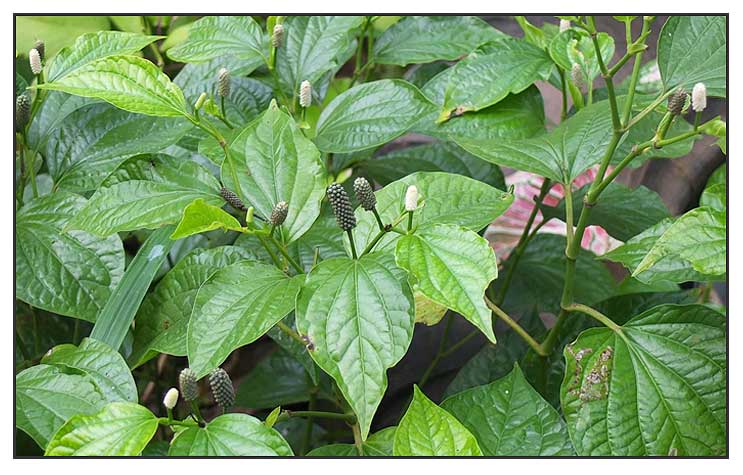
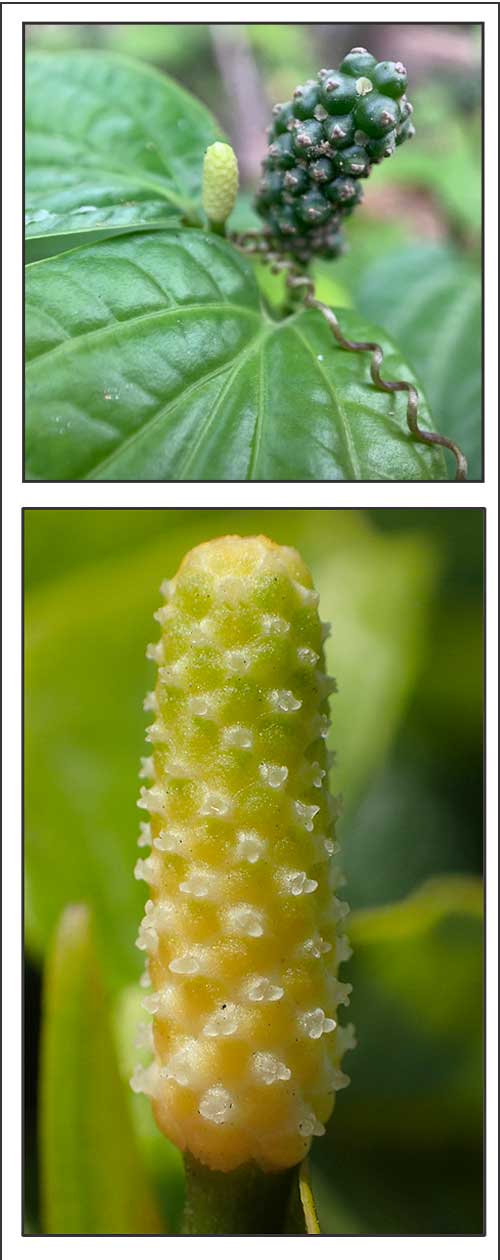
• A perennial herb with creeping rhizomes, and a striped stem that grows to 40 cm high. Leaves are thin, heart-shaped, and 8–10 cm long and 8–11 cm wide, with 5 main veins from the base of the blade, oil glands on the upper surface, and fine veins on its under side. Petioles are 2.5–3 cm long. Erect white spikes of 1–2 cm long emerge at the axils.
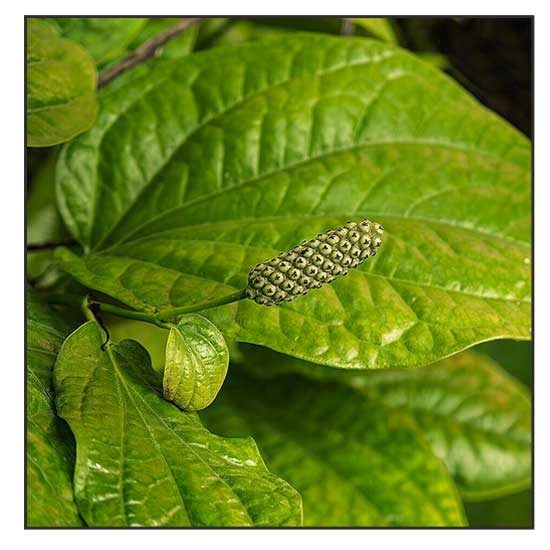
• Growth form: A sprawling herbaceous creeper, with erect stems at intervals, growing close to the ground and forming mounds of up to 60 cm in height. The stems are slightly hairy. Foliage: Its alternate, stalked leaves have leaf blades that are heart-shaped, glossy dark green, and 7–15 by 5–13 cm, with 5–7 prominent veins. The leaves emit a pungent peppery scent when crushed. Flowers: Erect, cylindrical flowering shoots are 1–2 cm long, and consist of small, stalkless and petal-less white male or female flowers. Species is monoecious, where male and female flowers are produced on different spikes on the same plant. The male flower spikes are 6 mm long, while the female flower spikes are longer and denser (12 mm long). Fruit: One-seeded fruits are small aggregated nodular drupes formed from female spikes, maturing to deep green. (Flora & Fauna Web)
Distribution
- Native to the Philippines. (1) (2)
- In Balabac, Batanes, Camiguin, Jolo; in Luzon: Albay; in Mindanao: Agusan del Norte, Davao Oriental, Davao del Sur, Lanao del Sur, Surigao, Surigao del Norte, Zamboanga, Siasi, Sulu Archipelago, Tawi-tawi. (2)
- Also native to Andaman Is., Borneo, Cambodia, China South-Central, China Southeast, Hainan, Jawa, Laos, Malaya, Maluku, Myanmar, New Guinea, Northern Territory, Queensland, Sumatera, Thailand, Tibet, Vietnam. (1)
Constituents
- Study of fresh roots of P. sarmentosum isolated 16 compounds: the aromatic alkene (1), 1-allyl-2-methoxy-4, 5-methylenedioxybenzene (4), b-sitosterol, pyrrole amide (6), sarmentine (10), sarmentosine (13) and pellitorine (14).(+)-Sesamin (2), horsfieldin (3), two pyrrolidine amides 11 and 12, guineensine (15) and brachystamide B (16). (7)
- Ethyl acetate fraction showed highest content of polyphenols (254.1 mg GAE/g) and total flavonooids (132.2 mg/;QEg). (see study below) (9)
- Study of leaves isolated 3 previous undescribed compounds, namely 4″-(3-hydroxy-3-methylglutaroyl)-2″-β-D-glucopyranosyl vitexin (1), kadukoside (2), and 6-O-trans-p-coumaroyl-D-glucono-1,4-lactone (3), along with 31 kinown compounds. Known compounds included 2 flavonoids (4, 5), 12 phenolics (6–17), two amides (18, 19), 8 alkaloids (20–27), 2 terpenes (28, 29), 3 lignans (30–32), and a mixture of sterols (33, 34). (see study below) (13)
Properties
- Leaves are often confused with betel, but lack the intense taste of betel leaves and are significantly smaller.
- Studies have suggested anti-ulcer, gastroprotective, anti-atherosclerosis, antioxidant, antidiabetc, antihypertensive, antibacterial, anti-inflammatory, hypolipidemic, bone health promoting and fracture-healing, pulmoprotective, antimutagenic, anticancer properties.
Parts used
Roots, leaves.
 Uses
Edibility
- Leaves are eaten raw.
- Leaves are added to curries or blanched and used as potherb. Dried infructescence is occasionally used as spice. Soaking leaves in cold water with a bit of sugar for two hours before use subtly alters the flavor. Leaves used for making tea. (21)
- In Chinese cuisine, chopped leaves are primary ingredient in a dish of wild betel rice.
- In Bangladesh cuisine, chopped leaves are tossed with chopped onion, green chili, and a dash of mustard oil, and eaten as salad with plain rice. (4)
- In Thai cuisine, leaves are used to wrap miang kham, a traditional snack. Leaves are also an ingredient of the Kaeng kihae curry of Northern Thailand. (4)
-
In Lao and Vietnamese cuisine, the cultivated leaf is used as a flavoring wrap for grilling meats, the thit bo nurong la lot in Vietnam.
-
In Laotian cuisine, eaten as part of a salad. In Malay cuisine, shredded for the salad, ulam. (4)
Folkloric
- No reported folkloric medicinal use in the Philippines.
- Used for treatment of asthma, fever, and gastritis.
- In Malaysia,,
leaves and root are applied to the forehead to relieve headaches. Decoction used for relief of muscle weakness and pain. In Thailand, roots used for stomach aches, and leaves used for relief of gastritis.
- Used for treatment of toothache and for fungoid dermatitis of the feet; for cough, influenza, and rheumatism. Decoction of leaves drunk for treatment of malarial fever. Crushed leaves mixed with water used for bathing to treat kidney stones and difficulty urinating. (12)
- In Vietnam, used for relieving symptoms associated with gout. Across Vietnam, Thailand, and Malaysia used for treatment of joint pain, inflammation, and digestive ailments.
- For medicinal use, whole plant, preferably harvested in flower, is dried and stored. (20)
Others
- Agroforestry: Grows well as an understorey shrub in woodlands. Also used as ground cover. (20)
Studies
• Gastroprotective / Anti-Gastric Ulcer / Leaves: Study compared the gastroprotective effects of P. sarmentosum (PS) with omeprazole (OMZ) on gastric parameters in male Wistar rats exposed to water-immersion restraint stress. Methanol extract was prepared in dose of 500 mg/kg. Oral supplementation of PS was effective in preventing formation of gastric lesions when compared with OMZ. Results suggest similar protective effect against stress-induced gastric lesions as omeprazole. The gastroprotective effect was associated with decreased lipid peroxidation, increased prostaglandin E2, reduction in gastric acidity, and reduction in COX-2mRNA expression that was altered by stress. (5)
• Anti-Atherosclerosis: Study evaluated the effect of PS on atherosclerotic changes in hypercholeste-
rolemic rabbits.
Rabbits fed only with high cholesterol diet 1% showed focal fatty streak lesions compared with the C group and 1% cholesterol supplemented with simvastatin. W4 group 1% cholesterol with PS water extract (500 mg/kg) and Smv-1% cholesterol supplemented with simvastatin (1.2 mg/kg) showed significant reduction (30 ± 6.0%, p<0.05) in fatty streak. Atherosclerotic lesions under electron microscopy showed reduction in foam cells. Results suggest PS extract has protective effect against atherosclerosis. (6)
• Anticarcinogenic on Human Hepatoma Cell Line: Study evaluated the potential anticarcinogenic effect of P. sarmentosum ethanolic extract on human hepatoma cell line (HepG2).
Molecular analysis showed a typical intrinsic apoptotic characterization, which included fragmentation of nuclear DNA in ethanolic extract-treated HepG2 cells. Results suggest the extract induced anticarcinogenic activity through an intrinsic apoptosis pathway in HepG2 cells in vitro. (8)
• Flavonoids / Antioxidation Human Hepatoma Cell Line: Chromatographic study of ethyl acetate fractions isolated two substances: afzelin (1) and kaempferol (2). Compound 2 exhibited strong antioxidant activity with IC50s of 6.37 and 4.93 µg/mL in DPPH and ABTS models, respectively. Compound 1 showed moderate activity. (see constituents above) (9)
• Antihypertensive / Antidiabetic / Review: Study evaluated the potential of P. sarmentosum for prevention and treatment of diabetes mellitus and hypertension. Review screened 47 articles from 1998 until 2021. Most of the studies revealed positive effects on PS against hypertension and diabetes, suggesting potential of PS as natural source of antidiabetic and antihypertensive agents. (10)
• Effect of Harvest Maturity on Secondary Metabolites, Antioxidant Activity and Herbal Yield: Study evaluated the effect of harvest maturity on yields, total flavonoid content, total phenolic content, and antioxidant activities by DPPH and ABTS radical scavenging assays. Results showed highest weight for fresh and dried leaves and total flavonoid content were observed at harvesting maturity of 90 days after planting. Harvesting maturity at 120 days also gave highest total phenolic content (14.53 mg GAE/g dried sample and antioxidant activities. Among the four harvesting maturities studies (30, 60, 90, and 120 days), harvesting maturity of 90 days was recommended as optimal for P.. sarmentosum. (11)
• Antibacterial / No Cytotoxicity: Study screening yielded four compounds: three amides -3-(3',4',5'-trimethoxyphenylpropanoyl) pyrrolidine (1), 3-(4’-methoxyphenylpropanoyl) pyrrole (2), N3-phenyl-propanoyl) pyrrole (3) and a sterol namely β-sitosterol (4). Antibacterial testing by disk diffusion method showed all compounds were active towards gram(+) bacteria except compound 4. On cytotoxicity screening using SRB (sulforhodamine B) assay, none of the compounds showed anticancer activity. (12)
• Bioactive Potential of Secondary Metabolites / Anthelmintic / Leaves: Study of leaves isolated 3 previous undescribed compounds, namely 4″-(3-hydroxy-3-methylglutaroyl)-2″-β-D-glucopyranosyl vitexin (1), kadukoside (2), and 6-O-trans-p-coumaroyl-D-glucono-1,4-lactone (3), along with 31 known compounds. Some isolated compounds showed anthelmintic (Caenorhabditis elegans), antifungal (Botrytis cinerea, Septoria tritici and Phytophthora infestans), and antibacterial (Aliivibrio fischeri) potential in line with the plant's trafiyional applications. Noteworthy, only a few compounds showed cytotoxic effects, and only at high concentration, implying a safe consumption of the species. (13)
• Potential Effect on Metabolic Syndrome / Review: Piper sarmentosum (PS) has shown promising properties and potential in the management of metabolic syndrome (MetS) and its complications. The review summarizes the literature on effects of PS on principal components of MetS and their complica-tions. Evidence suggests PS prevented adiposity, hyperglycemia, hypertension, and dyslipidemia in preclinical studies through its antioxidant and anti-inflammatory properties. PS has also protected against MetS-associated cardiovascular complications. However, a significant challenge to medical use of PS is the absence of randomized controlled trials in humans — a gap that must be bridged before supplementation can be advised to manage MetS in humans. (14)
• Antibacterial / Leaves: Study evaluated the antibacterial activity of P. sarmentosum aqueous leaf extract against several Gm(+) and Gm(-) pathogenic bacteria using disc diffusion method. Results showed the extract at concentration of 1.5 mg/disc and 2.5 mg/;disc demonstrated inhibitory activity against S. aureus, with ZOI ranging from 11 to 12 mm. No significant antibacterial activity was observed against other tested bacteria. Study suggests optimization of extraction methods and further evaluation of effectiveness against a broader range of bacteria. (15)
• Effect on Bone Health and Fracture Healing / Review: PS may have potential therapeutic effects against osteoporosis. Review systematically summarized the therapeutic effects of PS on prevention of osteoporosis and promotion of fracture healing. Efficacy has been studied in animal models of osteo-
porosis induced by ovariectomy and glucocorticoids, and in bone fracture models PS prevented deterioration of bone histomorphometric indices, improved fracture healing and restored biomechanical properties of healed bone in ovariectomized rats. PS also prevented osteoblast/osteocyte apoptosis, increased bone formation and mineralization and improved trabecular bone microstructures and strength of rats with osteroporosis induced by glucocorticoids.
(16)
• Xanthine Oxidase Inhibition / Anti-gout / Anti-Inflammatory / Chrysin / Aerial Parts: Study aimed to validate the traditional use of PSar for management of gout by evaluating extracts and fractions of Psar for antioxidant, anti-inflammatory and XO (xanthine oxidase) inhibitory activities. The ethyl acetate fraction showed strongest XO inhibition with IC50 of 13.90 µg/mL and antioxidant activity. Fractions significantly reduced carrageenan-induced paw edema in mice. Am9ong seven isolated compounds, chrysin showed outstanding XO inhibition (IC50 2.05 µM), better than allopurinol (IC50 4.80 µM). Chrysin also showed notable NO and TNFα inhibition. Results supports PS role as a natural XO inhibitor and anti-inflammatory agent, and chrysin. in particular, as a promising lead compound. (17)
• Antidiabetic / Hypoglycemic / Hypolipidemic / Antioxidant / Leaves: Study evaluated the antihyperglycemic effect of ethanolic extract of P. sarmentosum leaves (PSE) on diabetes and its complications in Wistar albino rats. Results showed consumption of 50 and 200 mg PSE/kbw significantly reduced blood glucose level in diabetic rats after 60 days, along with decreases in triglyceride and cholesterol levels. PSE also decreased levels of malondialdehyde, AST, ALT, alkaline phosphatase, BUN, and creatinine. (18)
• Anticancer / Antimicrobial / Antioxidant / Leaves: Study evaluated the phytochemical and biological activities of P. sarmentosum leaf extracts. Antimicrobial testing showed activity against tested microorga-nisms Bacillus subtilis and Klebsiella pneumonia. Antioxidant testing by DPPH scavenging assay, showed IC50 of 55.25 ppm, suggesting potentially significant source of antioxidants. Extract also showed strong cytotoxic activities against three human cancer cell lines viz., cervical carcinoma (HeLa), breast cancer (MCF-7) and colon adenocarcinoma (HT-29). Antimicrobial and antioxidant activities could be attributed to tannins, steroids and alkaloids. GC-MS analysis for phytochemicals with anticancer potentials showed abundance of Asarone (73.72%), 3-(4-methoxyphenol) propionic acid (7.58%), and phytol (3.67%). (19)
• Pulmoprotective in CCl4-Induced Oxidative Stress in Lung: Study evaluated the effects of Piper sarmentosum supplementation on carbon tetrachloride (CCl4) induced oxidative stress in lung of male Wistar rats. CCl4 increased lung lipid peroxidation (TBARS) and glutathione peroxidase significantly. P. sarmentosum supplementation at 125 mg/k/day for 28 days was able to decrease oxidative stress in lungs induced by single dose of CCl4 by reducing lung TBARS content and maintaining the glutathione peroxdase activity towards normal level. Findings suggest the ME possesses good antioxidant property. (22)
Antimutagenic Potential / Culinary Insights / Leaves: Long a traditional vegetable, its health-promoting properties after cooking remain unclear. Study evaluated the phytochemical profiles, antioxidant capacity, and mutagenicity of the leaf extracts prepared to mimic typical culinary practices.
PEE (ethanolic extract of uncooked leaves), PHWE (hot water extract simulating curry broth), and ethanolic extract of boiled leaf residues representing cooked leaves in curry (PREE) were evaluated
for chemical composition, antioxidant activity, and antimutagenic effects. PEE and PREE were rich in phenolics and flavonoids, with strong antioxidant activity in ABTS and FRAP assays. PHWE contained higher levels of condensed tannins, None of the extracts showed mutagenicity in Salmonella assay. Results showed the leaves retained considerable antioxidant and antimutagenic potential after cooking highlighting their value as safe and functional food with potential health benefits. (23)
Availability
- Wild-crafted. |