Gen info
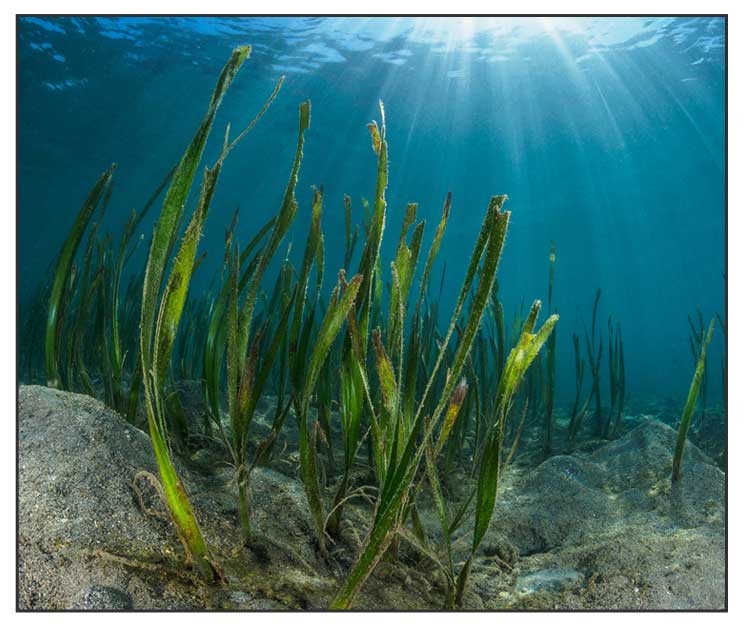
- Seagrasses are marine flowering plants that play important roles in marine ecosystems, i.e. reducing wave energy, stabilizing sand, and providing shelter for a variety of marine animals. (16)
-
A pressing plant in coastal areas, seagrass provides habitat for various marine biota, acting as feeding, breeding. It is found in shallow marine environments, estuaries with high salt content, constant puddles, and areas with open water at low tide. It is commonly found on sand substrates, muddy sand, mud, and coral shards. (19)
- Enhalus a a monotypic genus of marine flowering plants. The sole species is Enhalus acoroides.
(It is surface pollinated with male flowers that detach from the plant to float on the surface until they reach a female flower where pollination can occur. Enhalus acoroides is considered a slow-growing, "climax" species. (32)
- Etymology: The genus name Enhalus derives from Greek roots en halo, meaning "in salt", referring to the marine, saltwater habitat of this flowering seagrass. The specific epithet acoroides derives from Acorus, the ancient Greek and Latin name for sweet flat plant, and the Greek suffix -oides, meaning "resembling" or "like", referring to the long, flat, strap-shaped leaves similar to those of freshwater sweet flag.
Botany
• Lamon is an aquatic weed. Leaves are long and ribbon-like, alternating in two ranks. Roots are cordlike with firm black fibers anchored in the bottom mud. Fruits occur singly, connected by spiral stalks to the base of old leaves. Flowers are water pollinated (hydrophilous). Female stalk lengthens before pollination and fertilization. After fertilization, the stalk shortens and coils in a springlike fashion until maturity, and straightening out when the seed are ready for release.
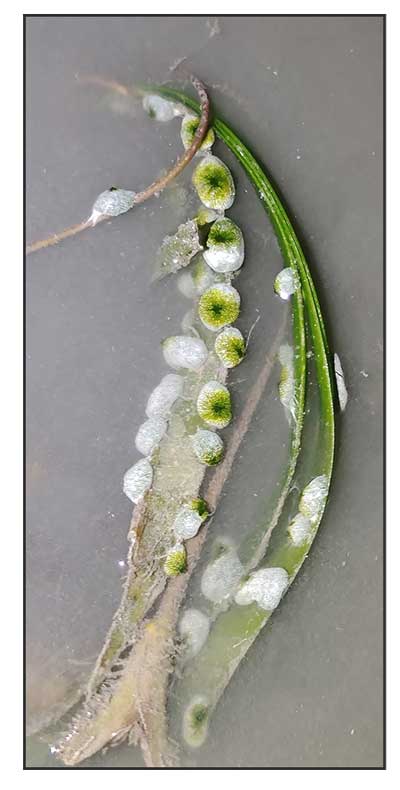
 • Enhalus acoroides massive rhizomes (1.5 cm in diameter) help it stay anchored in soft mud substrates, withstanding wave action and tidal currents. it has long strap like leaves (30–150 cm) which make up a significant volume of total plant biomass of shallow water seagrass beds, because of the large structure of the leaves and where they are in the water column, they provide greater surfaces for Epibiont organisms to inhabit. Fruit are round and large (4–6 cm in diameter) with dark, ribbed skin and 6-7 white seeds. The male plant bears a single pedunculate inflorescence or stem containing clusters of flowers, each is highly reduced in form to a small free floating device. Female Enhalus acoroides bears only a single inflorescence, but the peduncle of a female flower is much longer. (32) • Enhalus acoroides massive rhizomes (1.5 cm in diameter) help it stay anchored in soft mud substrates, withstanding wave action and tidal currents. it has long strap like leaves (30–150 cm) which make up a significant volume of total plant biomass of shallow water seagrass beds, because of the large structure of the leaves and where they are in the water column, they provide greater surfaces for Epibiont organisms to inhabit. Fruit are round and large (4–6 cm in diameter) with dark, ribbed skin and 6-7 white seeds. The male plant bears a single pedunculate inflorescence or stem containing clusters of flowers, each is highly reduced in form to a small free floating device. Female Enhalus acoroides bears only a single inflorescence, but the peduncle of a female flower is much longer. (32)
Distribution
- Native to the Philippines. (12) (31)
-
Found in muddy salt-water gulfs, lagoons, and seagrass areas of the Philippines and other tropical seas.
-
Found in fishponds, waterways, and sea bathing resorts, sometimes colonizing in abundance to cause obstruction of water flow.
- Also native to Andaman Is., Bismarck Archipelago, Borneo, Cambodia, Caroline Is., Hainan, India, Jawa, Kenya, Lesser Sunda Is., Madagascar, Malaya, Maldives, Maluku, Marianas, Mozambique, Myanmar, Nansei-shoto, New Caledonia, New Guinea, Nicobar Is., Northern Territory, Queensland, Saudi Arabia, Seychelles, Solomon Is., Somalia, South China Sea, Sri Lanka, Sulawesi, Sumatera, Tanzania, Thailand, Vietnam, Western Australia, Yemen. (12)
 Constituents Constituents
- Study for calorific content showed 68.82 K cal g, the highest in the species tested. Leaves and rhizomes also yielded high content of phenols. (3)
- Study yielded eleven pure compounds including four flavonoids and five steroids. (See study below) (3)
- Study of proximate composition of seeds showed protein 8.8%, lipid 0.2%, carbohydrate 72.4%, ash 6.4%, kCal 3.27.
- In a comparative study of seagrasses, E. acoroides had the lowest insoluble fiber content. Its percentage of soluble fiber against total fibers was 62.4%.
-
Rhizomes and roots have yielded luteolin, apigenin, luteolin 4’-glucuronide, luteolin 3’-glucuronide, stigmasta-4,22-dien-6β-ol-3-one, stigmasta-4,22-dien-3,6-dione, stigmast-22-en-3-one, stigmasta-5,22-dien-3-O-β-D-glucopyranoside, daucosterol, hexacosyl alcohol, p-hydroxy-benzaldehyde, n-hexadecanoic acid. Fresh leave are rich in sterol and fatty acid components, sitosterol, stigmasterol, palmitic acid, linoleic acid, linolenic acid, and stigmasterol derivatives. (13)
- Study of aqueous extract yielded twelve types of major chemical constituents: six flavonoids, two homocyclic peptides, two long chain aliphatic amides, one tannin and one nitrogen heterocyclic compound. (see study below) (15)
- Phytochemical screening of methanol extract yielded alkaloids, flavonoids, saponins, phenols, tannins, and steroids. Proximate analysis yielded 9,35% crude protein, 0.07% crude lipid, 54.94% carbohydrate and 31.98% ash. (17)
- Qualitative screening revealed alkaloids, flavonoids, saponins and steroids the the methanol extract, and steroids and flavonoids in the n-hexane extract. (see study below) (19)
- GC-MS study of ethyl acetate extract of E. acoroides whole seagrass revealed phytocompounds, including: 1-nonadecene (17.15%), n-tetracosanol-1 (11.48%), 1-octadecene (10.06%), 2-pentadecanone (7.87%), behenyl alcohol (7.33%), 17-pentatriacontene (4.84%), triacontane (4.25%), tetratetracontane (4.17%), and butylated hydroxytoluene (2.09%).
(see study below) (25)
- Proximate analysis of flour prepared by grinding dried seeds revealed: 9.8% moisture; 8.8% protein; 0.2% fat; 72.4% carbohydrates; 2.4% crude fiber; 6.4% ash; 933 mg/kg calcium; 2392 mg/kg phosphorous; and 2813 mg/kg iron. Correspondingly, proximate analysis of the starch prepared from the flour with a 50% yielded: 11% moisture; 0.8% protein; 0.1% fat; 87.6% carbohydrates; 0.4% crude fiber; 0.5% ash; 320 mg/kg calcium; 210 mg/kg phosphorous and; 220 mg/kg iron. (Comparison of proximate analysis results and calculated caloric values of seed flour and starch showed similarity with those of terrestrial origin.) (26)
Properties
- Seeds considered to have aphrodisiac and contraceptive properties.
-
Studies suggest antimicrobial, antioxidant, antilarval, anticancer, nutrient, antidiabetic, antiobesity properties.
Parts used
Rhizome, seed.
 Uses Uses
Edibility / Nutrition
- Study showed the seagrass to be high in kilocalorie content, with high content of phenols in the leaves and rhizomes, suggesting a potential for feed/food.
- Flour made from Enhalus used in the preparation of Chocolate Chip Cookies. (See Seagrass recipe I)
(8)
- In the Philippines, seeds are traditionally eaten. Raw seeds described as crunchy and sweet; boiled seeds taste like cooked sweet potato or chestnuts. (13)
Folkloric
- In the Philippines, fruits and leaves are chewed or macerated and the mixture applied to wounds to staunch bleeding. Seeds are considered aphrodisiac and contraceptive. (30)
-
In traditional medicine, rhizome used for muscle pains, skin diseases, wounds, and stomach problems. Used as remedy for stings of different kinds of rays and scorpions. Also used as tranquilizer for babies. (13)
- In India, skin of fresh rhizome is peeled and taken with a cup of sea-water for heart disease and low blood pressure.
(6) Used for treatment of heart conditions and sea sickness. (13)
- In Thailand, used carminative and to improve blood and lymph circulation. (13)
- In Pahawang Island, Lampung, Indonesia, used as traditional body scrub to avoid mosquito bites and malaria. (20)
Others
- Biomass: A study in Sabah, Malaysia showed seagrass Enhalus acoroides produced very high bio-mass especially in the muddy habitat bordering mangroves (e.g. total biomass of 468.5 g AFDWm.2). (7)
-
Used in various formulations for treatment of ulcers, acne, and cosmetics due to antibacterial activity.
- Fiber: Yield a durable fiber. The black fiber strands of the leaf margins persist after leaves decay and are used for making fishing nets. Also used for making mats and ropes, and for papermaking. (30)
- Alage: Tiny algae grows on the leaves of the seagrass, providing food for grazing creatures like snails and seagrass sea hare. (28) Grazed by turtles and dugongs (Dugong dugon).
- Shelter: Mat of rhizomes provide shelter for many small animals. (28)
- Body scrubs: In Indonesia, used as traditional body scrub to avoid mosquito bites and malaria.
Studies
• Antimicrobial / Anticancer: Study evaluated the leaf extracts of E. acoroides for antimicrobial and anticancer properties. Results showed the ethyl acetate extracts inhibited the growth of all the tested bacteria. On cytotoxicity testing, it killed 50% of HeLa ells.(2)
• Nutritional Value: Study evaluated the biochemical and calorific content of different species of seagrasses. Enhalus acoroides yielded 68.82 K cal g, the highest in the species tested. E. acoroides also yielded maximum values in leaf and rhizomes. The calorific contents of the seagrasses were equivalent to Bengal gram, peas, potato, and sweet potatoes. Results suggest seagrasses could be considered feed/food.(3)
• Antifeedant / Antibacterial / Antilarval: Study yielded eleven pure compounds including four flavonoids and five steroids. Three flavonoids were antifeedant against second-instar larvae of Spodoptera litura. Two flavonoids have antibacterial activity against several marine bacteria. One flavonoids showed strong antilarval activity against Bugula neritina larvae. (4)
• Biomass Reduction from Solar Radiation and Tidal Exposure: Monitoring over eleven years revealed a declining trend in above-ground biomass (54% significant reduction from 2000 to 2010) which negatively correlated with tidal exposure and solar radiation. Enhalus acoroides contributes to the canopy habitat that provides for diverse, endangered, and economically important fauna throughout the Indo-Pacific bio-region. (5)
• Antioxidant: Study of leaf sample yielded high levels of phenolic and proanthocyanidins when compared to root and rhizome. The leaf samples exhibited higher total antioxidant activity (11.770±0.026 mg Ascorbic acid equivalents/g), higher percentage of DPPH radical scavenging activity (25.76±0.04) and higher reducing power (18.060±0.73) in terms of mg GAE/g. There was significant correlation between the phenolic and proanthocyanidin content with the antioxidant activity. (9)
• Antioxidant / Fiber Content: Study evacuated four tropical seagrasses from Indonesia. An methanol extract of E. acoroides showed high activity on scavenging DPPH radicals. It also showed the highest content of soluble fiber.(10)
• Toxicological / Histopathological / Biochemical Evaluation: Acute toxicity i.e., LD50 was more than 3000 mg/kg in Wistar albino rats. Sub-acute toxicity 28day repeated dose) showed NOAEL (no observed adverse effect level) at dose of 400 mg/kg in Wistar albino rats. There were no significant differences in hematological, biochemical, and histopathological parameters. Results suggest a high margin of safety. (14)
• Anti-Algal / Luteolin-7-O-Glucuronide / Inhibition of Phaeocystis globosa: Phaeocystis globosa is a harmful algae species. Study evaluated aquatic plants to inhibit harmful algal blooms (HABs). E, acoroides aqueous extract could significantly inhibit the growth of P. globosa, decrease the chlorophyll-a content and photosynthetic efficiency. Study yielded twelve types of major chemical constituents Luteolin 7-O-glucuronide was one of the antialgal compounds of E. acoroides aqueous extract with potential as novel algaecide. (15)
• Antimicrobial Activity of Endophytic Fungi Isolated from E. acoroides: Endophytic fungi were isolated from seagrass Enhalus acoroides. Forty0seven endophytic isolates were classified into 17 phylogenetically diverse genera. Crude extracts including culture media and cells of all isolates were tested for antimicrobial activities against 10 potential human pathogens. Extracts from 10 isolates (80.85%) showed antimicrobial activity with MIC values ranging from 4 to 200 µg/mL. Results suggest endophytic fungi from seagrasses such as E. acoroides has potential as a good source of natural antimicrobial products. (16)
• α-Glucosidase Inhibitory Activity: Study evaluated the α-glucosidase inhibitory activity of three species of seagrasses viz., Enhalus acoroides, Thalassia hemprichii and Cymodocea rotundata. Extracts of all parts i.e., root, leaf, and stem were prepared with maceration using 80% ethanol solvents. Results showed the 80% ethanol extract of Enhalus acoroides showed highest α-glucosidase inhibitory activity with IC50 168.15 ± 2.71 µg/mL. Kinetic type of inhibition was non-competitive. Phytochemical screening yielded phenols, flavonoids, terpenes, and tannins, with total phenolic content of 28.76 ± 2.46 mg GAE/g, (18)
• Antibacterial against S. aureus: Study evaluated the antibacterial activity of E. acoroides extract against S. aureus. Yield was 0.35% in n-hexane extract with 5.6mm ZOI, and 5.91% in methanol extract with 5.6 mm diameter. (see constituents above) (19)
• Potential as Traditional Body Scrubs for Preventing Malarial Bites: Study evaluated the use of seagrass Enhaus acoroides as an antimalarial. Ancient inhabitants of Pahawang Island, Lampung, Indonesia. used E. acoroides as traditional scrub to avoid mosquito bites. Phytochemical study revealed active chemicals contained flavonoid, tannin, terpenoid, steroid, triterpenoids, and saponins, with yields ranging from 3.21 to 8.63% for ethanol solvents and 0.21-0.76% for n-hexane solvents. (20)
• Anti-Breast and Hepatocellular Cancer: Study evaluated a hydroalcoholic extract of E. acoroides for anti-breast cancer activity. Results showed inhibition of proliferation of liver and breast cancer. Cell viability by MTT assay showed significant growth reduction with IC50s of 112.20 µg/ml for HepG2 and 101.60 µg/ml for MCF-7. Results showed potential for treatment of hepatocellular cancer and breast cancer. (21)
• Comparative Study of Various Plant Parts / Leaves, Roots, Rhizomes: Comparative study evaluated various plant parts for highest antiproliferative and antioxidant activities. Leaves revealed highest phenolic content. Phenolic content by HPLC was leaves > rhizomes > roots. Roots showed highest DPPH radical scavenging activity. Leaves also showed highest antiproliferative activity and mitrochondrial membrane potential depletion effect against MNCF-7 cell line. Results suggested leaves as new candidate for use in cancer treatment. (22)
• Genotoxic / Antigenotoxic / Leaves: Study evaluated the genotoxic effect and potential of encapsulated E. acoroides leaf extract as antigenotoxic against nickel nitrate NiNO3. Results showed that at higher concentrations (250 ppm and 500 ppm), encapsulated E. acoroides extract decreased mitotic indices, with no chromosome aberration observed. NiNO3 induced a genotoxic effect evidenced by low mitotic index and high percentage of chromosome aberration. Modulation of NiNO3 effect by the addition of encapsulated E. acoroides extract at low concentration (100 ppm) increased mitotic index compared to Ni alone, but did not reduced chromosome aberration. Simultaneous extract and Ni treatment significantly reduced nuclear fragmentation and nuclear lesion. The encapsulated extract can repair several types of nuclear damage but cannot minimize chromosomal damage. (23)
• Novel Breast Cancer Inhibitors: Study evaluated the bioactive molecule profiles of E. acoroides and their direct biological anticancer potential using in silico and in vitro studies. In silico study revealed its ability to combat breast cancer by inhibiting HER2/EGFR/HIF-1α pathway via molecular docking. MTT assay demonstrated higher doses of E. acoroides increased the effectiveness of toxicity against cancer cell line. Metabolites also functioned as potent antioxidants, effectively inhibiting carcinogenic mechanisms. Results suggest a new approach to unveiling E. acoroides metabolites' anticancer activity via inhibition of HER2/EGFR/HIF-1α receptors, with great cytotoxicity and potent antioxidant activity to prevent a carcinogenic cascade. (24)
• Bioactive Components: GC-MS study of ethyl acetate extract of E. acoroides whole seagrass revealed phytocompounds, including: 1-nonadecene and n-tetracosanol-1, which possess antioxidant property and triacontane which has antibacterial, antidiabetic, and antitumor activities. (see constituents above) (25)
• Mitigation of Obesity and Diabetes / Hypolipidemic: Study evaluated the anti-obesity and anti-diabetic effects of E. acoroides extract (SEAE) in a zebrafish model of diet- and glucose-induced metabolic dysfunction. SEAE significantly reduced body weight and blood glucose in diabetic zebrafish (p<0.05), with efficacy comparable to or exceeding metformin. Extract upregulated GLP-1 and downregulated PPARγ and SREBP-1c, and also reduced total cholesterol, triglycerides, and LDL levels, while increasing HDL. SEAE exhibits strong anti-obesity and anti-hyperglycemic effects by modulating key metabolic pathways and restoring gut microbial homeostasis. Findings highlight a potential marine-derived therapeutic candidate for metabolic syndrome, as functional food or nutraceutical. (27)
• Biostimulant: Drought poses a significant challenge to crop productivity, with maize particularly vulnerable. The sea grass E. acoroides, rich in phytochemicals, is a potential biostimulant. Study evaluated the effects of E. acoroides extract on maize growth under drought conditions during the seedling phase and analyzed biochemical changes in plants treated with extract. Results showed the extract enhanced plant height, increased shoot and root fresh and dry weight, higher total sugars and protein content in shoots. Chlorophyll, reducing sugars, total N, and tocopherol contents were higher in extract treated plants. Results indicate potential of E. acoroides extract as biostimulant for improving drought tolerance in maize. (29)
Availability
Wild-crafted. |