|
 Gen info Gen info
- Ficus septica is a shrub or tree in the family Moraceae.
- Taxonomy: Ficus septica was first described by the Dutch botanist Nicolas Laurens Burman in 1768.
(27)
- Etymology: The species epithet 'septica' derives from Greek, meaning putrid or septic, referring to the poisonous latex and its corrosive effect on the humann skin
Botany
Hauili is an erect, small tree, growing
3 to 8 meters high, smooth, with more or less hairy young shoots. Leaves are smooth and shining, not all roughened, oblong-ovate to elliptic-ovate, 10 to 20 centimeters long, with tip tapering
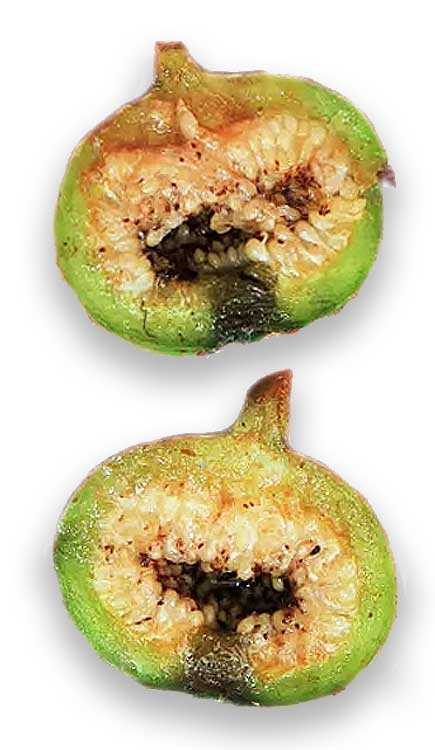
to a rather sharp point, and the base pointed. Receptacles are axillary, solitary, depressed-globose or turbinate, obscurely ridged or angled, 1.5 to 2 centimeters in diameter, and shortly peduncled.
• Ficus septica is a tree or shrub up to 25 m. Latex is characteristically yellow. Leaves and petioles are both glabrous. Leaves are symmetric, elliptic to oblong. Figs often grow in pairs but can be solitary or in groups of up to four, with 7 to 12 ribs towards the ostiole. At maturity, whitish to yellowish dots appear on the fig. Those in the Philippines have stems covered by short hairs while those in Taiwan are glabrous. (27)
Note: The water drops on the Ficus septica leaf (above/right) are not the result of rain or morning dew but expelled by "gutation", a natural process in plants that involves pushing out or secreting excess liquid from the leaves or blades. It occurs only at night while the stomata or small pores on the surface of the leaf are closed. It is common in many species of figs including F. elastica and F. chartacea. (Figs of Borneo) (32)
Distribution
- Native to the Philippines.
-
In thickets at low and
medium altitudes throughout the Philippines.
- Also native to Bismark Archipelago, Borneo, Jawa, Lesser Sunda Is., Malaya, Maluku, Nansei-shoto, New Guinea, Queensland, Santa Cruz Is., Sulawesi, Sumatera, Taiwan, Vanuatu. (16)
 Constituents Constituents
• Phytochemical
study isolated isoflavones: ficusin A and ficusin B from the root bark.
• Study isolated two indolizidine alkaloids: a novel ficuseptine and antofine.
• Phytochemical screening of an ethanol extract yielded alkaloids, quarternary base, tannins, 2-deoxysugars and benzopyrone nucleus. (see study below) (5)
• Methanol extract of stems yielded eight new alkaloids, namely, ficuseptines B−D (1−3), 10R,13aR-tylophorine N-oxide (4), 10R,13aR-tylocrebrine N-oxide (5), 10S,13aR-tylocrebrine N-oxide (6), 10S,13aR-isotylocrebrine N-oxide (7), and 10S,13aS-isotylocrebrine N-oxide (8), together with six known phenanthroindolizidine alkaloids. (see study below) (1)
• Study of ethanolic extract of dried leaves yielded alkaloids, condensed tannins, 2-deoxysugar, fats and oils. (see study below) (18)
• Study of dichlormethane extracts yielded ß-sitosteryl-3ß-glucopyranoside-6'-O-fatty acid esters (1),
α-amyrin fatty acid esters (2), and a mixture of ß-sitosterol (3a) and stigmasterol (3b) in 5:2 ratio from the twigs, and 3α, ß-amyrin (4) and long chain saturated fatty alcohols (5) from the leaves. (22)
Properties
• Diuretic, sudorific, antiherpetic, antirheumatic.
• Studies have suggested cytotoxicity, anti-inflammatory, antibacterial, antifungal, immunomodulatory, antioxidant, hepatoprotective, antiprotozoal, anticancer, muscarinic-binding, antiangiogenic, wound healing, anti-malarial, antimitotic, antiproliferative properties.
 Part utilized Part utilized
Root, leaves, latex.
Uses
Edibility
· Fruit reportedly edible, bland tasting to sweet.
Folkloric
· In the Philippines, decoction
of roots used as diuretic.
· Poultice of roots used for boils.
· Fresh leaves are sudorific; bruised with oil, used for headaches.
· Leaves applied externally as antirheumatic.
· Roots used for neutralizing toxins; also, for prevention of asthma.
· Fruits used as laxative.
· Latex used for herpes.
· Used by the Ayta people of Pampanga for wounds. (15)
· Used by the Ifugaos for diarrhea, cough, malaria and stomach
problems.
· In southern Mindanao, bark used for diarrhea.
(17)
· The Subanens in Dumingag in Zamboanga del Sur use decoction of roots and stems for headache and fever. (25)
· Used by the Ata Matigsalog in Arakan, north Cotabato for treating skin infections. (26)
Studies
• Phytochemicals / Phenanthroindolizidine Alkaloids / Stems / Cytotoxicity:
Study yielded six known phenanthroindolizidine alkaloids, eight new
alkaloids – ficuseptines B-D, 10R,13aR-tylophorine N-oxide, 10R,13aR-tylocrebrine
N-oxide among others – from the methanol extract of stems of Ficus
septica. Cytotoxicity of the new alkaloids were assessed in vitro using
HONE-1 and NUGC cell lines. (1)
• Phenanthroindolizidine Alkaloids / Leaves / Cytotoxicity: Study yielded phenanthroindolizidine
N-oxide, ficuseptine-A together with 18 known compounds from the leaves
of FS. Some of the compounds exhibited strong cytotoxic activity against
two human cancer cell lines. (3)
• Mucarinic Receptor
Activity: Malaysian study of 224 plant extracts from
50 plant families for muscarinic receptor binding activity showed the
greatest inhibition, and with other extracts that exhibited significant
muscarinic properties were suggested to be worthy of further investigation. (2)
• Anti-inflammatory / Phenanthroindolizidine Alkaloids:
Study examined the molecular mechanisms for the
anti-inflammatory activity of phenanthroindolizidine alkaloids isolated
from the leaves of Ficus septica. Study suggests that it exerts its
anti-inflammatory effects by inhibiting expression of the proinflammatory
factors and related signaling pathways. (4)
• Antimicrobial / Antifungal / Antiprotozoal: Study of ethanol extracts of F septica and S foetida showed antibacterial activities, inhibiting the growth of S aureus and E coli. Antifungal assay showed inhibition of Candida albicans. Antiprotozoal assay showed activity against T vaginalis and Entamoeba histolytica. Results suggest the extracts can be used to produce alternative forms of antimicrobials. (see constituents above) (5)
• Antimicrobial Alkaloids: Study of methanolic extract displayed intense antimicrobial and antifungal activities. Study isolated two indolizidine alkaloids: a novel ficuseptine and antofine. (6)
• Immunomodulatory / Anticancer: Previous study has shown anticancer effects singly or in combination with doxorubicin on T47D breast cancer lines. Study in thirty male Sprague Dawley rats showed HIF (hexane insoluble fraction) of leaves has a potential as protective agent combined with doxorubicin. (8)
• Apoptosis / Chemopreventive: Study of ethanolic extract of leaves showed potential as chemopreventive agent with its activity on inducing apoptosis in liver cancer with p53-independent pathway. (9)
• Co-Chemotherapeutic Agent / Leaves / Breast Cancer: Study evaluated the effects of n-hexane insoluble fraction (HIF) of Ficus septica leaves in combination with doxorubicin on cytotoxicity, cell cycle, and apoptosis induction of breast cancer T47D cell lines. Results show the HIF has potential to be developed as co-chemotherapy for breast cancer by inducing apoptosis and cell cycle arrest. (10) The combination of doxorubicin and ethyl acetate extract soluble fraction more potently inhibited cell growth than a single treatment of doxorubicin in T47D cells. The combination enhanced doxorubicin activities in T47D cells by apoptosis induction and cell cycle arrest. (24)
• Toxicity Study / Mutagenicity / Antifungal / Leaves: Study of dried leaf extract showed no toxicity at upper limit dose of 5000 mg/kg. The AMES test showed the leaf extract to be mutagenic against Salmonella typhimurium TA98. Antifungal activity was done using Kirby-Bauer Method with an active zone of 16.67 mm (C. albicans). (11)
• In Vitro Immunomodulatory Effect / Flavonoid and Phenolic Content: Study of various fractions of ethanolic extract exhibited increase in lymphocyte proliferation and macrophage phagocytosis activity. The ethyl acetate soluble fraction, with its phenolics and flavonoids, showed the highest immunomodulatory effect. (12)
• Antioxidant / Hepatoprotective: Study evaluated the antioxidant properties of leaf extract of F. septica and vine bark extract from U. perrottetti by measuring malondialdehyde (MDA) levels, as by-products of lipid peroxidation, in the liver of ICR mice. Extract treated mice had lower MDA levels with various signs of histological cellular repair. Results suggested hepatoprotection. (14)
• Antiangiogenic Activity / Leaves: Study evaluating the potential of leaves of various plants, including Ficus septica Burm. f., for angiosuppressive activity. All the extracts tested except for P. laevigata can reduce CAM (chorio-allantoic membrane) vascular density pointing to an antiangiogenic activity. (13)
• Antifungal / Leaves: Study evaluated ethanolic extracts of air-dried leaves of Ficus septica for antimicrobial activity. Results showed antifungal activity against Candida albicans, Aspergillus niger, Epidermophyton floccosum and Trichophyton mentagrophytes. (see constituents above) (18)
• Anti-Dengue: Dengue virus types 1-5 are positive-strand RNA viruses with an envelop that belongs to the Flaviviridae. In an in vitro study of 59 crude extracts, without cytotoxicity, from 23 plants, immuno-fluorescence assay showed the methanol extracts of fruit, heartwood, leaves and stems from Ficus septica had promising anti-DENV-1 and DENV-2 effect. Results suggest a potential antiviral drug against an enveloped virus such as DENV. (19)
• Cytotoxic Effect on Human Breast Cancer T47D Cell Lines: Previous study showed an ethanolic extract of F. septica to have cytotoxic effects on several cancer cell lines including T47D cells. Study evaluated various fractions of ethanolic extract for their cytotoxic effect on T47D cells. Results showed n-hexane soluble fraction and ethyl acetate soluble fraction exhibited potent cytotoxic eff3ect on breast cancer T47D cell lines. (20)
• Larvicidal
/ Aedes Mosquito / Leaves: Study evaluated the larvicidal potential of lagnob leaf extract on Aedes mosquito. A 95% ethanol extract of leaves caused significant mortality of two-day old Aedes larvae causing more than 50% larval mortality, with the larval mortality directly proportional to extract concentration. (23)
• Acute Dermal Toxicity Study / Leaves: Study evaluated the acute dermal toxicity of dried leaves of Ficus septica using OECD guideline. Results showed dried leaf crude extract was non-toxic with no signs of toxicity or deaths of rabbits at the upper limit dose of 5000 mg/kg. (25)
• Alkaloids / Cytotoxicity Against Cancer Cell Lines / Leaves: Study isolated two new aminocapro-phenone alkaloids, ficuseptamines A and B, and a new pyrrolidine alkaloid, ficuseptamine C, together with 12 known alkaloids and a known acetophenone. (26)
• Anti-Angiogenesis / Leaves: Study evaluated the antiangiogenesis activity and potential of awar-awar leaf extracts on chorioallantoic membrane (CAM) of chicken embryo inducted with basic fibroblast growth factor (bFGF). Results showed the higher the concentration of the extract, the growth of new vessels is decreased, demonstrated by reduced erythrocyte density, parallel blood vessel pattern, and looser cellular mesenchymal tissue. The increasing concentration of extract could inhibit new blood vessel growth (p<0.05). (28)
• Combination with Nigella sativa / Effect on HeLa Cycle: Study evaluated the potential combination of black cumin extract (BBC/thymoquinone) from Nigella sativa and awar-awar extract (AAE/tylophorine) from Ficus septica as chemotherapeutic agent in HeLa cell. Cell cycle analysis showed that either the single treatment or combination of BBE and AAE modulated cell cycle arrest in G2/M phase. The combination has potential as a chemotherapeutic agent for cervical cancer treatment. (29)
• Wound Healing / Cutaneous Ulcers / Clinical Trial: Infected cutaneous ulcers are major health problems for children in rural areas of Papua New Guinea. An open label cluster-randomized clinical trial evaluated the efficacy of Ficus septica in healing small cutaneous ulcers compared with Savlon antiseptic cream, and soap and water washing. In vitro, the topical exudate was rich in alkaloid ficuseptine, which was found to be non-mutagenic while inhibiting pro-inflammatory responses and exhibiting antibacterial activity. In the clinical trial, there were no significant differences between healing efficacy of F. septica exudate and two comparator treatments (Savlon antiseptic cream and soap/water treatment). (30)
• Antimalarial / Phenanthroindolizine Alkaloids / Twigs: A MeOH extract of twigs was showed to have antimalarial activity. Bioassay-guided fractionation of the methanol extract of twigs isolated a new seco-phenanthroindolizine alkaloid and three known phenanthroindolizine alkaloids. Compounds 2-4 showed antimalarial activity against 3D7 strain of Plasmodium falciparum with IC50 of 0.028-0.42 µM, while compound 1 exhibited moderate antimalarial activity. (31)
• Anti-Inflammatory: Study evaluated the anti-inflammatory activity and molecular mechanisms of compounds from Ficus septica, focusing on interactions with Bovine Serum Albumin (BSA) and Cyclooxygenase-2 (COX-2). Results showed purified extracts from Kadia and Batalaiworu exhibited better anti-inflammatory activity with IC50s of 32.04 and 32.06 µg/mL, respectively. compared to crude extracts with IC50s of 42.07 and 42.44 µg/mL, and diclofenac sodium with significantly lower IC50 of 7.99 µg/mL Computational study showed Genistein had strongest binding affinity to BSA with binding energy of -7.52 kcal/mol, comparable to diclofenac sodium (-7.51 kcal/mol). Ficuseptine B and Septicine showed strong binding to COX-2, with binding energies of -9.51 kcal/mol and -9.4 kcal.mol, respectively, outperforming Diclofenac Sodium at -8.49 kcal/mol. Results suggest compounds from F. septica, particularly Genistein, Ficuseptine, and Septicine, may have potential as anti-inflammatory agents via ability to bind to BSA and COX-2. (33)
• Antibacterial against P. aeruginosa Isolated from Native Chicken / Leaf Essential Oil: Study evaluated the antibacterial activity of Ficus septica leaf essential oil (FLEO) against Pseudomonas aeruginosa isolated from Philippine Native Chicken in invitro conditions. Results showed significant antibacterial activity with the 100% FLEO showing highest mean percentage of 94.14%.Test treatment results showed gradual decline in ZOI every 24 hours of post-exposure. Results suggest FLEO can effectively control P. aeruginosa within 24 hours time exposure. (34)
• Antimitotic / Antiproliferative / Stem Bark: Study evaluated the antimitotic and antiproliferative actions of F. septica stem bark crude ethanolic extract using onion (Allium cepa) root tip assay and yeast (Saccharomyces cerevisiae) proliferation assay. Results showed the extract can block mitosis in onion root cells by causing spindle and chromosome damage. Genotoxicity was evidenced by increasing frequency of chromosomal aberrations at higher concentrations. Mitotic anomalies included sticky chromosomes, vagrant chromosomes, laggard pole deviation, and polyploidy. Extract decreased cell viability of yeast cells in a concentration dependent manner. Results showed antimitotic and antiproliferative properties in A. cepa root tips and yeasts. (35)
• Antifungal / Leaves: Study evaluated the antifungal activity of F. septica leaf ethanolic extract against Candida albicans and Aspergillus niger. Itraconazole was used as positive control. Results showed zones of clearing against C. albicans of 31.3 mm, 33 mm and 32.2 mm for 50%, 75%, and 100% concentrations, respectively. Compared to Itraconazole, results showed inhibitory activity with sensitive reactivity against C. albicans, and only intermediate activity against A. niger at 50% concentration. (36)
• ROS-Mediated Cytotoxicity in HepG2 Hepatocarcinoma Cells / Leaves: Study evaluated the cytotoxic activity of 96% ethanol macerated leaf power F. septica extract in HepG2 cells. The extract inhibited the growth of HepG2 and Vero cells with IC50s of 50.9 and 286.2 µg/mL, with doxorubicin at 5.6 abd 15 respectively. Extract triggered cell cycle arrest in HepG2 at G0/G1 phase, and doxorubicin in the S phase. Extract and doxorubicin significantly increase intracellular ROS in HepG2, but not in Vero cells. Results showed F. septica induced cytotoxicity in HepG2 cells mediated by excessive ROS generation leading to oxidative stress. (37)
• Antiangiogenic Activity / Tylophorine / Leaves:
The n-hexane insoluble fraction of ethanolic extract of leaves (HIFFS) shows potential anticancer activity against breast cancer cell line T47D. Study evaluated the antiangiogenic effect of HIFFS
on chicken chorioallantoic membrane (CAM) induced by bFGF and evaluated tylophorine, the cytotoxic alkaloid of F. septica. Results showed the HIFFS at low concentrations inhibited angiogenesis activity in chicken CAM induced by bFGF. Tylophorine (9.20 µM) also showed similar antiangiogenesis activity in the same model. Histopathology analysis showed the HIFFS and tylophorine reduced the number of new blood vessels in CAM induced by bFGF. Results show potential of F. septica as an anticancer agent.
(38)
• Acute and Chronic Toxicity Studies / Fruit: Study evaluated the acute and chronic toxicityusing various doses (100, 500, and 1000 mg/kbw) of fruit extracts administered orally in rats. Acute toxicity testing showed an LD50 more than the limit dose and is relatively safe when administered orally in rats. However, it is not safe when used chronically, manifesting with increased stools, presence of rectal bleeding, with recorded mortality and changes in vital organ weights. (39)
Availability
Wild-crafted. |


