HOME      •      SEARCH      •      EMAIL    •     ABOUT


Family Fabaceae
Hairy cowpea
Vigna luteola (Jacq.) Benth.
WILD BEAN / YELLOW VIGNA
Chang ye jiang dou

Scientific names Common names
Calopogonius pedunculatum Standl. Deer pea (Engl.)
Dolichos abyssinicus Steud. Hairy cowpea (Engl.)
Dolichos gangeticus Roxb. Hairy pod cowpea (Engl.)
Dolichos glycinoides Kunth Nile bean (Engl.)
Dolichos helicopus (E.Mey.) Steud. Sea bean (Belize)
Dolichos luteolus Jacq. Wild vigna (Engl.)
Dolichos mexicanus Schltdl. Yellow vigna (Engl.)
Dolichos niloticus Delile Yellow water pea (Engl.)
Dolichos repens L.  
Dolichos sinensis Forssk.  
Lablab javanicus Miq.  
Phaselus violaceus Moench  
Phaseolus abyssinicus DC.  
Phaseolus luteolus (Jacq.) Gagnep.  
Phaseolus marinus Burm.  
Phaseolus violaceus Moench  
Scytalis helicopus E.Mey.  
Scytalis helicopus var. major E.Mey.  
Scytalis helicopus var. minor E.Mey.  
Vigna acuminata Hayata  
Vigna brachystachys Benth.  
Vigna brasiliensis Mart. ex Benth.  
Vigna bukobensis Harms  
Vigna gangetica Kurz  
Vigna glabra Savi  
Vigna glabra var. angustifolia Engelm. & A.Gray  
Vigna helicopus (E.Mey.) Walp.  
Vigna hirsuta Feay ex. Alph.Wood  
Vigna holstii Harms  
Vigna longepedunculata Taub.  
Vigna luteola (Jacq.) Benth.  
Vigna luteola var. angusstilofia D.L.Rob.  
Vigna luteola var. angusstilofia (Engelm. & A. Gray) S.Watson  
Vigna luteola var. villosa (Savi) Baker  
Vigna nigerica A.Chev.  
Vigna nilotica (Delile) Hook.f.  
Vigna repens (L.) Kuntze  
Vigna repens var. angustifolia (Engelm. & A.Gray) Kuntze  
Vigna repens var. glabra Kuntze  
Vigna repens var. luteola (Jacq.) Kuntze  
Vigna repens var. villosa (Savi) Kuntze  
Vigna villosa Savi  
Vigna villosa f. violacea (Moench) Cufod.  
Typha orientalis is an accepted species. KEW: Plants of the World Online

Other vernacular names
AFRICA: Gilibande, Goko, Masheke, Mugulula, Indola a kwakwa, Ka vuhivahi, Kavuhivuhi, Toshimboshimbo, Umurakuku (Democratic Republic of Congo); Mare (Niger); Kuanga (Thonga, southern Africa); Akwari, Lubiya Tayib (Sudan), Kisukuna, Kashilika (Tanzania).
ARGENTINA: Porotillo del agua, Machagai, Porotillo de los sapos, Batatilla.
AUSTRALIA : Dalrymple vigna.
BRAZIL: Batarana, Batatarana, Feijão-de-praia, Vigna.
CARIBBEAN: Pwa jon, Pwa zombi (St.Lucia); Caupi de monte (Netherlands Antilles); Pois jaune, Pois pigenon (Guadalupe, Martinique).
CHINA: Chang ye jiang dou.
COLOMBIA: Frisol de vaca.
CUBA: Frijol cimarron.
FRENCH GUIANA: Pois-zombie, Pois pigeon, Pois-jaune.
HONDURAS: Frijol de playa.
INDIAN OCEAN: Antaka, Famehifary, Telouravy, Vahipoko, Vahisanjy (Madagascar).
JAPAN: Nagabahama-sasage.
MEXICO: Frijol de monte.
SPAIN: Frijol maravilla, Porotillo, Vigna amarilla.
VENEZUELA: Bejuco marullero.
VIRGIN ISLANDS:

Gen info
- Taxonomy: Vigna luteola was initially classified as Dolichos luteolus in 1771 by Nicholas von Jacquin. In 1859, it was moved to the genus Vigna by George Bentham, classified as Vigna luteola. (3)
- Etymology: The genus name Vigna derives from varied origins: from Latin vinea, meaning "vineyard", or as botanical genus honoring the Italian botanist Domenico Vigna. In Sanskrit, it means "trembling or frightened, referring to the root vij. The specific epithet luteola, derives from Latin luteus, meaning "yellow", referring to the plant's yellow flower. The common name cowpea is derived from the Chicasaw waakimbala, which translates literally to "cow bean".

Botany
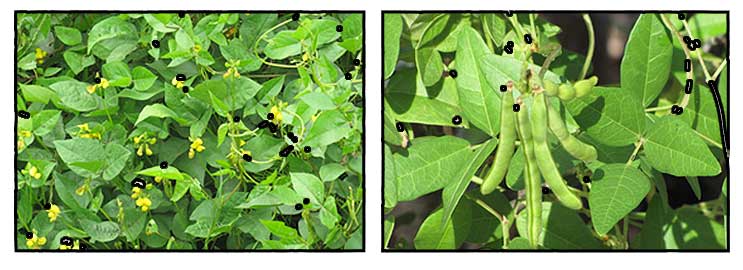
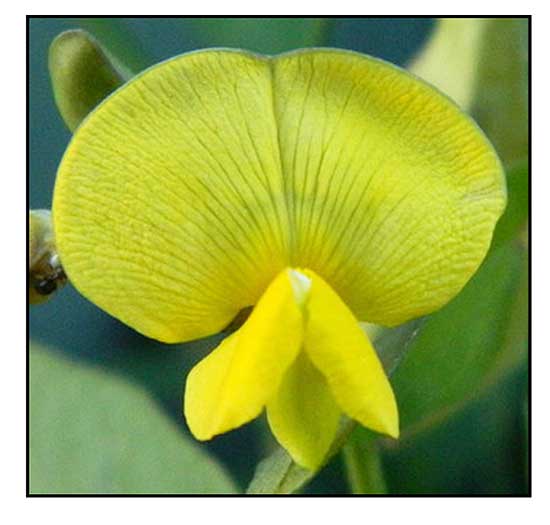
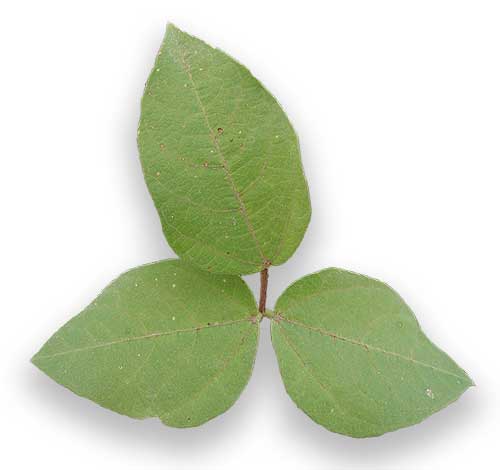
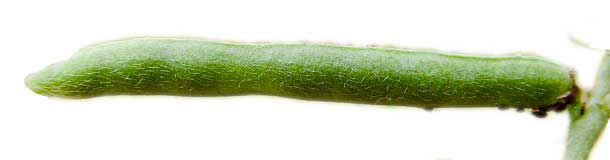
Vigna luteola is a hairy, short-lived perennial vine that occurs in moist soil and grows in either a spreading or climbing fashion. Leaves are trifoliate, meaning they are a compound leaf of three leaflets. Leaflets are oval shaped and become acute at their apex. Leaflets are 2.5–10 cm (0.98–3.94 in) long, and 1.5–5 cm (0.59–1.97 in) wide. Flowers are numerous, yellow, 1.8–2.2 cm (0.71–0.87 in) long and are made of one large standard petal, two lateral wing petals, and two lower keel petals, creating bilateral symmetry in the flower. Pods are thin, pubescent, up to 5 cm (2.0 in) long and 5–6 mm (0.20–0.24 in) wide, green to brown or black, containing numerous large black seeds. The pod twists spirally when the seeds are dispersed. (3)

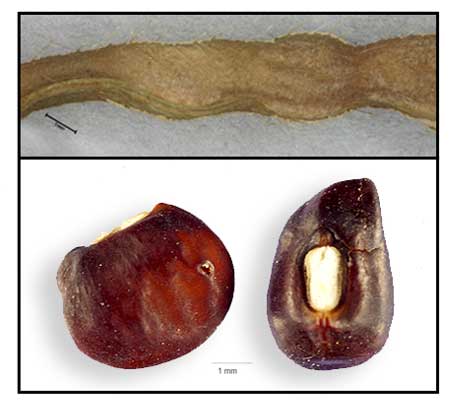
• Annual or perennial herb, trailing to 10 m or climbing to 2.5 m;  stems glabrous to densely hairy, rooting readily when in contact with moist soil.  Leaves trifoliate; leaflets ovate, ovate-elliptic, or ovate-lanceolate, rarely linear-lanceolate, 2.5–10 (–11) cm long, 0.4–5 cm wide, acute or acuminate at the apex, roundedor cuneate at the base, sparsely  pubescent on both surfaces or glabrous, petiole 2–8 cm long; rachis 0.5–1.5 cm long; petiolules 2–3 mm long; stipules mostly linear-lanceolate (rarely ovate), 3–4 mm long, 2 mm wide, shortly bilobed at the base. Inflorescence an axillary  raceme, few to many flowered, rachis 1.5–5.5 cm long, peduncles 5–40 cm long; pedicels 4–9 mm long.  Calyx green, glabrescent to densely hairy; tube 2–4 mm long; lobes 1.5–4 mm long; the lower one almost twice as long as the others, the upper pair united into an acute, rounded and  mucronate, or slightly bilobed lip.  Flowers papilionate; standard yellow to greenish yellow (sometimes tinged red outside), 1.3–2.5 cm long, 1.2–2.6 cm wide.  Pods pendant, linear, 4–8 cm long, 4–6.5 mm wide with slight constrictions between the 4–9 (–12) seeds; sparsely to rather densely adpressed pubescent with a short curved beak; green when young, ripening through yellow to dark brown, nearly black when ripe.  Seeds dark red-brown or grey brown with black speckling to black, oblong or ovate-rhombic, 3–4.5 × 3–3.5 × 2–3 mm.  40,000 seeds per kg. (Tropical Forages)

Distribution
- Native to the Philippines. (2)
- In Luzon: NCR, Rizal; Mindanao: Cotobato, Lanao del Sur, Maguindanao del Sur. (2)
- In thickets and grasslands.
- Pantropicl
- Native to Alabama, Andaman Is., Angola, Argentina Northeast, Argentina Northwest, Bahamas, Bangladesh, Belize, Benin, Bismarck Archipelago, Bolivia, Botswana, Brazil North, Brazil Northeast, Brazil South, Brazil Southeast, Burkina, Burundi, Cameroon, Cape Provinces, Cayman Is., Chad, Colombia, Congo, Costa Rica, Cuba, Dominican Republic, DR Congo, Ecuador, Egypt, Ethiopia, Florida, French Guiana, Gabon, Galápagos, Georgia, Ghana, Guatemala, Guinea, Guinea-Bissau, Gulf of Guinea Is., Guyana, Haiti, Honduras, Ivory Coast, Jamaica, Kenya, KwaZulu-Natal, Laos, Lebanon-Syria, Leeward Is., Liberia, Louisiana, Madagascar, Malawi, Mexico Central, Mexico Gulf, Mexico Northeast, Mexico Southeast, Mexico Southwest, Mozambique, Myanmar, Namibia, Nansei-shoto, New Caledonia, New Guinea, New South Wales, Nicaragua, Niger, North Carolina, Northern Provinces, Northern Territory, Palestine, Panamá, Paraguay, Peru, Puerto Rico, Queensland, Rwanda, Senegal, Sierra Leone, South Carolina, Sri Lanka, Sudan-South Sudan, Sulawesi, Suriname, Taiwan, Tanzania, Texas, Thailand, Togo, Trinidad-Tobago, Uganda, Uruguay, Vanuatu, Venezuela, Vietnam, Windward Is., Zambia, Zimbabwe. (1)
- Plant can become weedy or invasion in some regions and habitats, and displace desirable vegetation. Considered a weed of rice in South America. (4) (6)

Constituents
- Chromatographic studies of methanol extract of air-dried and powdered whole plants characterized three new compounds, one sesquiterpenoid viglutin (1), one alkaloid viglutoside (2), one α-pyranone viglutanone (3), along with two salts, sodium phaseate (4) and sodium p-coumarate (5). (5)
- Study of aerial parts isolated two flavonol glycosides, identified as: kaempferol 3-O-[α-L--rhamnopyran-osyl-(1-->4)-O-α-L-rhamnopyronosyl-(1-->6)-O]-ß-D-galactopyranoside (1) and kaempferol 3-O- [α-L-
rhamnopyranosyl-(1-->4)-O-α-L-rhamnopyranosyl-(1-->6)-O]-ß-D-galactopyranoside 7-O-α-L rhamno-
pyranoside (2). (7)

Properties
- Studies have suggested anti-inflammatory, superoxide anion and elastase inhibitory properties.

Parts used
Leaves, flowers, whole plant.

Uses

Edibility
- Flowers and shelled seeds can be boiled and eaten as vegetable. Roots dug by children, peeled, and chewed to extract a sweet juice.
Folkloric
- No reported folkloric medicinal use in the Philippines.
- Used for treatment of boils, ulcers, syphilis, asthma, tumors and high cholesterol. Given to infants as strengthener. (4)
- In Ethiopia, leaves and flowers are mixed with Hagenia abyssinica for treatment of ulcers and syphilis. In Argentina, used as antimicrobial and for treatment of high cholesterol. In Polynesia, use for treatment of a supernatural affliction, "ghost sickness",
Others

- Agroforestry: Used as green manure or cover crop. Its twining habit may present problems for young trees. (3)
- Fodder: Very palatable; preferentially grazed by livestock.(4) Used as pasture plant and ground cover in may countries, such as Ghana, Zambia, and Australia. However, it has short lifespan, and vulnerability to insects and frost. (3) A good plant for deer food plots; hence, the common name Deer pea.

Studies
Trypsin Inhibitor Activity:
In a study of seven wild Vigna species, V. luteola showed trypsin inhibitor activity, tannin and lectin contents. ()
Anti-Inflammatory / Superoxide Anion and Elastase Inhibitory Effects / Whole Plant: Study evaluated a methanol extract of air-dried and powdered whole plants of V. luteola. Chromatographic studies characterized three new compounds, one sesquiterpenoid viglutin (1), one alkaloid viglutoside (2), one α-pyranone viglutanone (3), along with two salts, sodium phaseate (4) and sodium p-coumarate (5). Inspection of reported spectroscopic data verified 68 known compounds, including 8 sesquiterpenoids. Purified compounds were evaluated for inhibitory activity against superoxide anion and elastase release by human neutrophils. Eight compounds displayed significant inhibition of superoxide anion generation with IC50 with IC50s ranging from 1.9 to 9.3 µM. Results suggest crude extract and purified constituents of V. luteola have potential for development of lead compounds or health food ingredients. (5)
Constituents and Properties: At flowering, crude protein content of 17.4% of dry matter qualifies it as excellent fodder. Flavonoids quercetin and isorhamnetic from leaves play a role in its resistance against aphids. Seed contain high amounts of amino acids and cystine. Seeds contain high levels of antimetabolic factors viz., tannins phytic acid, inhibitors of trypsin and cystatin, suggesting resistance to storage pests. (8)

Availability
- Wild-crafted.
- Seeds in the cybermarket.

December 2025

                                                 PHOTOS / ILLUSTRATIONS
IMAGE SOURCE: Vigna luteola plant / Harry Rose / CC BY 2.0 / Image modified / Click on image or link to go to source page / Wikipedia
OTHER IMAGE SOURCE: Vigna luteola - Ripening seedpods / Forest and Kim Starr / CC BY 2.0 Generic / Image modified / Click on image or link to go to source page / Creative Commons
OTHER IMAGE SOURCE: Vigna luteola flower xlose-up / Eduardo Luis Beltrocco / Some rights reserved / CC BY 4.0 International Deed / Image modified / Click on image or link to go to source page / iNaturalist
OTHER IMAGE SOURCE: Vigna luteola - trifoliate leaves / Harry Rose / CC BY 2.0 / Image modified / Click on image or link to go to source page / Creative Commons
OTHER IMAGE SOURCE: Vigna luteola seeds / Tracy Slotta Hurst @ USDA-NRCS PLANTS Database / Click on image or link to go to source page Plants.USDA.Gov
OTHER IMAGE SOURCE: Vigna luteola pod close-up / Wikitrop / Click on image or link to go to source page / Wikitrop

Additional Sources and Suggested Readings
(1)
Vigna luteola / KEW: Plants of the World Online
(2)
Fabaceae: Vigna luteola / Co's Digital Flora of the Philippines
(3)
Vigna luteola / Wikipedia
(4)
Vigna luteola / Tropical Forages
(5)
Chemical Constituents of Vigna luteola and Their Anti-inflammatory Bioactivity / Sio-Hong Lam, Yue-Chiun Li, Jason TC Tzen et al / Molecules, 2019; 24(7): 1371 / DOI: 10.3390/molecules24071371
(6)
Wild cowpea: Vigna luteola / USDA:NRCS - Plant Fact Sheet
(7)
Two New Kaempferol Isorhamninosides from Vigna luteola / Alicia B Pomilio, Enrique M Zallocchi / Journal of Natural Products, 1989; 52(3): pp 511-515
(8)
Vigna luteola / PROTA4U

DOI: It is not uncommon for links on studies/sources to change. Copying and pasting the information on the search window or using the DOI (if available) will often redirect to the new link page. (Citing and Using a (DOI) Digital Object Identifier)

                                                            List of Understudied Philippine Medicinal Plants
                                          New plant names needed
The compilation now numbers over 1,730 medicinal plants. While I believe there are hundreds more that can be added to the collection, they are becoming more difficult to find. If you have a plant to suggest for inclusion, native or introduced, please email the info: scientific name (most helpful), local plant name (if known), any known folkloric medicinal use, and, if possible, a photo. Your help will be greatly appreciated.

HOME      •      SEARCH      •      EMAIL    •     ABOUT