 |

Family • Euphobiaceae
Gubas
Endospermum peltatum Merr.
SESENDOK
| Scientific names | Common names |
| Endospermum peltatum Merr. | Amiang (Tag.) |
| Endospermum philippinense Elmer ex Merr. | Baubau (Ibn.) |
| Bayang (Mbo., Mand.) | |
| Biluang (Bik.) | |
| Binoang (Tag.) | |
| Binuang (Tag.) | |
| Ginabang (Ig.) | |
| Gubas (Tag.) | |
| Indang (Tag.) | |
| Kabal (Tag.) | |
| Magabong (Mag.) | |
| Malasabon (Tag.) | |
| Malibubuk (Mbo.) | |
| Mulang (Zambales) | |
| New Guinea basswood (Engl.) | |
| Sesendok (Engl.) | |
| Endospermum peltatum Merr. is an accepted species. KEW: Plants of the World Online | |
| Other vernacular names |
| BRUNEI: Takaliu. |
| INDONESIA: Bunkul tekaya, Kejo luk long (Kalamintan), Mapoopo (Sulawesi), Sendok-sendok. |
| MALAYSIA: TAKALIU (Sarawak); Buah icras, Maram pangi (Sabah). |
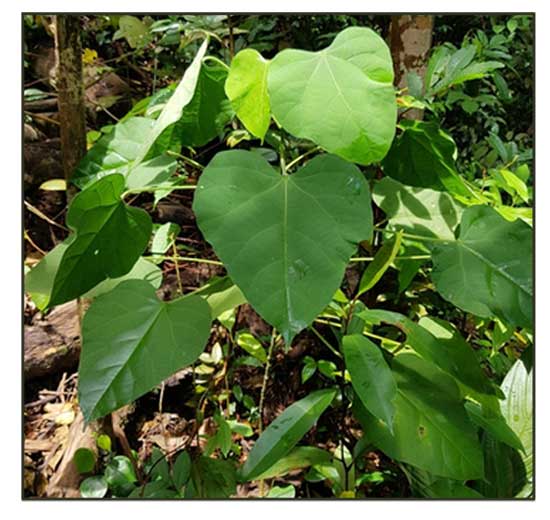
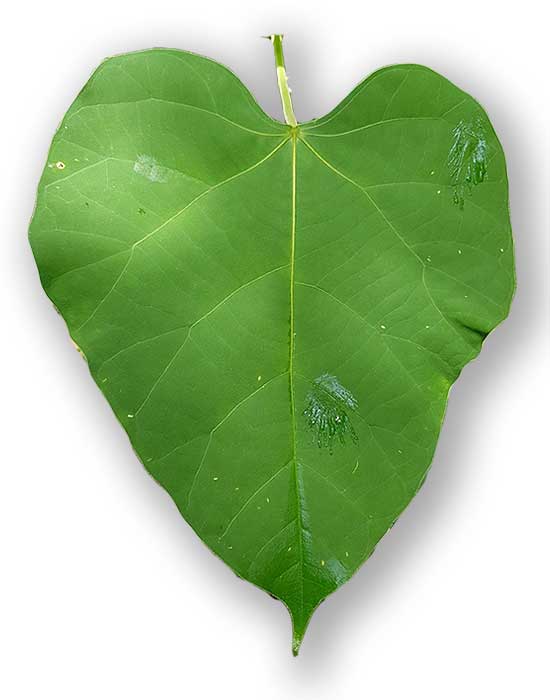
• A medium-sized to fairly large tree of up to 35(-45) m tall, bole branchless for up to 20 m, up to 60 cm in diameter, bark surface smooth, grey-brown with an orange tinge and an unpleasant odour, inner bark hard, yellow-brown; leaves sometimes peltate, elliptical to ovate-oblong, 11-25 cm 9-18 cm, rounded to cordate at base, palmately 7-9-veined, the midrib with 4-9 pairs of lateral veins often carrying a gland beneath, petiole with 2 cylindrical glands at the apex; inflorescence paniculiform, long; male flowers with about 11 stamens, female flowers with a 2-3-celled ovary. Distribution Properties Studies Availability |

Updated October 2026 / October 2018 / September 2013

 |
| IMAGE SOURCE: / Photo / Euphorbiaceae : Endospermum peltatum det. John Rey Callado/ Habit / Copyright © 2012 by P.B. Pelser & J.F. Barcelona (contact: pieter.pelser@canterbury.ac.nz) [ref. DOL51889] / Non-Commercial Use / Click on image to go to source page / Phytoimages.siu.edu |
| IMAGE SOURCE: Endospermum peltatum / © pbsg (plantbrosg) / CC BY 4.0 International / Image modified / Click on image or link to go to source page / iNaturalist |
| OTHER IMAGE SOURCE: Endospermum peltatum - Leaf close-up / © pbsg (plantbrosg) / CC BY 4.0 International / Image modified / Click on image or link to go to source page / iNaturalist |
Additional
Sources and Suggested Readings |
• |
DOI: It is not uncommon for links on studies/sources to change. Copying and pasting the information on the search window or using the DOI (if available) will often redirect to the new link page. (Citing and Using a (DOI) Digital Object Identifier) |
| List of Understudied Philippine Medicinal Plants |
| New plant names needed The compilation now numbers over 1,830 medicinal plants. While I believe there are hundreds more that can be added to the collection, they are becoming more difficult to find. If you have a plant to suggest for inclusion, native or introduced, please email the info: scientific name (most helpful), local plant name (if known), any known folkloric medicinal use, and, if possible, a photo. Your help will be greatly appreciated. |
• |
 |
|
