HOME      •      SEARCH      •      EMAIL    •     ABOUT


Family Selaginellaceae
Creeping spikemoss
Kayomkom
Selaginella involvens (Sw.) Spring
SPREADING CLUBMOSS
Yan zhou

Scientific names Common names
Kungiselaginella involvens (Sw.) Li Bing Zhang & XM Zhou Kayomkom (Batangas)
Kungiselaginella peltata (C.Presl) Li Bing Zhang & XM Zhou Clubmoss (Engl.)
Kungiselaginella polyura (Warb.) Li Bing Zhang & XM Zhou Creeping clubmoss (Engl.)
Lycopodium caulescens Wall. ex Hook. & Grev. Creeping spikemoss (Engl.)
Lycopodium involvens Sw. Medicinal spikemoss (Engl.)
Lycopodium microstachyum Desv. Spreading clubmoss (Engl.)
Lycopodioides involvens (Sw.) Kuntze  
Selaginella bellula Ces.  
Selaginella caudispica Alderw.  
Selaginella caulescens (Wall. ex Hook. & Grev.) Spring  
Selaginella caulescens var. bellula (Ces.) Hieron.  
Selaginella caulescens var. brachyoida Baker  
Selaginella caulescens var. gracilis W.Bull  
Selaginella caulescens var. japonica (T.Moore) Baker  
Selaginella caulescens var. minor Milde  
Selaginella caulescens var. subintegerrima Milde  
Selaginella homonorpha Klotzsch  
Selaginella involvens (Sw.) Spring  
Selaginella involvens var. bellula (Ces.) Hieron.  
Selaginella involvens var. variegata J.Veitch f.  
Selaginella japonica T.Moore  
Selaginella merrillii Alderw.
 
Selaginella microstachya Warb.
 
Selaginella pachystachys Koidz.
 
Selaginella peltata C.Presl
 
Selaginella polyura Warb.
 
Selaginella pseudostauntoniana Pamp.
 
Selaginella striolata Warb.
 
Selaginella subfimbriata var. polyura (Warb.) Alderw.
 
Selaginella warburgii Hieron.
 
Selaginella involvens (Sw.) Spring is an accepted species. KEW: Plants of the World Online
NOTE: Kayomkom is reported as local name in Batangas. It is also local name for Clerodendrum brachyanthum (Short flower glorybower)

Other vernacular names
CHINA: Yan zhou

Gen info
- Selaginella is a genus of lycophyte. It is treated as the only genus in the family Selaginellaceae, with over 740 known species. They are referred to as spikemosses or lesser clubmosses.
- The genus name Selaginella was erected by Palisot de Beauvois solely for the species Selaginella selaginoides, which turns out--with the closely related Selaginella deflexa--to be a clade that is sister to all other Selaginellas. (3)
- Historical snippet: Records of Selaginella involvens has appeared in herbal records from India's Eastern Ghats way back 12th century CE. Keral and Odisha manuscripts from16th-century recounts use of it under local names Jaladhara mala or Shwetapushpi.

Botany
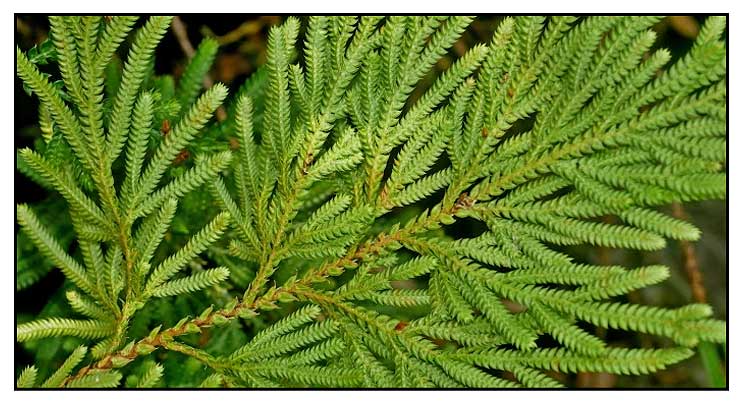
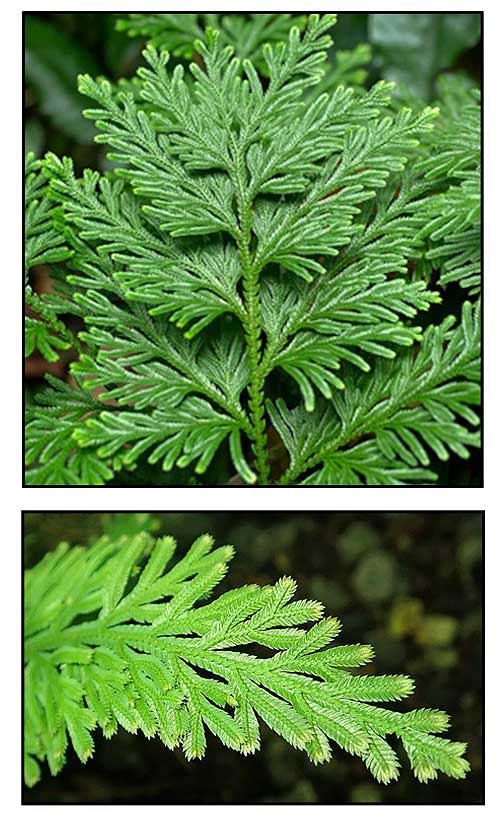
Plants epilithic or xerophytic, evergreen or seasonally green, erect, 15-35(-65) cm, with creeping subterranean rhizome and stolons; leaves on rhizome and stolons scalelike, pale yellow. Rhizophores restricted to creeping rhizomes and stolons. Main stems branched from middle upward, pinnately branched, stramineous, unbranched main stem 5-25 cm tall, 1-1.5 mm in diam. in lower part, terete, not sulcate, glabrous; primary leafy branches 7-12 pairs, 2 or 3 times pinnately branched, secondary branches 1 or 2 times pinnately branched, tertiary branches forked or once pinnately branched, leafy main stem including leaves 4-6 mm wide at middle, ultimate branches 2-3 mm wide including leaves. Axillary leaves symmetrical, ovate to triangular, 1.1-1.6 × 0.4-1.1 mm, base exauriculate, margin denticulate. Dorsal leaves imbricate, ovate-triangular or ovate-elliptic, 0.6-1.2 × 0.2-0.5 mm, slightly carinate, base cuneate, margin denticulate, apex long acuminate to shortly aristate, parallel to axis. Ventral leaves contiguous or overlapping, slightly ascending, ovate to triangular, 1.4-2.4 × 0.4-1.4 mm, apex subacute or apiculate; basiscopic base rounded, margin entire; acroscopic base enlarged, broader, overlapping stem and branches, margin hyaline, denticulate. Strobili solitary, terminal, compact, tetragonal, 5-15 × 1-1.4 mm; sporophylls uniform, not white-margined, ovate-triangular, sharply carinate, margin denticulate, apex acuminate, without sporophyll-pteryx; megasporophylls and microsporophylls at intervals, or megasporophylls in middle on lower side; microsporangia elliptic, rather thin, cells regular; microspores yellowish orange, megaspores whitish or brown, with equatorial flange. (Flora of China)

Distribution
- Native to the Philippines. (1) (2)
- Widespread in the Philippines.
- Also native Andaman Is., Assam, Borneo, Cambodia, Caroline Is., China North-Central, China South-Central, China Southeast, East Himalaya, Hainan, India, Japan, Jawa, Laos, Lesser Sunda Is., Malaya, Myanmar, Nansei-shoto, Nepal, Nicobar Is., Sri Lanka, Sulawesi, Taiwan, Thailand, Tibet, Vietnam, West Himalaya. (2)

Constituents
- Phytochemical studies have revealed numerous bioactive compounds including alkaloids, lignans, and flavonoids.
- Phytochemical screening revealed alkaloid +, flavonoid +, tannins +++, saponin +, steroid ++, and absence of hydroquinone.

Properties
- Studies have antimicrobial, antioxidant, thymus growth stimulatory, antimycobacterial, anti-acne properties.

Parts used
Fronds.

Uses

Edibility
- No info found on edibility.
Folkloric
- No reported medicinal use in the Philippines.
- In Chinese traditional medicine, used for promoting blood circulation. (•) Whole plant used to stop bleeding and coughs.
- In India, used as ingredient in anti-aging tonics. Used to prolong life span and prevent age-related degenerative diseases.
- In Ayurveda, cited for wound healing, respiratory support and rejuvenation. In ancient tribal practices of Meghalaya and Assam, healers crushed fresh fronds into paste for wound dressing, believed to accelerate granulation and reduce infection, while decoctions were used to ease bronchial irritation in the monsoon months.

Studies
Antioxidant / Antimicrobial:
Study of aqueous extract showed significant antioxidant power to lipid peroxides (EC50 = 2 µg/ml. The extract was not toxic and showed ability to degrade blood cholesterol. It also displayed in-vitro lipid peroxidation with EC50 2.1, and varying levels of hydroxyl radical scavenging activity. S. involvens also showed potent antimicrobial activity against five poultry pathogens, namely: Klebsiella, Salmonella, Staphylococcus, Proteus, and Bacillus. (5)
Antimicrobial: Study evaluated the antimicrobial inhibitory effects of Selaginella involvens and S. inaequalifolia against E. coli and Pseudomonas isolated from poultry litter by agar diffusion method. Results showed inhibitory effects with 8-13 mm and 6.5-13 mm ZOIs. Results suggest potential as alternatives in treatment of these microorganisms present in poultry litter. (7) Study by Irene et al (2011) showed significant activity against S. aureus, E. coli, and C. albicans, with highest activity against C. albicans (50 mm).
Thymus Growth Stimulatory / Antilipid Peroxidation: Study evaluated the immunomodulatory and antioxidant properties of Selaginella involvens, S. delicatula, and S. wightii whole plant extracts and short-term toxicity in mice. While there was not influence on humoral antibody titer, out of the three, the water extract of S. involvens showed promising thymus growth stimulatory activity in adult mice and remarkable antilipid peroxidation property. (8)
Antimycobacterial: Study evaluated the antimycobacterial activity of S. involvens using standard bacterial strain of Mycobacterium smegmatis by agar well diffusion method. Crude extract doses of 4 and 8 mg were used, with gentamycin (80 mcg) as positive control and Dimethyl sulfoxide as negative control. Results showed 8 mg of ethyl acetate extract showed maximum inhibitory effects against Mycobacterium smegmatis (11mm). (9)
Anti-Acne / Antimicrobial Potential on Propionibacterium acnes: Study evaluated the anti-acne properties of S. involvens extract (SIE) in cell models. SIE was not cytotoxic under 50 microg/mL, and revealed inhibitory effect on both nitric oxide (NO) production and iNOS/ILbeta expression as well as NO scavenging effect.. IL-1alpha and IL-8 cytokines, which trigger the inflammatory acne response, were inhibited in keratinocytes when stimulated with viable P. acnes. SIE also showed dose-dependent antioxidant effect in hydroxyl radical-mediated oxidation test. The SIE showed non-antibiotic antimicrobial activity at a dose greater then 100 mcg/mL on P. acnes. Results suggest a safe non-antibiotic anti-acne therapeutic alternative via reduction of non-specific initiation and augmentation phase of the inflammatory response. (10)

Availability
- Wild-crafted.

December 2025

                                                 PHOTOS / ILLUSTRATIONS
IMAGE SOURCE: Selaginella involvens / by Jacy Chen / CC BY 4.0 International / Image modified / Click on image or link to go to source page / easyscape
OTHER IMAGE SOURCE: Selaginella involvens / by Jacy Chen / CC BY 4.0 International / Image modified / Click on image or link to go to source page / easyscape
OTHER IMAGE SOURCE: Selaginella involvens / by Salycina / CC BY-SA 4.0 International / Image modified /Image modified / Click on image or link to go to source page / Wikimedia Commons

Additional Sources and Suggested Readings
(1)

Selaginellaceae: Selaginella involvens / Co's Digital Flora Database
(2)
Selaginella involvens / KEW: Plants of the World Online
(3)
Selaginella / Wikipedia
(4)
Selaginella involvens / Dr Ayush Varma / Ayurveda.com
(5)
Evidence-Based Medicinal Potential and Possible Role of Selaginella in the Prevention of Modern Chronic Diseases: Ethnopharmacological and Ethnobotanical Perspective / Mohd Adnan, Arif Jamal Siddiqui, Arshad Jamal, Walid Sabri Hamadou et al / Records of Natural Products, 2021; 15(5): pp 330-335 /
eISSN: 1307-6167 / DOI: 10.25135/rnp.222.20.11.1890
(6)
Review: Natural products from Genus Selaginella (Selaginellaceae) / Ahmad Dwi Setyawan / NUSANTARA BIOSCIENCE, 2011;3(1): pp 44-58 / DOI: 10.13057/nusbiosci/n030107 / eISSN: 2087-3956 / ISSN: 2087-3948 /
(7)
The effect of extracts of Selaginella involvens and Selaginella inaequalifolia leaves on poultry pathogens / Haripriya Duraiswamy, Selvan Nallaiyan, Periasamy Rathina Samy et al / Asian Pacific Journal of Tropical Medicine, 2010; 3(9): pp 678-681 / DOI: 10.1016/S1995-7645(10)60164-2
(8)
Research Paper - Preliminary studies on the immunomodulatory and antioxidant properties of Selaginella species / V Gayathri, VV Asha, A Subramoniam / Indian Journal of Pharmacology, 2005; 37(6) /
ISSN: 0253-7613
(9)
Qualitative phytochemical analysis and antimycobacterial activity of Selaginella involvens against  Mycobacterium smegmatis / Riya K, Dr Vijeesh Govindah, Anoop TV, Swetha TP / Journal of Pharmacognosy and Phytochemistry, 2024; 13(2): pp 648-651 / DOI: 10.22271/phyto.2024.v13i2d.14906
(10)
Anti-acne activity of Selaginella involvens extract and its non-antibiotic antimicrobial potential on Propionibacterium acnes / Seong Soo Joo, Su Kil Jang, Sung Geun Kim, Jae-Seok Choi, Kwang Woo Hwang, Do Ik Lee / Phytother Res., 2008; 22(3): pp 335-339 / DOI: 10.1002/ptr/2319

DOI: It is not uncommon for links on studies/sources to change. Copying and pasting the information on the search window or using the DOI (if available) will often redirect to the new link page. (Citing and Using a (DOI) Digital Object Identifier)

                                                            List of Understudied Philippine Medicinal Plants
                                          New plant names needed
The compilation now numbers over 1,730 medicinal plants. While I believe there are hundreds more that can be added to the collection, they are becoming more difficult to find. If you have a plant to suggest for inclusion, native or introduced, please email the info: scientific name (most helpful), local plant name (if known), any known folkloric medicinal use, and, if possible, a photo. Your help will be greatly appreciated.

HOME      •      SEARCH      •      EMAIL    •     ABOUT