Gen info
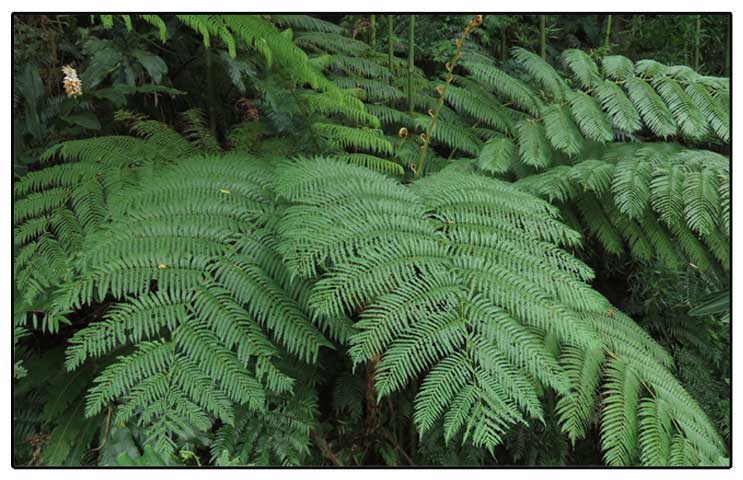
- Sphaeropteris lepifera is an endangered tree fern that grows in the mountains of East and Southeast Asia.
-
The species can grow up to 20 feet and 20 centimeters in diameter at base. The tree fern lineage dates back to the Jurassic, and the crown group Sphaeropteris can be traced back to the Cretaceous, around 90 million years ago. (3)
- The species is often referred to as a "living fossil". It is one of the oldest plant in the planet, earning its symbolism of longevity, endurance, prosperity, resourcefulness, and strength.
- S. lepifera is included in the lists of China's second-class key protected wild plants and China's Rare and Endangered plants. (5)
 Botany Botany
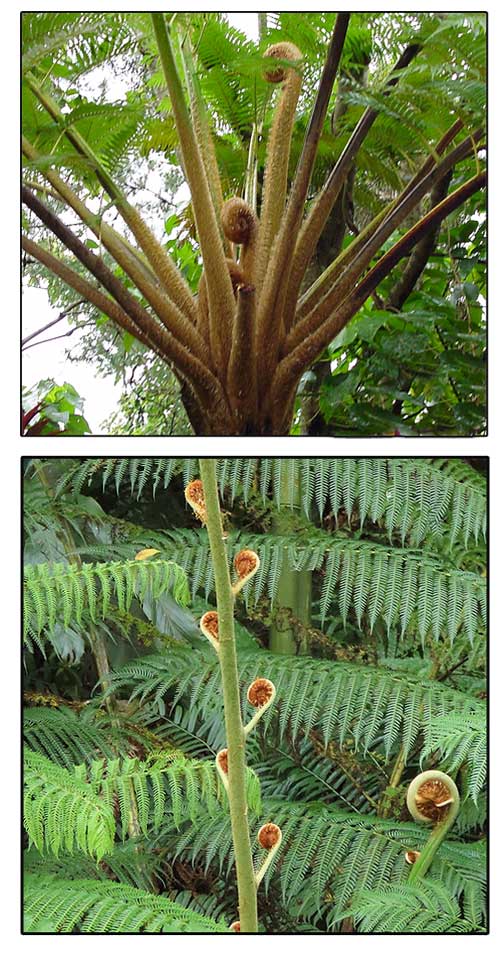
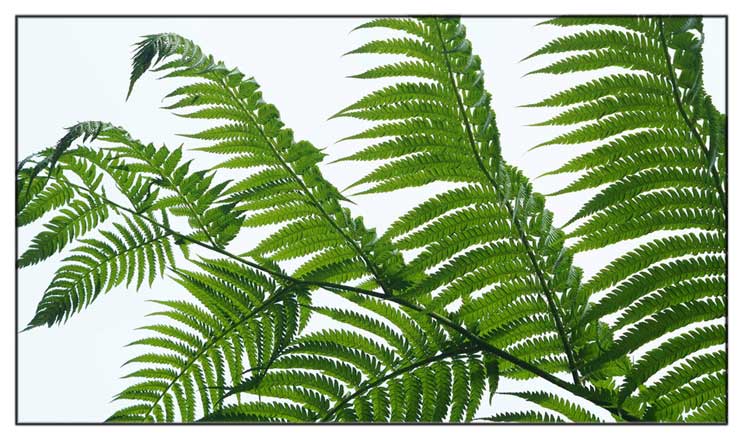
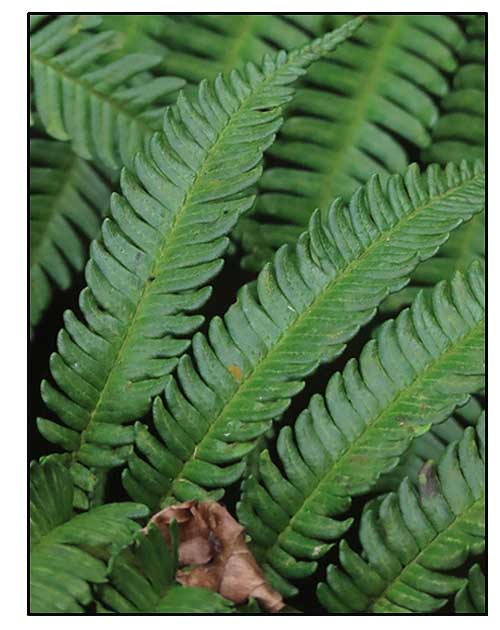
• Trunk erect, often more than 6 m tall, up to 20 cm in diam. near base, with distinct leaf scars on surface; scales on trunks and at stipe base pale brown to nearly white, thin, up to 4 cm, 2-4 mm wide at base, fimbriate at margin, without distinct prickles but granular from deciduous scales. Fronds pale green to green, large, up to 2.5 cm; stipe purple at base, green above, up to 16 cm or more, swollen at base, up to 7 cm in diam., smooth or with warts and scattered scales, densely scaly, with abscission marks on trunks; lamina 2-pinnate to almost 3-pinnate, oblong-obovate, 2-4(-5?) m; larger pinnae up to 80 cm, basal ones smaller; larger pinnules 10-15 × 1.5-2.3 cm, caudate at apex; scales on abaxial side of axes dense, whitish, ovate to oblong-ovate, mixed with spreading hairs; ultimate segments thick, entire or nearly so, glaucous on abaxial surface. Sori subcostal on pinnules, without indusia; paraphyses pale, longer than sporangia, sometimes narrow and scalelike. (Flora of China)
Distribution
- Native to the Philippines.
(1) (2)
- In Babuyan Islands, Batan, Camiguin de Babuyanes; In Luzon: Aurora, Benguet, Ifugao, Ilocos Sur, Kalinga, Nueva Viscaya, Quezon, Rizal, Sorsogon; in Mindanao: Bukidnon, Cotobato, Misamis Occidental, South Cotobato; Mindoro, Negros, Panay. (2)
- Also native to China South-Central, China Southeast, Hainan, Nansei-shoto, New Guinea, Taiwan.
(1)
- The wild population of Sphaeropteris lepifera exhibits a declining trend, which poses a very high risk of extinction. (6)
Ecology
- Spores are generated bi-annually at end of April and October. After a 3-month process, sporophytes are formed by July/August or January/February depending on when the spores were generated. Low temperature and dry conditions result in decreased sporophyte production. (3)
Constituents
- Study of fresh leaflets of Cyathea lepifera isolated four new minor triterpenoids, 9α, 11α-epoxyfernane (1), 9β, 11β-epoxyfernane (2), 3α, 10α-epoxyfilic-4(23)-ene (3) and 20α, 22-dihydroxyhopane (4), together with known triterpenoids, fern-9(11)-ene (5), fern-7-ene (6), filic-3-ene (7), adiantone (8), glaucanone (9), fern-9(11)-en-12-one (10), hydroxyhopane (11), hopan-30-oic acid (12) and cycloartanoid esters (13).
(8)
 Properties Properties
- After the leaves fall and accumulate on the forest floor through defoliation, toxic substances such as p-coumaric acid and (-)-3-hydroxy-ß-ionone can decompose and inhibit the growth of other woody plants in tropical forests. (5) (see study below: 7)
-
Studies have suggested antibacterial and phytotoxic properties.
Parts used
Fronds, sap.
 Uses Uses
Edibility
- Stems yield a starch; valued for food in China and Taiwan.
-
In Japan, new leaves and shoots are consumed; boiled to remove bitterness and then eaten as tempura or pickled in vinegar (sanbaizu). The texture is likened to daikon radish. Boiled core of S. lepifera is used as festival food in the Yaeyama Islands and Ishigaki Island. (3)
Folkloric
- In the Philippines, decoction of young fronds help reduced duration of labor and improve postpartum recovery. (3)
- Sap and other plant parts used for treatment of headaches, ulcers, boils, and wounds.
Others
- Crafts / Construction: In the Philippines and Taiwan, tree trunk used for construction and making sculptures. (3)
-
Trunk: Used as orchid media or mounts. Also used as safety treads for uphill or steep mountain trails.
Studies
• Antibacterial: In a study of 159 plant extracts for antibacterial activity against planktonic cells and biofilms of Pseudomonas aeruginosa PAO1 Wild-Type strains, six o, six including Sphaeropteris lepifera showed potent activity against the bacteria. S. lepifera showed not inhibitory effect on biofilm. (4)
• Survival by Phytotoxicity / Fronds: Study evaluated an aqueous methanol extract of Cyathea lepifera fronds for phytotoxicity and phytotoxic substances. Extract of fronds inhibited the growth of roots and shoots of garden cress (Lepidum sativum), lettuc (Lactuca sativa, alfalfa (Medicago sativa, ryegrass (Lolium multiflorum), timothy (Phleum pratense, and barnyard grass (Echinochloa crus-galli). Chromato-
graphic purification of extract
isolated compounds p-coumaric acid and (-)-3-hydroxy-ß-ionone. The compounds showed phytotoxic activity and may contribute to the phytotoxic effects of the fronds. The fronds fall and accumulate on the forest floor, and the compounds released through decomposition of the fronds. The phytotoxic activities of the compounds may be partly responsible for the fern's survival. (7)
• Understudied
Availability
- Wild-crafted.
- Ornamental cultivation.
- Seeds in the cybermarket.
|