| 
 Gen info Gen info
- Soybean, soya bean (Glycine max) is a species of legume native to East Asia.
- Etymology: The word 'soy" is a corruption of Cantonese and Japanese names for soy sauce: Chinese, jyutping; Cantonese Yale, sihyauh; and Japanese, Shoyu.
- The genus name Glycine comes from Linnaeus, who observed the sweet root of a genus species. From there, the Greek word for sweet, glykos, was Latinized.
- A crop of long domestication, the relationship of modern soybean to wild-growing species can no longer be traced with any degree of certainty. It is a cultigen with a very large numbers of cultivars. (28)
- Soybean is a primary alternative protein source in vegetarian diets. Nearly 70% of protein meal consumption worldwide is attributed to soybean. The three largest soybean-producing countries-the USA, Brazil, and Argentina-produce a total of 380 million metric tons of soybean, with sales of $15 billion in the USA alone.
(35)
Botany
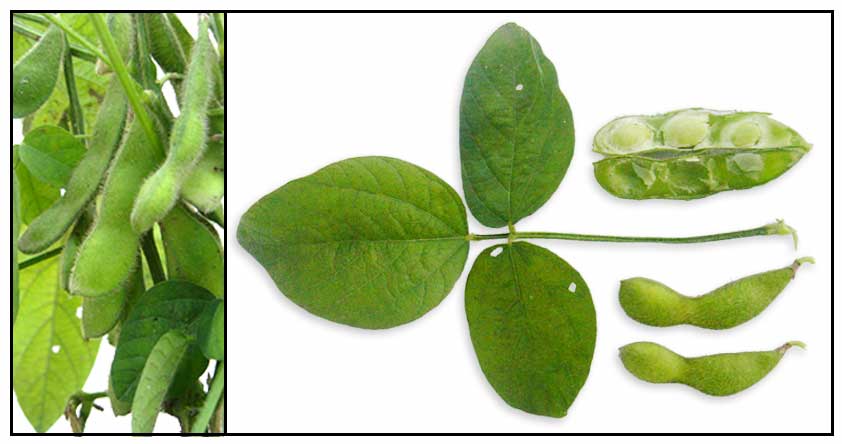
• Soya is a stout and suberect annual plant
growing to a height of less than a meter. Stems are densely clothed
with fine feruginous hairs. Leaves are long-petioled, with 3 leaflets,
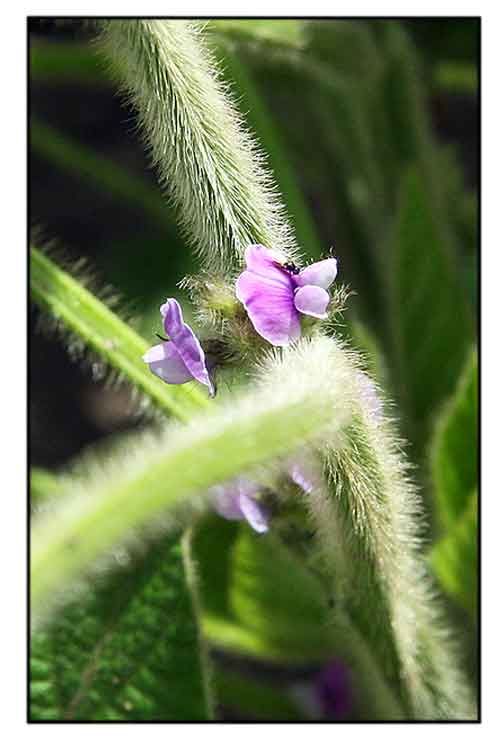
oval, 5 to 10 centimeters long. Racemes have few flowers which are congested. Calyx is densely hairy,
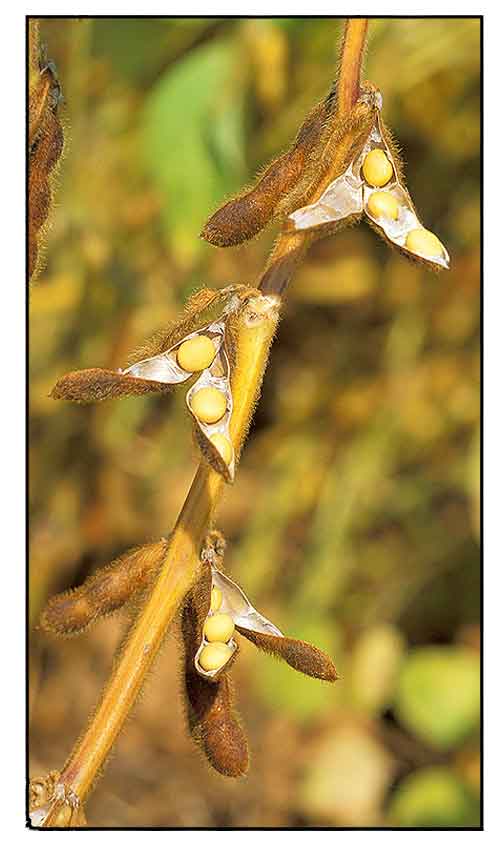
about 7 millimeters long, with long teeth. Corolla is reddish, and a little exserted. Pods are linear-oblong, 2 to 3 in each
axil of leaf, 4 to 5 centimeters long, recurved and densely hairy, containing
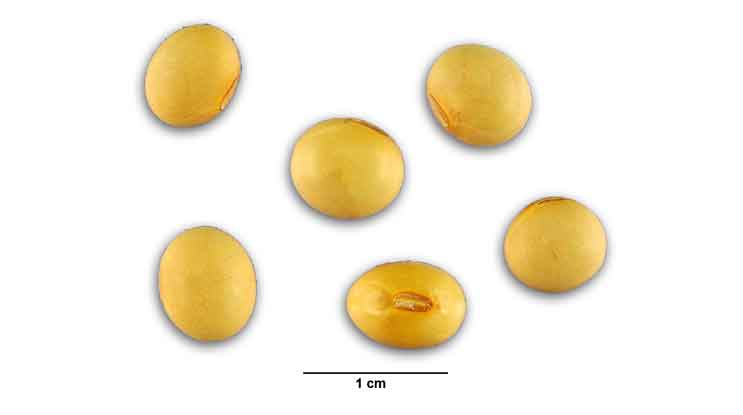
2 to 4 oblong to subglobose seeds.
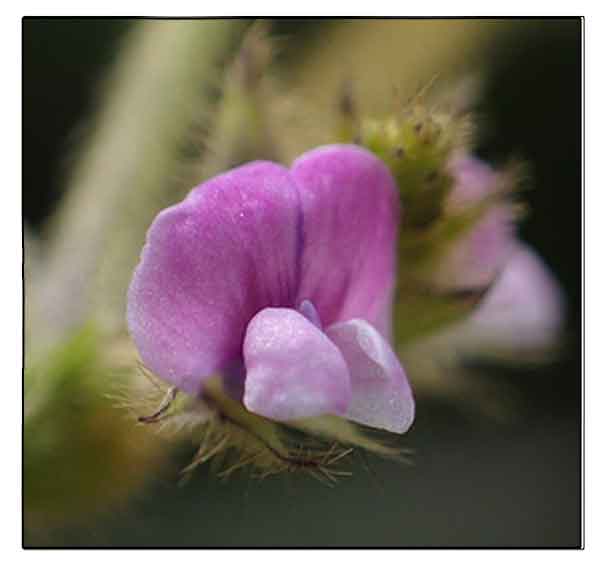 • Herbs annual, 0.3-0.9 m tall. Stems robust, erect, sometimes ± twining at apex, ± ribbed, densely brown hirsute. Leaves usually pinnately 3-foliolate; stipules broadly ovate, 3-7 mm, acuminate, densely yellow villous; petiole 2-20 cm, sparsely pubescent or hirsute when young; stipels lanceolate, 1-2 mm; petiolules 1.5-4 mm, hirsute; leaflets papery, broadly ovate, almost circular, or elliptic-lanceolate, terminal one larger, 5-12 × 2.5-8 cm, base broadly cuneate or rounded, apex acuminate or ± rounded, mucronate; lateral leaflets smaller, obliquely ovate. Raceme short or long; peduncle 1-3.5 cm; bracts lanceolate, 2-3 mm, strigose. Flowers few to many, those on lower part of stem sometimes solitary or 1 pair between 2 axils; bracteoles lanceolate, 2-3 mm, hirsute. Calyx 4-6 mm, densely long hirsute and strigose, usually 2-lipped; lobes 5, lanceolate, upper 2 connate to above middle, lower 3 separate, all densely white villous. Corolla purple, light purple, or white, 4.5-8(-10) mm; standard obovate-suborbicular, base clawed, apex slightly emarginate and usually reflexed; wings crenate, base narrow, with claws and auricles; keels obliquely obovate, with short claws. Ovary with undeveloped glands at base, hairy. Legume succulent, oblong, slightly curved, pendulous, 40-75 × 8-15 mm, densely silky hairy. Seeds 2-5, elliptic, suborbicular, or ovate to oblong, ca. 10 × 5-8 mm, many colored; testa smooth; hilum obvious, elliptic. (Flora of China) • Herbs annual, 0.3-0.9 m tall. Stems robust, erect, sometimes ± twining at apex, ± ribbed, densely brown hirsute. Leaves usually pinnately 3-foliolate; stipules broadly ovate, 3-7 mm, acuminate, densely yellow villous; petiole 2-20 cm, sparsely pubescent or hirsute when young; stipels lanceolate, 1-2 mm; petiolules 1.5-4 mm, hirsute; leaflets papery, broadly ovate, almost circular, or elliptic-lanceolate, terminal one larger, 5-12 × 2.5-8 cm, base broadly cuneate or rounded, apex acuminate or ± rounded, mucronate; lateral leaflets smaller, obliquely ovate. Raceme short or long; peduncle 1-3.5 cm; bracts lanceolate, 2-3 mm, strigose. Flowers few to many, those on lower part of stem sometimes solitary or 1 pair between 2 axils; bracteoles lanceolate, 2-3 mm, hirsute. Calyx 4-6 mm, densely long hirsute and strigose, usually 2-lipped; lobes 5, lanceolate, upper 2 connate to above middle, lower 3 separate, all densely white villous. Corolla purple, light purple, or white, 4.5-8(-10) mm; standard obovate-suborbicular, base clawed, apex slightly emarginate and usually reflexed; wings crenate, base narrow, with claws and auricles; keels obliquely obovate, with short claws. Ovary with undeveloped glands at base, hairy. Legume succulent, oblong, slightly curved, pendulous, 40-75 × 8-15 mm, densely silky hairy. Seeds 2-5, elliptic, suborbicular, or ovate to oblong, ca. 10 × 5-8 mm, many colored; testa smooth; hilum obvious, elliptic. (Flora of China)
Distribution
- Introduced.
- Domesticated in southeastern Asia more than 3,000 years ago for its pods and seeds.
- Cultivated
in some parts of the Philippines.
Agri info
• One of the world's most useful plant; and considered by some as the world's most important legume crop.
• Total commercial production of soybeans in 2010 was 261.6 million metric tons worldwide, harvested from 102.4 million hectares (2% of the world's agricultural land), with the U.S. producing just over one third of the world total. (13)
 Constituents Constituents
• Contains a fixed oil, 14-22&; protein, 50%; carbohydrates,
16.2%; diastase, urease, lipase, allantoinase, peroxidase, pentosan,
sojasterol, sitosterin, and phasin.
• The two primary isoflavones are daidzein and genistein; others
are puerarin, genistin and daidzin.
• Soybean proteins have two major components: beta-conglycinin
(vicilin class) and glycinin (legumin class), accounting for 390-40%
of total seed proteins.
• Nutrient analysis of raw mature seeds per 100 g (one cup=186 g): (Proximates) water 8.54 g, energy 446 kcal, protein 36.49 g, total lipid 19.94 g, carbohydrate by difference 30.16 g, total dietary fiber 9.3 g, total sugars 7.33 g; (Minerals) calcium 277 mg, iron 15.70 mg, magnesium 280 mg. phosphorus 704 mg, potassium 1797 mg, sodium 2, mg, zinc 4.98 mg; (Vitamins) vitamin C 6.0 mg, thiamin 0.874 mg, riboflavin 0.870 mg, niacin 1.623 mg, folate 375 mg, vitamin A RAE 1 µg. vitamin A 22 IU, vitamin E 0.85 mg, vitamin K 47.0 µg; (Lipids) total saturated fatty acids (FA) 2.884 g, total monosaturated FA 4.404 g, total polyunsaturated FA 11.255 g, trans FA 0, cholesterol 0. (17)
• Protein is the major constituent of soybean (30 to 50g/100g) and contributes to the supply of amino acids and nitrogen to humans and animals. Major soy proteins are storage proteins known as ß-conglycinin (7S) ab glycinin (11S), representing 65% to 80% of total seed proteins. (18)
• Phytochemical study of methanolic extract of eaves yielded
16 phytochemicals, including 5 isoflavones (1-5), flavones (6-8), flavonol (9), pterocarpans (10-11), phenolic compounds (12 and 13), phytosterols (14 and 15), and a sugar alcohol (16). The compounds were defined as 4,5,7-trihydroxyisoflavone (1), 4,5,7-trihydroxyisoflavone-7-O-ß-D glucopyranoside (2), 4,7-dihydroxy-6-methoxyisoflavone (3), 4,7-dihydroxyisoflavone (4), 4,7-dihydroxyisoflavone-7-O-ß-D-glucopyranoside (5), 5,7,4′-trihydroxyflavone (6), 3′,4′,5,7- tetrahydroxyflavone (7), 3′,4′,5-trihydroxyflavone-7-O-β-D- glucopyranoside (8), 3,4′,5,7-tetrahydroxyflavonol (9), coumestrol (10), glyceofuran (11), 4-hydroxybenzoic acid (12), methyl-4-hydroxybenzoate (13), soyasapogenol B (14), stigmasterol (15), and D-mannitol (16),
Properties
• Considered
astringent, carminative, and quieting.
• Dried sprout considered laxative, resolvent, and constructive.
• Root considered astringent.
• Studies have suggested anticancer, antidiarrheal, antidiabetic, cholesterol lowering, antiarthritic, antioxidant, immunomodulatory, antinociceptive,hepatoprotective, anti-inflammatory, skin estrogenic, antibacterial properties.
Parts used
Leaves, flowers, oil.
 Uses Uses
Edibility / Nutritional
- Typically consumed as a protein drink, soy flour, soy protein, extract,
fiber, cereal or milk beverage.
- Staple article of food in China and Japan.
- "Tokua" as food and" toyo" as flavoring are made
from the beans.
- Tokua is remarkable for its content of protein and fat and low proportion of carbohydrates when compared to beans.
- Soy milk is considered a substitute for human milk, and used in making
ice-cream and flan.
- Soybean is a good source of vitamins A and B; the sprouts have good
vitamin C content.
- Soybean is present in many infant formulas, industrially processed food, vegetarian dishes, and meat-based foods.
- Soybeans and soy foods are considered the best dietary sources of isoflavones.
Folkloric
• Bruised leaves
applied to snake bites.
• Flowers used for blindness and corneal opacities.
• Green bean hulls chewed to a pulp are applied to smallpox ulcers,
corneal ulcers and excoriations in children from urine.
• Black beans are considered to provide vigor and strength, and considered a counter poison against most vegetable poisons, ie., Aconite and Croton tiglii.
• Dried sprouts believed to be beneficial for hair growth and
curative for ascites and rheumatism.
• Dried sprouts, without the hulls, are considered laxative, resolvent, and constructive.
• Oil used for ulcers and skin diseases, and for removing bandoline from the hair.
Studies
• Cholesterol
lowering: Soy protein
in the diet can help decrease total and LDL cholesterol with no significant
effect on HDL.
• Anti-diarrheal:
Soy formula for infants
and young children decreased bowel movements and days of diarrhea.
• Menopause:
May be beneficial in reducing menopausal symptoms, such as
hot flushes. A study in Spain of 190 postmenopausal women on isoflavone-rich
soy preparation (PHYTO SOYA) showed significant improvement in menopausal
symptoms associated with lack of estrogen.
•
Anti-Cancer: Some studies are
conflicting as to whether supplements can increase or decrease the risk
of breast cancer. The isoflavone genistein in animal cancer studies
have shown anticancer effects: anti-angiogenesis, tyrosine-kinase inhibition,
or apoptosis. However, genistein has been reported to increase growth
of pancreatic tumor cells in the lab.
• Diabetes: Functional
components associated with ameliorating T2DM: beta-sitosterol (antilipemic),
genisterin and daidzein (lipase inhibitory), glycitein and soyasaponin
A3, A4, A5, A6 and soyasaponin V (lipoxygenase inhibitory), soyasaponin
A1 and A2 and stigmasterol (antilipemic).
• Antihyperglycemic: Extracts from the seeds of G max were evaluated for antihyperglycemic activity. Results conclude that the aqueous extract, but not the petroleum ether and alcoholic extracts, showed antihyperglycemic activity. (6)
• Anti-Arthritic: A study of G max for antiarthritic activity showed reversal of paw volume, biochemical, hematological and histological parameters. Further investigation is suggested to identify the compounds responsible for the antiarthritic activity.
(7)
• Isoflavone / Antioxidant: Study showed soy extracts activate NO synthesis in endothelial cells and protect against cell damage. The soy isoflavones potentially act as a NO promoter and as an antioxidant. (8)
• Antinociceptive / Anti-Inflammatory: Study showed ethanolic extracts of G max and R nulubilis seeds tested possessed antinociceptive and anti-inflammatory activities.
(9)
• Potent Phytoestrogen Glycinol: Primary induced isoflavones in soybean, the glyceollins, have been shown to be potent estrogen antagonists in vitro and in vivo, The glyceeollins have showed ability to inhibit cancer cell proliferation and caused study of estrogenic activities of other induced isoflavones. Study of a novel isoflavone, glycinol, showed potent estrogenic activity and may represent an important component of the health effects of soy-based foods.
(10)
• Antibacterial / Anticancer: Study
evaluated various extracts of four trifoliate plants: Glycine max (control), Cajanus cajans, Phaseolus vulgaris and Tecoma stans for bioactivities. The chloroform extract showed the best antibacterial activity; the methanol extracts, the best anticancer activity. (12)
• Chemomodulatory / Anticancer: Study evaluated the chemopreventive potential of Glycine max against DMBA-induced skin and MCA-induced cervical pappilomagenesis in Swiss albino mice. Results showed G. max provided chemoprevention by modulating the detoxifying and antioxidative enzymes. (15)
•
Dermatological / Cosmeceutical: Review presents an overview on dermatological and cosmeceutical studies on soybean and its bioactive compounds.
Isoflavones, a major class of flavonoids in soybean, possess antioxidant activity and anti-inflammatory activity. Topical applications of soy isoflavones to mouse skin before UVB exposure reduced the expression of COX-2. Several experimental studies have suggested topical treatment of soybean isoflavone genistein inhibits UVB-induced skin tumorigenesis in a hairless mice model. Studies suggested that soybean seed extract and its active components such as phenolic acids, flavonoids, isoflavonoids (quercetin, genistein, and daidzein) and proteins (Bowman-Birk inhibitor and soybean trypsin inhibitor) are safe and effective in improving numerous skin care parameters. Thus, soybean extracts have potential for many dermatological and cosmeceutical benefits, i.e., protection, restoration, and benefits. (18)
• Antibacterial / Seeds: Study evaluated the antibacterial effects of methanolic extract of seeds of G. max against Gram-negative and positive bacteria (L. monocytogenes, B. cereus, S. aureus, and K. pneumonia) using M7 and M9 varieties. Results showed dose-dependent antibacterial effect, with inhibition zones varying from 5.94 to 24.95 mm. The M7 variety showed higher antimicrobial effect than M9. (20)
• Antihyperlipidemic / Seed: Study evaluated the effect of crude extract of seeds of Glycine max on serum lipid profiles of ad-libitum high-cholesterol-fed male albino wistar rats. The observed protective could be due to the hypocholesterolemic effect and antioxidant activity of soy. It may be due to one or more phytochemicals present in the soy, such as isoflavones, phytic acid, soya saponin, phytosterol. (21)
• Douchi (Fermented Soybean) / Alleviation of Atopic Dermatitis: Study evaluated whether Douchi (fermented Glycine max Merr.) from fermented soybeans can attenuate protein kinase C (PCK) and interleukin (IL)-4 response and cutaneous inflammation in atopic dermatitis (AD)-like NC/Nga mice. Douchi treatment of NC/Nga mice significantly reduced clinical scores (p<0.01) and histological features. Reduction of IL-4 and PKC led to decrease in inflammatory factors i.e., substance P, inducible NO synthase (iNOS), and matrix metallopeptidase 9 (MMP-9), all at P<0.01. Douchi also downregulated TH1 and Th2 markers. Results suggest potential in the prevention and treatment of AD. (22)
• Effect of Cadmium Treatment on Biochemical Activity in Glycine max: Studies evaluated secondary metabolites production and the biochemical potential of Glycine max exposed to Cd-rich growing medium. Cadmium treatment in the form of Cadmium chloride increased the amino acid, protein, proline, and diadzene content in field grown soybean plants at different developmental stages, with increase in antioxidant enzymes viz., SOD, CAT, and GRT with increase in Cd treatment. Results suggest higher diadzene production in Cd-enriched soya bean contributed to higher medicinal value. (23)
• Antidiabetic Herbal Formulation Comprising Glycine Max: The invention provides a novel herbal preparation comprising of Glycine max active fraction containing 75 globulin protein extract, Curcuma longa, and Zingiber officinale rhizome extract for the treatment of diabetes and diabetes related diseases. (24)
• Immunomodulatory Effects / Seeds: Study evaluated the in-vitro immunomodulatory activity of ethanolic and methanolic extracts of dry seeds of Glycine max seeds for secretion of various mediators examined on murine macrophage phagocytosis by NBT reduction, NO, lysosomal enzyme activity and myeloperoxidase activity. Both extracts presented immunomodulatory activity in peritoneal mouse macrophages, bone marrow cells and spleenocyts with clear dose response relationship. (25)
• Effect on Development of Non-Alcoholic Fat Liver in High Fat Diet-Fed Mice: Study investigated the effect of soybean leaf extract on the development of hepatic steatosis in high fat diet fed mice. Increase in body weight gain and visceral and subcutaneous tissues were attenuated by the leaf treatment, There was marked increase in phosphorylation of AMPK and ACC and their protein expression with inhibition of fatty acid synthase protein expression. Result showed soybean extract has beneficial effect against hepatic steatosis in HFD-fed mice. (26)
• Soy Isoflavones / Antioxidant / Protection of Free Radical Induced RBC Damage and Plasma Degradation: Study evaluated the antioxidant property of soy isoflavones and its protective role on red cells against free radicals and plasma protein degradation. Results suggest soy isoflavones protect RBCs and plasma protein degradation from oxidative stress. (27)
• Glycitin: Soybean is a rich source of isoflavones, including glycitin in the human diet.
Scientific data analysis revealed glycitin (4'-hydroxy-6-methoxyisoflavone-7-D-glucoside) exhibits chemo-preventive, cardio-protective, and anti-osteoporosis effects. It has beneficial effects on diabetes, acute lung injury, bone, cognitive performance, breast cancer, skin, immune system, enzymes, prostaglandin, and taste receptors. (29)
• Effect on Oocyte Development: Study evaluated the effect of soybean supplementation to the embryo quality from oocyte side using female Swiss mice strain. Results showed soybean supplementation improved embryo quality at the cleavage stage by decreasing apoptosis of the oocytes rather than increasing the viability of oocytes. (30)
• Antioxidant / Phytoconstituents / Seeds: Study evaluated the phytoconstituents and antioxidant activity of methanolic and aqueous extracts of seeds. Total phenolic content of the methanol and aqueous extracts was 769 and 1139 mg/ml GAE/mg; flavonoids, 107 and 120 mg/ml, respectively.
DPPH assay of aqueous extract showed higher scavenging capacity than the methanol extract with IC50s of 69.17 mg/ml and 4.17 mg/ml, respectively. (31)
• Trypsin Inhibitor from Soya Bean: A trypsin inhibitor is a protein and type of serine protease inhibitor that reduces the biological activity of trypsin. Study reports on the isolation, purification, and characterization of the trypsin inhibitor proteins from seeds of soya beans.
GC-MS analysis yielded steroid derivatives such as stigmasterol, campesterol, beta-sitosterol, and gamma-tocopherol. Glycine max trypsin inhibitor can be a plant-derived drug to overcome over-activation of trypsin without it real substrate (proteins) becoming activated and start auto-digestion leading to pancreatitis. (32)
• Valorization of Glycine max Seed Waste: Study evaluated the optimal conditions for extract of total phenolic compounds from soybean meal, a by-product of the soybean seeds industry, using a green protocol with microwave-assisted extraction (MAE). Highest phenol contents (13.09 mg GAE/g) and flavonoid (7.39 mg CE/g) were obtained at 120W for 0.16 min
with solvent/dry matter ration of 60/1. DPPH assay showed antioxidant capacity for the extract with IC50 f 194.98 µg/ml. Response surface methodology (RSM) was used for a green protocol for maximum extraction of polyphenols from soybean seeds waste using less solvent, low power, and reduced time in MAE. (33)
• Allergenic Potential: Soybean is classified as an allergenic source, affecting 0.2-o.4% of allergic individuals worldwide. It can cause severe allergic reactions and anaphylaxis. Although considered a transient pediatric allergy of infancy and early childhood, it has been reported to occur later in life, especially in adults who suffer from persistent peanut allergy or birch pollen allergy. Soybean is also commonly used as a food additive for its properties as a water and fat absorber, emulsifier, foaming material, gelatinizer, protein filler or binder. Review identified major and minor soybean allergens, allergen detection methods, and the impact of various food processing steps on the allergenicity of soybean-containing food, and how allergic patients can be protected by proper allergen management. (35)
• Effect on Regulatory T Cell Activity (Tregs) / Anti-Inflammatory: Regulatory T cells (Tregs) are essential negative regulators of inflammation. Study evaluated the effect of elicited soybean extract (ESE) on Treg activity in high fat-fructose (HFFD) mice. The HFFD treatment significantly decreased Treg number (p<0.05) compared to a normal diet. ESE treatment in HFFD mice could improved Treg numbers compared to HFFD mice. Results suggest ESE has potential as supplement to suppress chronic inflammation via increased Treg number. (36)
• Nephroprotective / Diazinon Renal Toxicity: Diazinon is an insecticide that belongs to a group of chemicals known as organophosphates. Study evaluated the nephroprotective effect of soy flour on diazinon-induced nephrotoxicity in Wistar rats. Administration of soy flour showed a nephroprotective effect in preventing increases in BUN and creatinine levels of diazinon-induced nephrotoxic male Wistar rats. (37)
• Burn Wound Healing / Modulation of Hydroxyproline Level / Seeds: Study evaluated the effectiveness of edamame's seed ethanolic extract in second-degree burn wound healing process on burn wound applied by hot aluminum (70°C) coin on rat skin. Results showed modulation of hydroxyproline levels on the 16th day, while epithelial thickness was higher in the treatment group (p<0.05). Results suggest certain concentration of ethanolic of Glycine max was effective in enhancing second-degree burn wound healing via modulation of hydroxyproline levels and increase of epithelial thickness. (38)
• Effect on Collagen Layer and Estrogen Receptors in the Skin: Study evaluated the effects of soybean extracts using different extraction methods on skin of female Sprague-Dawley rats. All extract treated groups showed statistically significant decrease in the number of estrogen receptor-positive cells compared to control groups. A 200 mg/kg EA-treated group showed significant increase in the thickness of collagen layer. Results suggest that soybean extracts might have positive estrogenic effects on the skin. Only the high-dose ethyl acetate extract increased the expression of collagen, which may be beneficial for postmenopausal facial skin. (39)
• Anti-Inflammatory: Study evaluated the efficacy of elicited soybean extract (ESE), which was elicited by Saccharomyces cerevisiae and light, as an anti-inflammatory agent in mice with high-fat and -fructose diet (HFFD). ESE administration decreased the relative number of CD4+TLR3+ T, CD4+TLR4+ T, CD4+TNF-α+ T, and CD4+IFN-γ+ T cells. A normal dose of 104 mg/kbw was most effective in suppressing inflammation compared to positive controls. ESE 104 mg/kbw may be considered an alternative herbal medicine for suppression of inflammation in HFFD mice. (40)
Safety
• Allergies: Like milk, eggs, peanuts, fish and wheat, may act as a food allergen. Symptoms are can be varied, from runny nose to hypotension.
• Side Effects: Soy protein may cause gastrointestinal intolerance – bloating, nausea, constipation. Infants fed with soy protein formula may develop vomiting, diarrhea, intestinal bleeding, colitis, atopic eczema and thyroid abnormalities.
• Estrogen Effects: Because of concerns on estrogen-like effects, its use is discouraged in patients with hormone-sensitive cancers (breast, ovarian, uterine).
• Highly recommended reading: Soybean (Glycine max) allergens─A Review on an Outstanding Plant Food with Allergenic Potential. (35)
Availability
Commercial cultivation.
Extracts and miscellany of soy food products and supplements in the cybermarket. |


